San Francisco's Prop C Homeless Measure Passed ー And Not Everyone in Tech is Happy
*By Chloe Aiello*
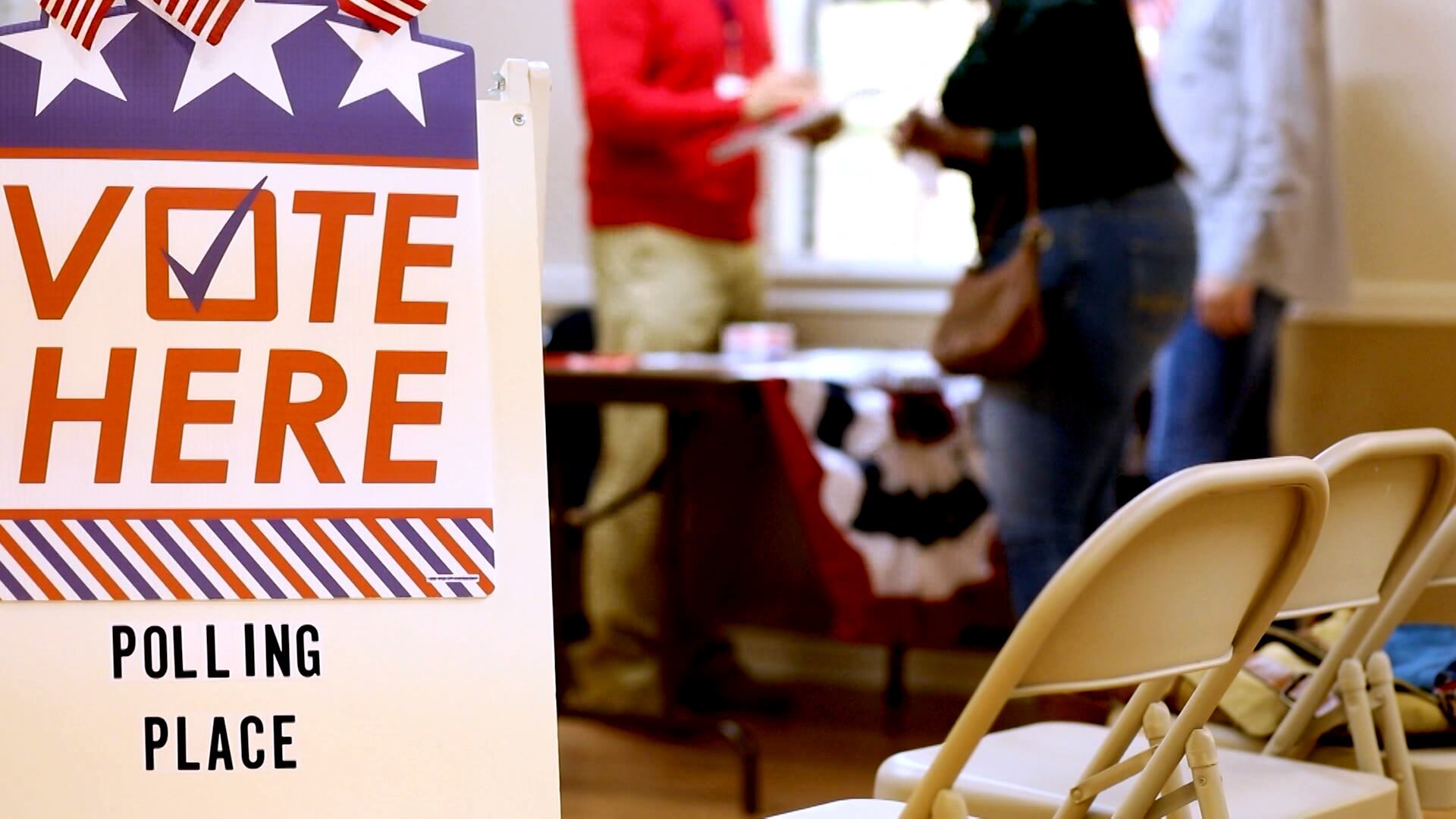
Voters in San Francisco gave overwhelming support on Tuesday to a measure that would tax big tech for the sake of the homeless.
And not everyone in the Silicon Valley stronghold is happy.
Proposition C, or the “Our City, Our Home” initiative, was easily the most controversial issue on the city's ballot. It proposed a tax on revenue over $50 million ー which would hit about the top 1 percent of corporations ー to help mitigate San Francisco's homeless problem. More than 7,000 people in San Francisco experience homelessness ー a stark contrast to the wealth the tech industry has generated for its own.
San Francisco has a "median home price \[of\] $1.6 million, the third most billionaires of any city in the world and one of the most dismaying homeless problems that a U.N. Special Rapporteur last year compared to Bangladesh," Scott Wilson, senior national correspondent at the Washington Post, who has covered the story, told Cheddar on Wednesday.
"I think there's a real disconnect between what the public wants to see and what the political class is willing to do especially in trying to avoid irritating tech leaders," he added.
The proposition's 10-point list includes efforts to provide more mental health and addiction treatment centers, place sanitation centers and mobile bathrooms on the streets, and expand homeless shelters, among other things.
Salesforce ($CRM) CEO Marc Benioff has been one of the initiative's most vocal cheerleaders ー although his company will surely be hit by the proposed tax.
"Prop C’s victory means the homeless will have a home & the help they truly need! Let the city come together in Love for those who need it most! There is no finish line when it come to helping the homeless. Thank you amazing supporters of Prop C," Benioff [gushed on Twitter](https://twitter.com/Benioff/status/1060060365193539584), following Prop C's victory.
He even reportedly poured about $7 million of his own and his company's money into the campaign, billing homelessness as the responsibility of technology companies that have brought jobs and wealth to the city, while also widening wage gaps and driving up property values.
But not all bigwigs in big tech seem to agree. Jack Dorsey, CEO of Twitter ($TWTR) and Square ($SQ), spoke out against the proposition ー much to Benioff's ire. The two tech elites exchanged arguments about the issue on social media in mid-October.
"I want to help fix the homeless problem in SF and California. I don’t believe this (Prop C) is the best way to do it," [Dorsey wrote](https://twitter.com/jack/status/1050780155524857856) on the platform he co-founded.
"I think that Benioff probably has his hand a little bit closer to the pulse of San Francisco and the people who live there than Jack Dorsey. I mean there is a real frustration, a real concern and a real compassion fatigue among San Francisco residents," Wilson said.
Dorsey wasn't alone. Legislators, including Mayor London Breed ー who has vowed to address homelessness ー spoke out against the proposition, which Wilson said just reinforces big tech's influence on the city.
"I think what it showed is that big tech still has a big sway over political power in San Francisco and that there's no coherent solution in city hall on how to solve the homeless problem ー and yet voters in approving it are demanding that something be done," he said.
For now, the proposition hangs in legal limbo. It did not pass with a full two-thirds legislative majority, which leaves it open to legal challenges from opponents.
David Daley, senior fellow for FairVote, joins Cheddar News to discuss the Supreme Court denying the GOP's challenge to congressional maps in North Carolina and Pennsylvania.
With the Russian invasion of Ukraine raging on, millions have turned to TikTok to stay up-to-date on the latest developments and get a first-hand look. The social media platform has been so prominent that the war has been dubbed "the first TikTok war" by many publications — and even the White House has taken notice. The Biden administration held a virtual briefing with 30 social media creators to discuss their role in communicating to their followers by countering what it deems as being misinformation. Ellie Zeiler, an 18-year-old TikTok star who attended the briefing, joined Cheddar to talk about the conference and her responsibilities as a social media creator. "How could you not be a little nervous or scared when you're getting your information and media all from this app? But also then you think back to, I guess, when media was changing between newspapers and TV, and I'm sure people were nervous about that too," she said. "So the fact is, is that people do really look to Tiktok and social media for their news."
U.S. markets closed the day at session lows as the Dow marked its fifth straight week of losses. Investors continue to weigh inflation and the ongoing Russia-Ukraine war and growing economic risk factors. George Seay, CEO of Annandale Capital, joins Cheddar News' Closing Bell to discuss.
U.S. stocks ended Thursday's session lower as new CPI data show inflation continues to rise and the Russia-Ukraine war continues. Philip Palumbo, founder, CEO, & Chief Investment Officer of Palumbo Wealth Management, joins Cheddar News' Closing Bell to discuss.
It's been an eventful past few weeks for the WNBA. One of the league's top players, Brittney Griner, remains in Russian custody after being detained at an airport last month. The league is also dealing with a scandal after fining a team for providing charter flights to their players. Emily Caron, sports business reporter for Sportico, joined Cheddar News' Closing Bell to discuss.
School nutrition experts warn that millions of children could go hungry as soon as this summer, after Congress excluded waivers that would extend universal lunch for children in school from the $1.5 trillion omnibus spending bill. Cheddar News speaks with Jessica Gould, chair of the public policy and legislation committee at the School Nutrition Association, about the issue.
The ongoing semiconductor chip shortage has been impacting everything from the purchase of cars to smartphones. Deputy Commerce Secretary Don Graves spoke with Cheddar about the Biden administration's efforts to combat the issue and if the current crisis in Ukraine will have any impact on the global supply chain problems for semiconductors. "We're working very closely with all of our partners and allies around the globe, just as we have on the export controls and sanctions that we've applied to Russia to deal with that needless aggression," he said. "We're also working with them on the challenges of raw materials for a range of industries, including the semiconductor industry. We believe that we are going to be able to meet the demand for the for the near term."