San Francisco's Prop C Homeless Measure Passed ー And Not Everyone in Tech is Happy
*By Chloe Aiello*
Voters in San Francisco gave overwhelming support on Tuesday to a measure that would tax big tech for the sake of the homeless.
And not everyone in the Silicon Valley stronghold is happy.
Proposition C, or the “Our City, Our Home” initiative, was easily the most controversial issue on the city's ballot. It proposed a tax on revenue over $50 million ー which would hit about the top 1 percent of corporations ー to help mitigate San Francisco's homeless problem. More than 7,000 people in San Francisco experience homelessness ー a stark contrast to the wealth the tech industry has generated for its own.
San Francisco has a "median home price \[of\] $1.6 million, the third most billionaires of any city in the world and one of the most dismaying homeless problems that a U.N. Special Rapporteur last year compared to Bangladesh," Scott Wilson, senior national correspondent at the Washington Post, who has covered the story, told Cheddar on Wednesday.
"I think there's a real disconnect between what the public wants to see and what the political class is willing to do especially in trying to avoid irritating tech leaders," he added.
The proposition's 10-point list includes efforts to provide more mental health and addiction treatment centers, place sanitation centers and mobile bathrooms on the streets, and expand homeless shelters, among other things.
Salesforce ($CRM) CEO Marc Benioff has been one of the initiative's most vocal cheerleaders ー although his company will surely be hit by the proposed tax.
"Prop C’s victory means the homeless will have a home & the help they truly need! Let the city come together in Love for those who need it most! There is no finish line when it come to helping the homeless. Thank you amazing supporters of Prop C," Benioff [gushed on Twitter](https://twitter.com/Benioff/status/1060060365193539584), following Prop C's victory.
He even reportedly poured about $7 million of his own and his company's money into the campaign, billing homelessness as the responsibility of technology companies that have brought jobs and wealth to the city, while also widening wage gaps and driving up property values.
But not all bigwigs in big tech seem to agree. Jack Dorsey, CEO of Twitter ($TWTR) and Square ($SQ), spoke out against the proposition ー much to Benioff's ire. The two tech elites exchanged arguments about the issue on social media in mid-October.
"I want to help fix the homeless problem in SF and California. I don’t believe this (Prop C) is the best way to do it," [Dorsey wrote](https://twitter.com/jack/status/1050780155524857856) on the platform he co-founded.
"I think that Benioff probably has his hand a little bit closer to the pulse of San Francisco and the people who live there than Jack Dorsey. I mean there is a real frustration, a real concern and a real compassion fatigue among San Francisco residents," Wilson said.
Dorsey wasn't alone. Legislators, including Mayor London Breed ー who has vowed to address homelessness ー spoke out against the proposition, which Wilson said just reinforces big tech's influence on the city.
"I think what it showed is that big tech still has a big sway over political power in San Francisco and that there's no coherent solution in city hall on how to solve the homeless problem ー and yet voters in approving it are demanding that something be done," he said.
For now, the proposition hangs in legal limbo. It did not pass with a full two-thirds legislative majority, which leaves it open to legal challenges from opponents.
With the Fed about to the announce a 25 basis point interest rate hike on Wednesday, what exactly does this mean for investors, consumers, and businesses?
Ukrainian President Volodymyr Zelenskyy has summoned the memory of Pearl Harbor and the Sept. 11 terror attacks in an impassioned video plea to Congress to send more help for Ukraine’s fight against Russia.
In February, Senator Jeff Merkley (D-Ore.) and Representative Jamaal Bowman (D-N.Y. 16th District) introduced the Fair College Admissions for Students Act. The bill looks to curb the admissions advantage given to the children of alumni and donors for colleges and universities. Sen. Merkley joined Cheddar news to discuss the push behind the legislation. "My dad was a mechanic. I was applying to schools around the country. I never thought about the fact that those students who came from the most privileged backgrounds also got a special advantage in applying to college," he said. "They take up 10-25 percent of the slots at many of our universities, and so this is kind of affirmative action for those who need it least rather than a level playing field for everyone else." If enacted, the law would amend the Higher Education Act of 1965 doing away with legacy or donor status admissions for any school participating in the federal student aid program.
Nancy Daoud, a private wealth adviser for Ameriprise Financial, joins Cheddar News' Closing Bell, where she discusses what led to a sharp spike on Wall Street during Tuesday's session and what she will be watching for most closely when the Fed announces it latest policy decision on Wednesday.
Russia's economy is effectively at a standstill after it was slapped with extensive western sanctions, and now it has to make the first of four monthly interest payments on dollar bonds. It's likely the country will not be able to pay — so what happens next? Major credit ratings agencies have downgraded Russian sovereign debt, with Fitch issuing a 'C' rating and S&P Global Ratings issuing a 'CCC-' rating. Caleb Silver, Editor in Chief of Investopedia, joins Closing Bell to discuss what a Russian debt default could mean for Russia's economy, U.S. consumers who have pensions with exposure to Russian assets, and whether this could create a global financial crisis.
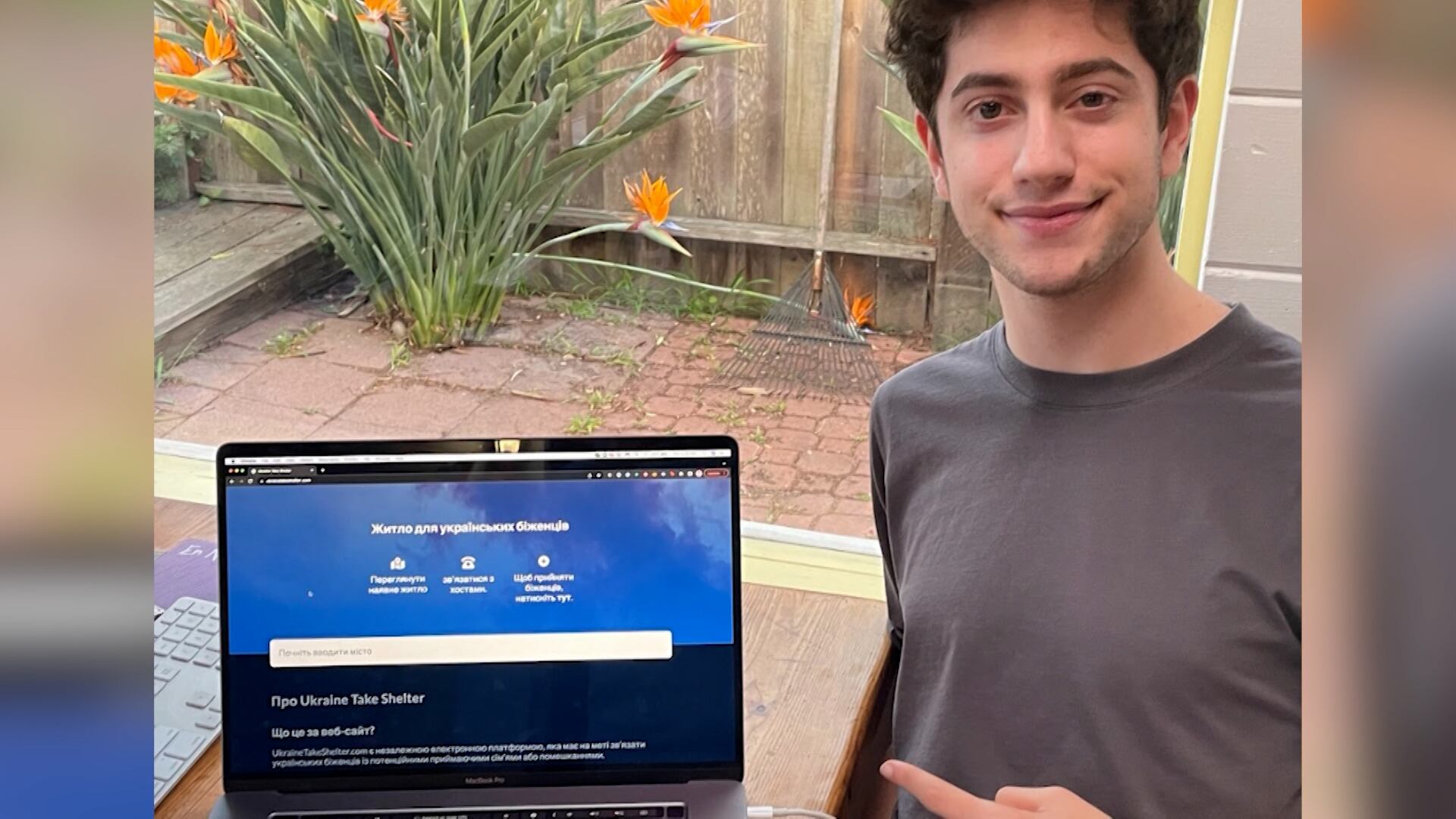
With the number of Ukrainians being displaced due to the Russian invasion surging, two students from Harvard took it on themselves to develop a website to help connect potential hosts with refugees seeking housing. The co-founder of the website Ukraine Takes Shelter, Marco Burstein, joined Cheddar news to discuss working together with fellow freshman Avi Schiffmann to streamline the effort to aid Ukrainian refugees. "We basically worked for three days straight developing the website, and since then the response has been pretty incredible," Burstein said.
Over three weeks ago, WNBA player Brittney Griner was arrested in Russia on drug charges. According to reports, the Star arrived at an airport near Moscow where authorities found Vape cartridges and hashish oil in her luggage. Grindr faces serious charges that could carry a possible sentence of 5-10 years in a Russian prison. Experts warn that Griner's arrest could be used as a bargaining chip. Partner at Stroock & Stroock & Lavan, Thomas Firestone, joined Cheddar to discuss more.