By Vladimir Isachenkov and Daria Litvinova
Updated 12:20 pm ET
Russia on Tuesday became the first country to approve a coronavirus vaccine, a move that was met with international skepticism and unease because the shots have only been studied in dozens of people.
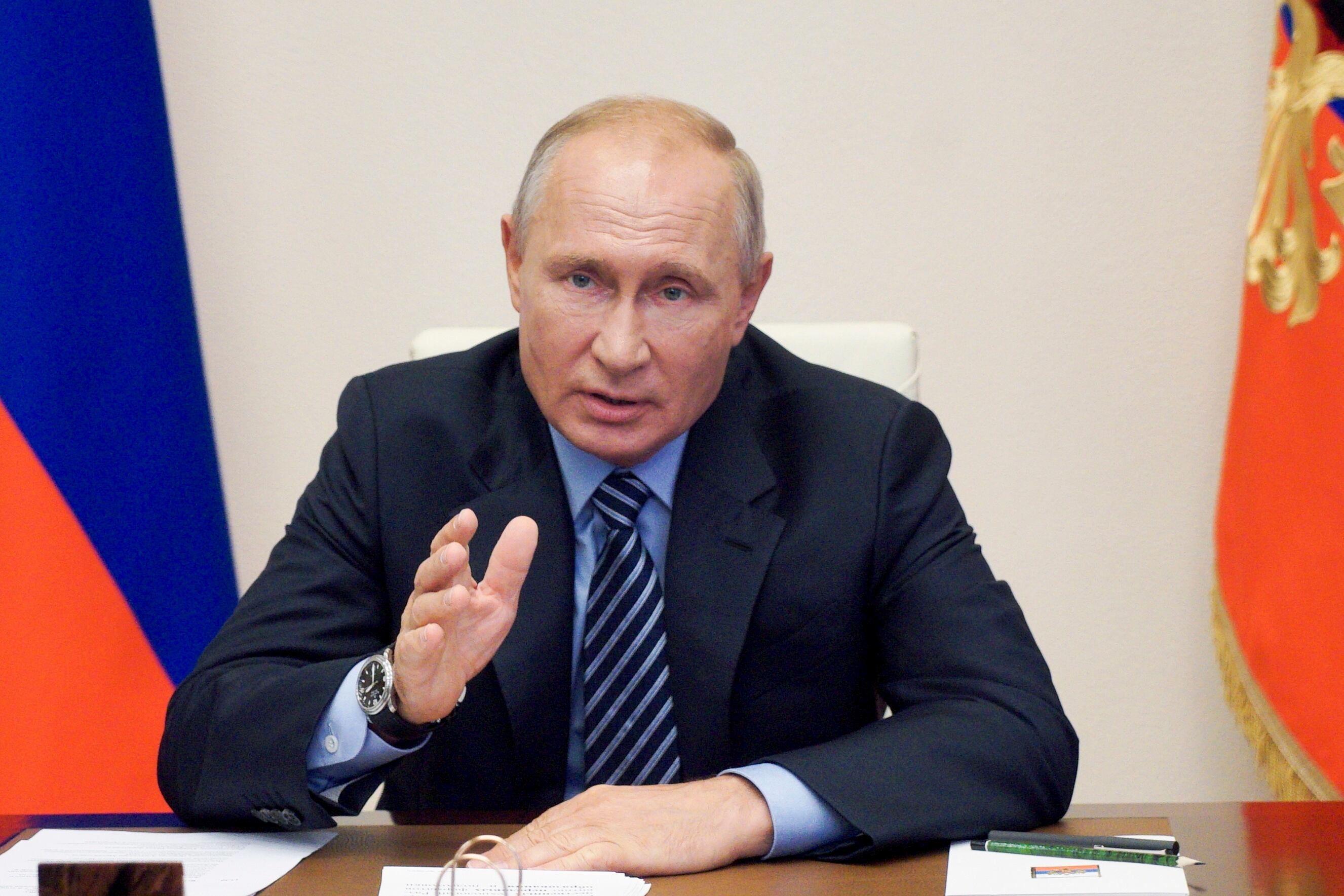
President Vladimir Putin announced the Health Ministry's approval and said one of his two adult daughters already was inoculated. He said the vaccine underwent the necessary tests and was shown to provide lasting immunity to the coronavirus, although Russian authorities have offered no proof to back up claims of safety or effectiveness.
"I know it has proven efficient and forms a stable immunity," Putin said. "We must be grateful to those who made that first step very important for our country and the entire world."
However, scientists in Russia and other countries sounded an alarm, saying that rushing to offer the vaccine before final-stage testing could backfire. What's called a Phase 3 trial — which involves tens of thousands of people and can take months — is the only way to prove if an experimental vaccine is safe and really works.
By comparison, vaccines entering final-stage testing in the U.S. require studies of 30,000 people each. Two vaccine candidates already have begun those huge studies, with three more set to get underway by fall.
"Fast-tracked approval will not make Russia the leader in the race, it will just expose consumers of the vaccine to unnecessary danger," said Russia's Association of Clinical Trials Organizations, in urging government officials to postpone approving the vaccine without completed advanced trials.
While Russian officials have said large-scale production of the vaccine wasn't scheduled until September, Deputy Prime Minister Tatyana Golikova said vaccination of doctors could start as early as this month. Officials say they will be closely monitored after the injections. Mass vaccination may begin as early as October.
"We expect tens of thousands of volunteers to be vaccinated within the next months," Kirill Dmitriev, chief executive of the Russian Direct Investment Fund that bankrolled the vaccine, told reporters.
The vaccine developed by the Gamaleya Institute in Moscow with assistance from Russia's Defense Ministry uses a different virus — the common cold-causing adenovirus — that's been modified to carry genes for the "spike" protein that coats the coronavirus, as a way to prime the body to recognize if a real COVID-19 infection comes along.
That's a similar technology as vaccines being developed by China's CanSino Biologics and Britain's Oxford University and AstraZeneca — but unlike those companies, Russian scientists haven't published any scientific information about how the vaccine has performed in animal tests or in early-stage human studies.
Dmitriev said even as Russian doctors and teachers start getting vaccinated, advanced trials are set to start Wednesday that will involve "several thousand people" and span several countries, including the United Arab Emirates, Saudi Arabia, the Philippines, and possibly Brazil.
The Associated Press couldn't find documentation in the Russian Health Ministry's records indicating that permission to start the advanced trials was granted. The ministry has not responded to a request for comment.
Putin said one of his daughters has received two doses, and had minor side effects such as slight fever, and is now "feeling well and has a high number of antibodies." It wasn't clear if she was one of the study volunteers.
The Health Ministry said in a statement Tuesday that the vaccine is expected to provide immunity from the coronavirus for up to two years, citing its experience with vaccines made with similar technology.
However, scientists around the world have been cautioning that even if vaccine candidates are proven to work, it will take even more time to tell how long the protection will last.
"The collateral damage from release of any vaccine that was less than safe and effective would exacerbate our current problems insurmountably," Imperial College London immunology professor Danny Altmann said in a statement Tuesday.
The World Health Organization said all vaccine candidates should go through full stages of testing before being rolled out. Experts have warned that vaccines that are not properly tested can cause harm in many ways — from harming health to creating a false sense of security or undermining trust in vaccinations.
Becoming the first country in the world to approve a vaccine was a matter of national prestige for the Kremlin as it tries to assert the image of Russia as a global power. Putin repeatedly praised Russia's effective response to the outbreak in televised addresses to the nation, while some of Moscow's top officials – including the country's prime minister and Putin's own spokesperson – became infected.
And the U.S., Britain, and Canada last month accused Russia of using hackers to steal vaccine research from Western labs. Russia has denied involvement.
Russia has so far registered 897,599 coronavirus cases, including 15,131 deaths.
The Gamaleya Institute's director, Alexander Gintsburg, raised eyebrows in May when he said that he and other researchers tried the vaccine on themselves before the start of human studies.
Those trials started on June 17 with 76 volunteers. Half were injected with a vaccine in liquid form and the other half with a vaccine that came as soluble powder. Some in the first group were recruited from the military, which raised concerns that servicemen may have been pressured to participate. The test was declared completed earlier this month.
"It's a too early stage to truly assess whether it's going to be effective, whether it's going to work or not," Dr. Michael Head, senior research fellow in global health at the University of Southampton.
It's not Russia's first controversial vaccine. Putin has bragged that Russian scientists delivered an Ebola vaccine that "proved to be the most effective in the world" and "made a real contribution to fighting the Ebola fever in Africa." However, there is little evidence either of the two Ebola vaccines approved in Russia was widely used in Africa. As of 2019, both of those vaccines were listed by the WHO as "candidate vaccines."
___
AP medical writers Maria Cheng in London and Lauran Neergaard in Alexandria, Virginia, contributed to this report.