A Russian space official on Friday blamed a software problem on a newly docked science lab that briefly knocked the International Space Station out of position.
The space station lost control of its orientation for 47 minutes on Thursday, when Russia's Nauka science lab accidentally fired its thrusters a few hours after docking, pushing the orbiting complex from its normal configuration. The station’s position is key for getting power from solar panels and or communications. Communications with ground controllers also blipped out twice for a few minutes.
Vladimir Solovyov, flight director of the space station's Russian segment, blamed the incident on a “short-term software failure.” In a statement released by the Russian space agency Roscosmos on Friday, Solovyov said that because of the failure, a direct command to turn on the lab's engines was mistakenly implemented.
He added that the incident was “quickly countered by the propulsion system” of another Russian component at the station and “at the moment, the station is in its normal orientation” and all its systems “are operating normally.”
NASA said Thursday that the incident moved 45 degrees out of attitude, about one-eighth of a complete circle, but the complex was never spinning, there was no immediate damage or danger to the crew.
The incident caused NASA to postpone a repeat test flight for Boeing’s crew capsule that had been set for Friday afternoon from Florida. It will be Boeing’s second attempt to reach the 250-mile-high (400-kilomter-high) station before putting astronauts on board. Software problems botched the first test.
Russia’s long-delayed 22-ton (20-metric-ton) lab called Nauka arrived earlier Thursday, eight days after it launched from the Russian launch facility in Baikonur, Kazakhstan.
The launch of Nauka, which will provide more room for scientific experiments and space for the crew, had been repeatedly delayed because of technical problems. It was initially scheduled to go up in 2007.
In 2013, experts found contamination in its fuel system, resulting in a long and costly replacement. Other Nauka systems also underwent modernization or repairs.
Stretching 43 feet (13 meters) long, Nauka became the first new compartment for the Russian segment of the outpost since 2010. On Monday, one of the older Russian units, the Pirs spacewalking compartment, undocked from the station to free up room for the new lab.
Nauka will require many maneuvers, including up to 11 spacewalks beginning in early September, to prepare it for operation.
According to Solovyov, on Friday the crew was busy equalizing the pressure in Nauka and planned to open the hatch to the lab later in the day.
The space station is currently operated by NASA astronauts Mark Vande Hei, Shane Kimbrough and Megan McArthur; Oleg Novitsky and Pyotr Dubrov of Russia’s Roscosmos space corporation; Japan Aerospace Exploration Agency astronaut Akihiko Hoshide and European Space Agency astronaut Thomas Pesquet.
In 1998, Russia launched the station’s first compartment, Zarya, which was followed in 2000 by another big piece, Zvezda, and three smaller modules in the following years. The last of them, Rassvet, arrived at the station in 2010.
___
Seth Borenstein in Kensington, Maryland, and Vladimir Isachenkov in Moscow, contributed to this report.
On this episode of Cheddar Innovates: Yat Labs Co-Founder breaks down how a 'Yat' is changing the way people think about their online identities; Scythe Robotics CEO explains how it's bringing innovation to the landscaping industry with its autonomous, all-electric mowers; Founder of California Cowboy discusses how its creating clothing designed for creating in-person connections with others with features like a beverage pocket, bottle opener, and conversation cards; Cheddar gets a look at Curiosity Stream's 'Beyond the Spotlight' biography series.
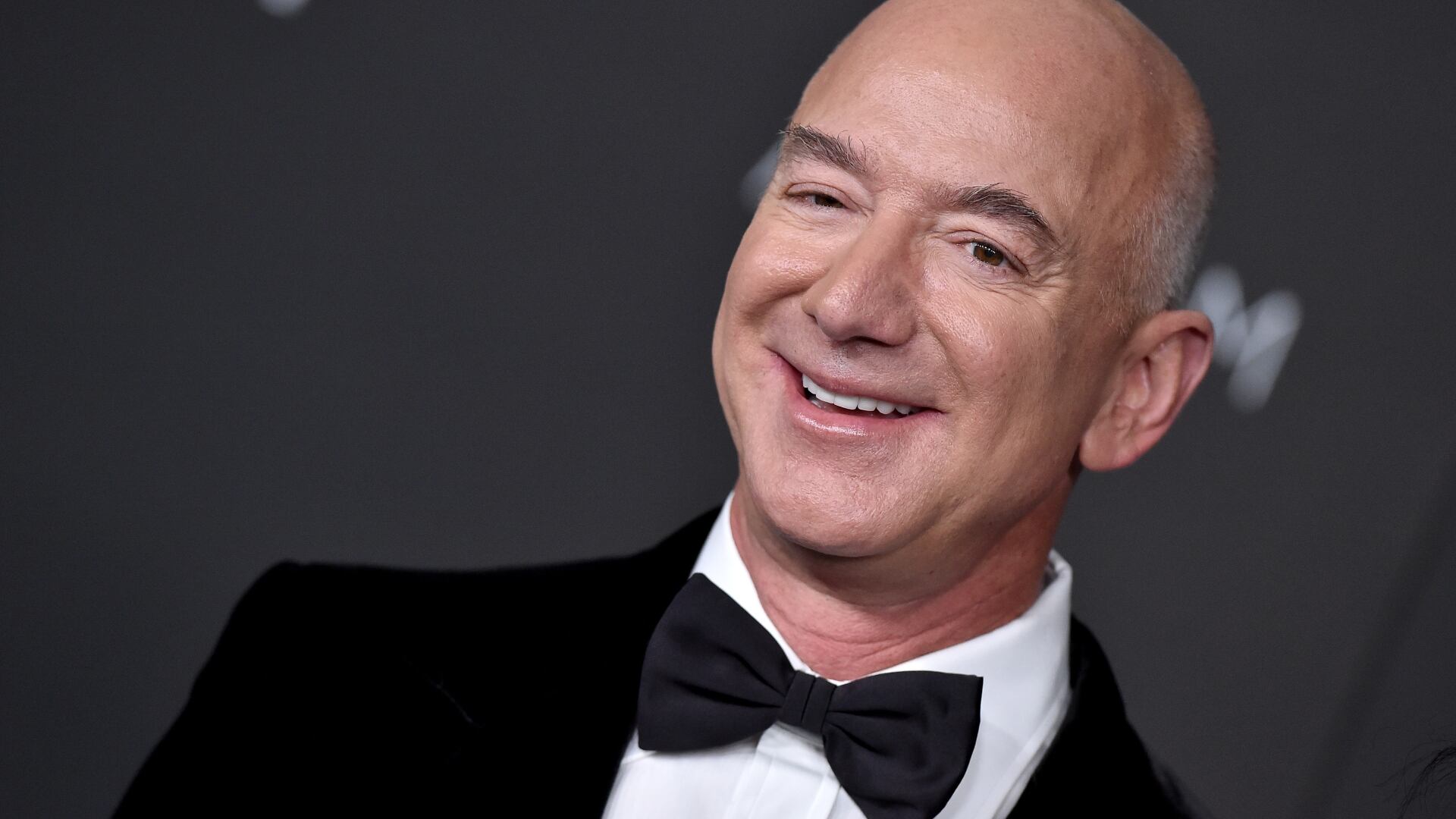
Amazon founder Jeffrey Bezos took to the stage at the U.N.'s COP26 Climate Summit to unveil a new plan to combat climate change, but some say it might do more harm than good. Justine Calma, Science Reporter at The Verge, joined Cheddar to discuss.
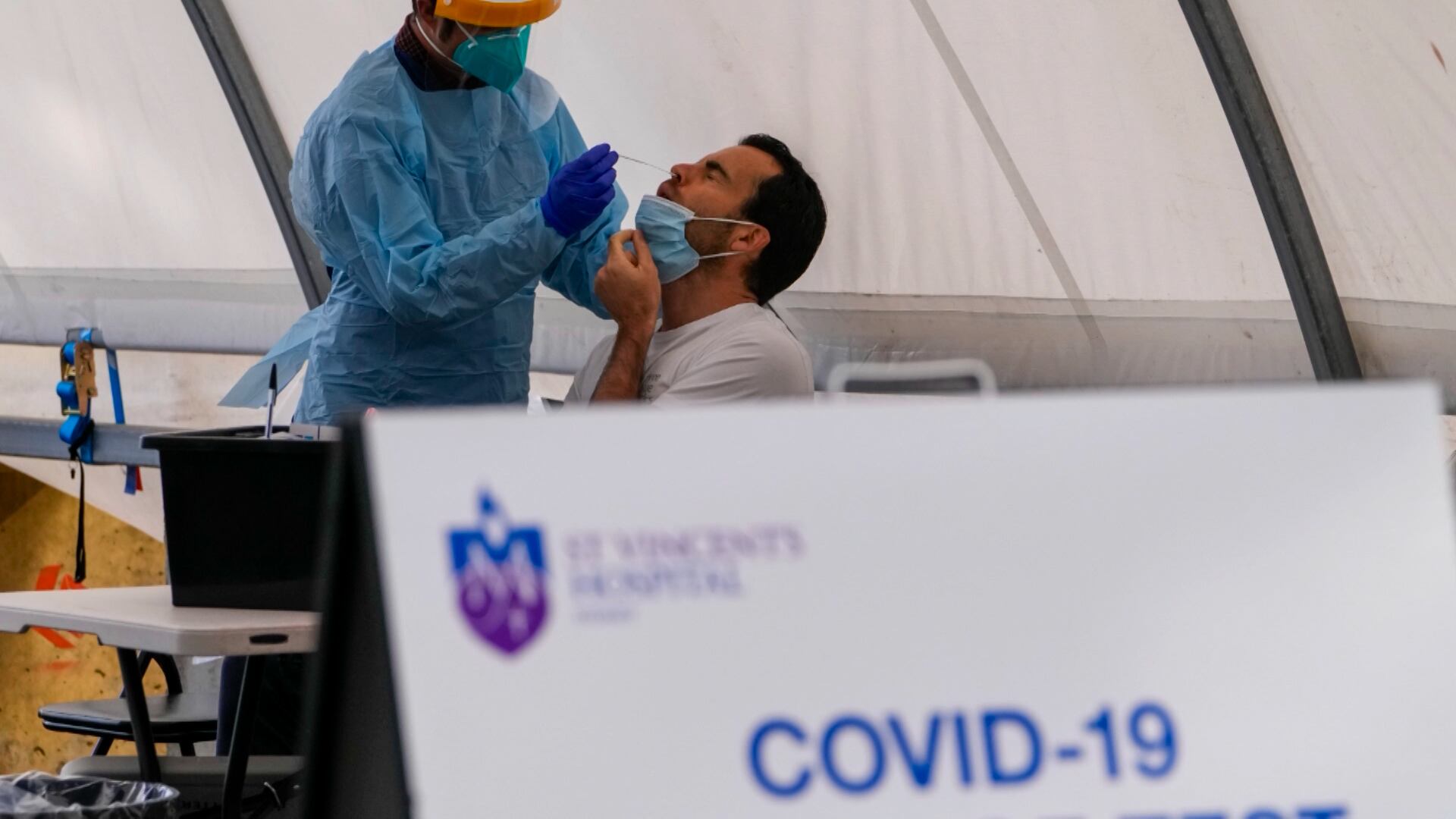
Pfizer has asked the FDA to expand authorization of COVID booster shots for all adults. The agency is expected to grant the request in the coming weeks, allowing vaccinated Americans as young as 18 to get boosted before the holidays. Dr. Bayo Curry-Winchell, Regional Clinical Director at Carbon Health, joined Cheddar to discuss.
Wood modification technology company Kebony recently raised $34 million in its latest funding round. The company's patented technology transformed sustainable softwood using leftover materials and makes it into a product that behaves like premium hardwood. The process has the potential to transform the global construction industry, as it is cost-effective and eco-friendly. Kebony CEO Norman Willemsen joined Cheddar News' Closing Bell to discuss.
Emma Searson, an author on the just-released Renewables on the Rise report and the director, 100% Renewable Campaign at Environment America, joined Cheddar to discuss the rapidly growing renewable energy sector. Between 2011 and 2020, the report shows that wind, solar, and geothermal energy production grew about 15 percent annually and that wind and solar alone account for 11 percent of electricity in the country. "There are a few really important drivers of the renewable energy progress that we're seeing all across the country," Searson said, highlighting falling prices, technology improvements, and supportive policies.
On this episode of 'Cheddar Reveals', Lydia McMullen-Laird and Samuel McMullen, co-founders of Live Zero Waste, discuss the sum of humanity's 'trash addiction' and lifestyle changes people can make to help reduce their individual trash output; Ryan Lupberger, Sustainability Pioneer and CEO of Cleancult, breaks down how Cleancult is redefining cleaning products and solutions to reduce their impact on the planet; Cheddar gets a look at Curiosity Stream's 'Going Circular.'
The U.S. has reopened its borders for fully vaccinated international visitors, ending a ban on foreign travelers that started more than a year ago. It's a welcome change for families separated by the pandemic and a sign of hope for the battered travel industry. Steve Shur, president of the The Travel Technology Association, discusses the new rules and how they could propel the travel industry into a post-pandemic boom.