A Russian space official on Friday blamed a software problem on a newly docked science lab that briefly knocked the International Space Station out of position.
The space station lost control of its orientation for 47 minutes on Thursday, when Russia's Nauka science lab accidentally fired its thrusters a few hours after docking, pushing the orbiting complex from its normal configuration. The station’s position is key for getting power from solar panels and or communications. Communications with ground controllers also blipped out twice for a few minutes.
Vladimir Solovyov, flight director of the space station's Russian segment, blamed the incident on a “short-term software failure.” In a statement released by the Russian space agency Roscosmos on Friday, Solovyov said that because of the failure, a direct command to turn on the lab's engines was mistakenly implemented.
He added that the incident was “quickly countered by the propulsion system” of another Russian component at the station and “at the moment, the station is in its normal orientation” and all its systems “are operating normally.”
NASA said Thursday that the incident moved 45 degrees out of attitude, about one-eighth of a complete circle, but the complex was never spinning, there was no immediate damage or danger to the crew.
The incident caused NASA to postpone a repeat test flight for Boeing’s crew capsule that had been set for Friday afternoon from Florida. It will be Boeing’s second attempt to reach the 250-mile-high (400-kilomter-high) station before putting astronauts on board. Software problems botched the first test.
Russia’s long-delayed 22-ton (20-metric-ton) lab called Nauka arrived earlier Thursday, eight days after it launched from the Russian launch facility in Baikonur, Kazakhstan.
The launch of Nauka, which will provide more room for scientific experiments and space for the crew, had been repeatedly delayed because of technical problems. It was initially scheduled to go up in 2007.
In 2013, experts found contamination in its fuel system, resulting in a long and costly replacement. Other Nauka systems also underwent modernization or repairs.
Stretching 43 feet (13 meters) long, Nauka became the first new compartment for the Russian segment of the outpost since 2010. On Monday, one of the older Russian units, the Pirs spacewalking compartment, undocked from the station to free up room for the new lab.
Nauka will require many maneuvers, including up to 11 spacewalks beginning in early September, to prepare it for operation.
According to Solovyov, on Friday the crew was busy equalizing the pressure in Nauka and planned to open the hatch to the lab later in the day.
The space station is currently operated by NASA astronauts Mark Vande Hei, Shane Kimbrough and Megan McArthur; Oleg Novitsky and Pyotr Dubrov of Russia’s Roscosmos space corporation; Japan Aerospace Exploration Agency astronaut Akihiko Hoshide and European Space Agency astronaut Thomas Pesquet.
In 1998, Russia launched the station’s first compartment, Zarya, which was followed in 2000 by another big piece, Zvezda, and three smaller modules in the following years. The last of them, Rassvet, arrived at the station in 2010.
___
Seth Borenstein in Kensington, Maryland, and Vladimir Isachenkov in Moscow, contributed to this report.
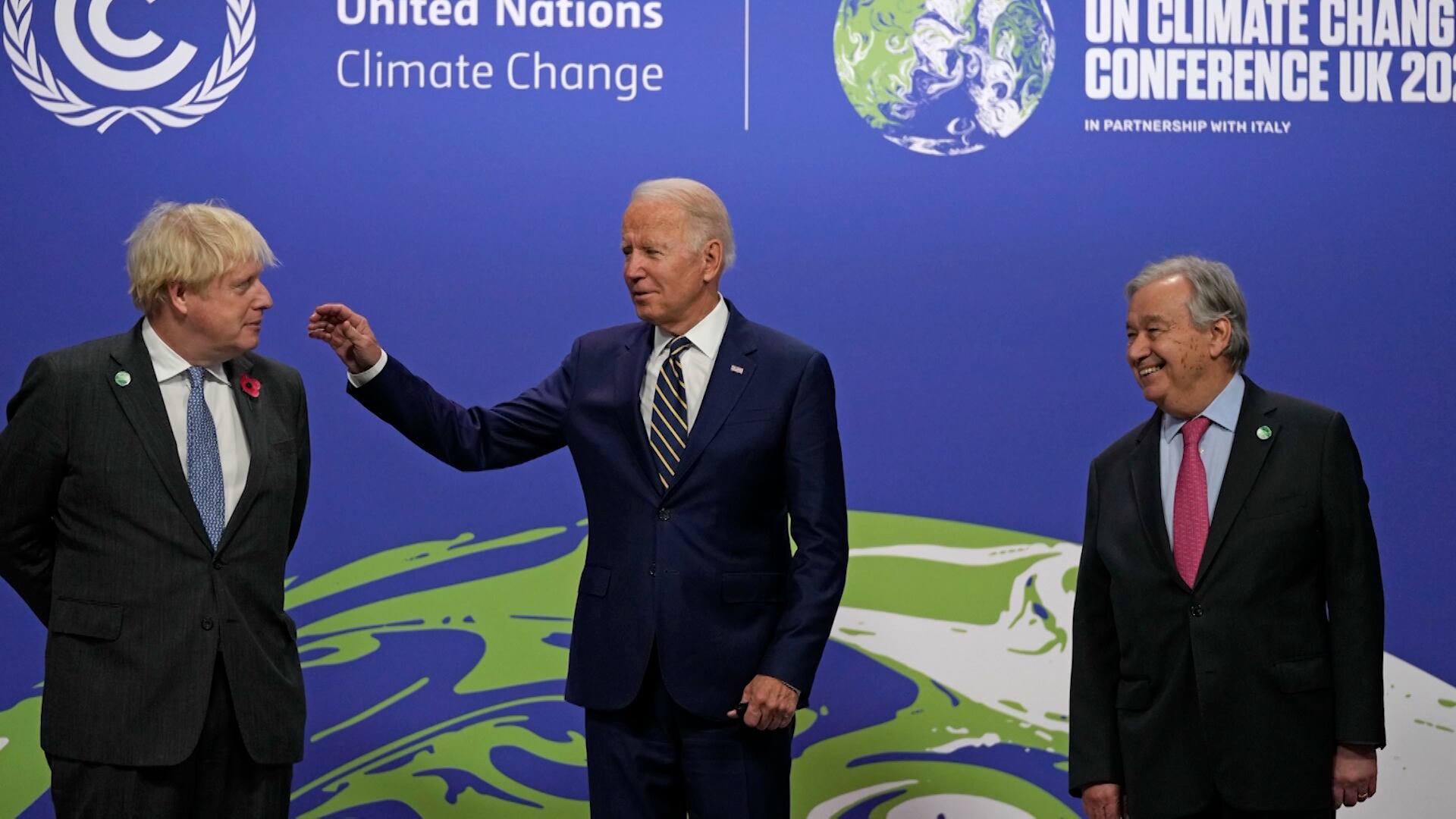
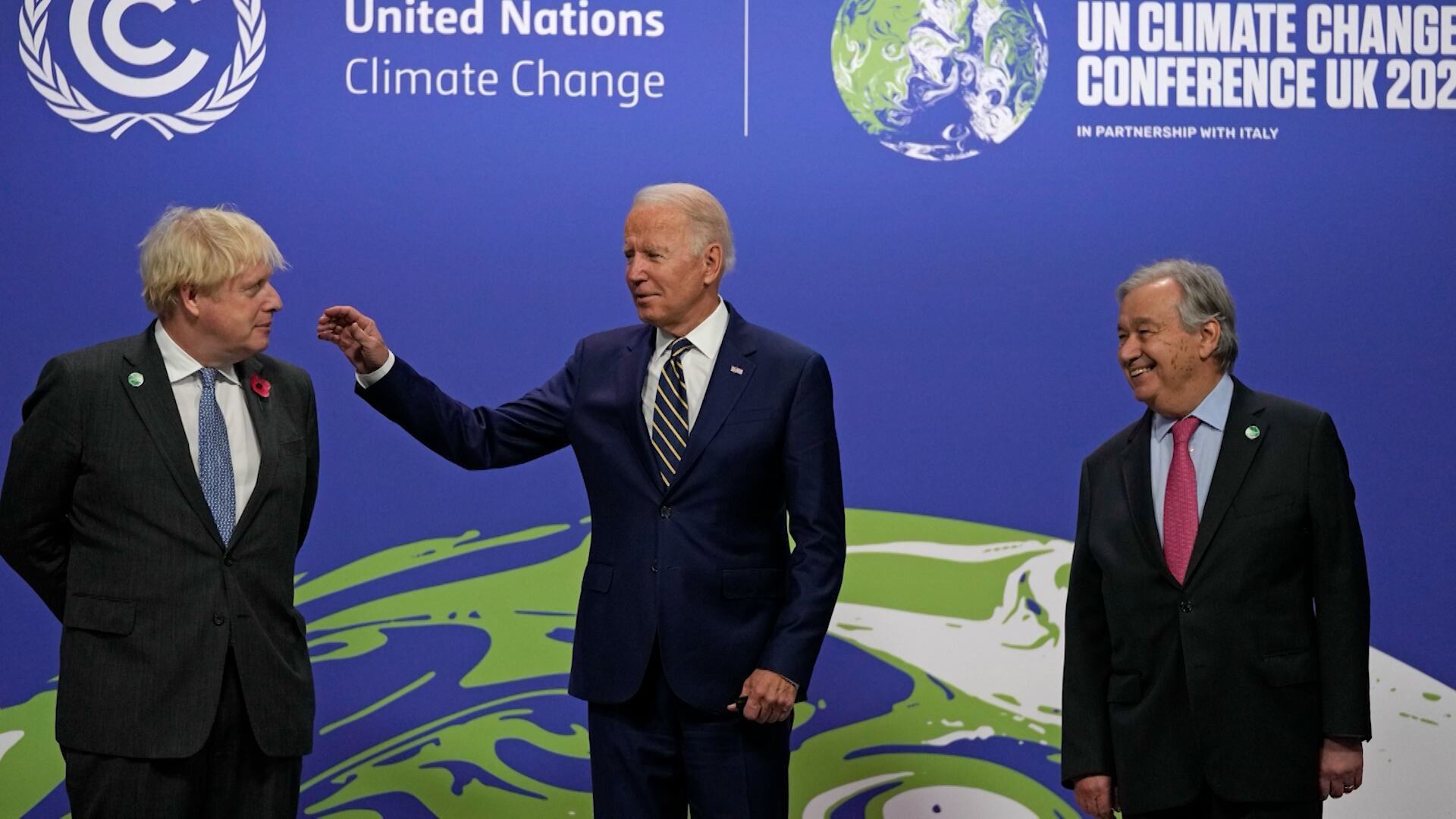
The two-week COP26 climate conference has now ended with leaders reaching a deal, but so far the deal is getting mixed reviews from climate experts across the globe. Chloe Demrovsky, president and CEO of Disaster Recovery Institute International, explains that while the agreement is a step forward in some ways, the world still has much more to work on in order to keep warming to below 2 degrees Celsius.
Jill and Carlo cover the latest with the infrastructure bill, the growing state rebellion over boosters, Trump's dereliction of duty on the pandemic, Taylor Swift's reign of cultural domination and more.
Aurora Cannabis CEO Miguel Martin joins Cheddar News' Closing Bell to discuss the company's latest earnings results, how it will achieve positive EBITDA by 2023, and the state of the cannabis industry amid potential U.S. federal legalization.
Moderna is defending its COVID-19 vaccine after a study found an increase in reports of myocarditis, which is an inflammation of the heart, in males ages 12 to 29 — about 13.3 cases in every 100,000 subjects. The pharmaceutical giant said the benefits of the vaccine outweigh the risk of the possible negative side effect.
The parent company of North Face, Vans and Supreme, VF Corp, released its fourth annual "Made for Change" sustainability and responsibility report. It details the company's ongoing efforts to tackle social and climate related issues. This comes as climate experts continue to warn about the dangers of fast fashion and its impact on global CO2 emissions. Sean Cady, Vice President of Global Sustainability, Responsibility and Trade at VF Corporation, joins Cheddar News to discuss.
A jam-packed Freitag pod with Carlo and Baker: new Covid hotspots, Kyle Rittenhouse trial, Belarus making trouble for Europe, red-hot housing market, and how to manage a PR crisis the right way.
As the UN climate conference is set to wrap this week, we take a look at pledges that world leaders have signed onto so far and the most important developments to come out of COP26. Sandeep Pai, Senior Research Lead at the Just Transition Initiative, joins Cheddar Climate to discuss the most important global initiatives and biggest pledges made by global leaders, and whether or not they can truly make an impact if two of the world's biggest economies, China and Russia, did not attend and are not fully committed to major climate initiatives.
A group of health experts from around the world is issuing a dire warning about the climate crisis, saying that climate change is the greatest global health threat facing the world this century and is set to become the 'defining narrative of human health.' The Lancet medical journal stated that warning in its annual report, along with a policy brief for the United States detailing actions the country can take to stop millions of unnecessary deaths. Director of Climate for Health at EcoAmerica Rebecca Rehr joined Cheddar Climate to discuss.
The COP26 summit in Scotland is in its final days, and the U.N. has just released a draft of an agreement for more than 200 world leaders to sign on Friday. The draft urges nations to set more aggressive goals in cutting emissions, while also calling for coal to be phased out. Chloe Demrovsky, President and CEO of Disaster Recovery Institute International, joins Cheddar News to discuss this agreement.
SpaceX and NASA have collaborated on another successful launch sending four astronauts to the international space station. The international crew will stay in orbit aboard the ISS for six months.