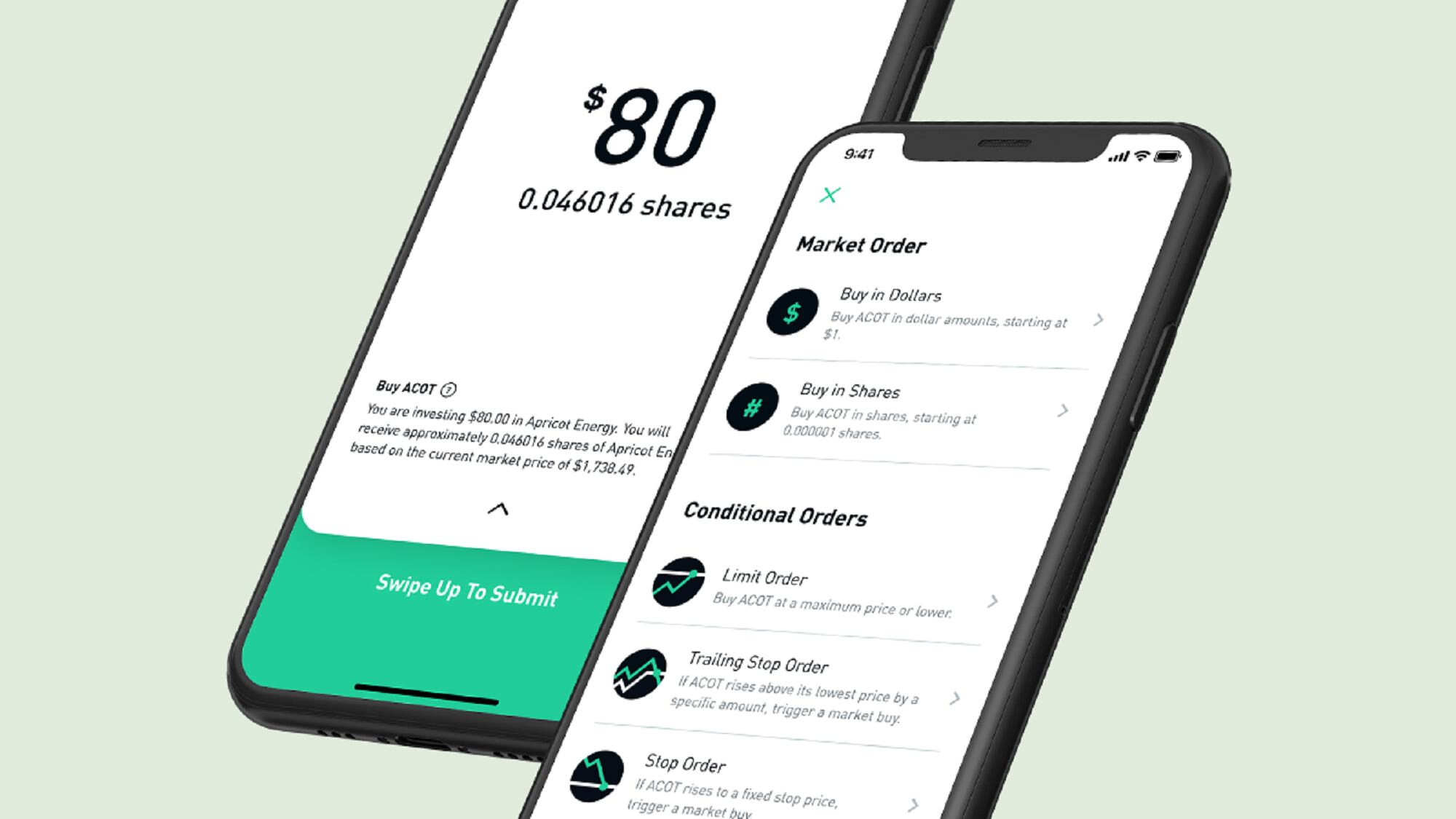
Robinhood, the popular single-stock trading app, now allows users to invest in fractions of stocks or funds.
The new feature, launched Thursday, is the next step for the fintech unicorn in becoming “the best place for first time and new investors,” Abhishek Fatehpuria, a product manager, told Cheddar. Robinhood, now six years old, was the pioneer of zero-commission online stock trading that ultimately led the major U.S. brokerages, including Charles Schwab and Fidelity, to ditch their own commission fees this October.
But despite the fact that most now operate a zero-commission model, cost is still a significant barrier to entry for the new inexperienced investors Robinhood initially sought to serve. Fractional investing gives users with limited funds an opportunity to participate in the stock market without having to invest more than they can afford. Some of the most popular stocks for Robinhood users, like Apple, Netflix and Tesla, cost hundreds of dollars today.
More than half of Robinhood’s 10 million users are first-time investors in the stock market, according to Fatehpuria. Their feedback drove the demand for fractional investing.
“With fractional shares and some of these other features, what really comes through is the amount of time that we've spent talking to our customers,” Fatehpuria said. “We spend a lot of time directly talking to customers one-on-one, and really building products that they understand and that resonate with them.”
Robinhood doesn’t distinguish between registered users, many of whom receive free stock in (usually) small-cap companies as a referral bonus, and active users.
Fatehpuria declined to share how much of its user base comprises the more experienced and sophisticated traders that Robinhood has tried to appeal to in recent years. In September 2016 in launched Robinhood Gold, its $5 a month premium product that includes bigger instant deposits, Morningstar research, Level 2 Nasdaq market data and access to margin trading.
In 2017 it released free trading of options, which allowed investors to bet on the price of an asset in the future. Options make up a big market on Wall Street but not so much among less-experienced investors.
While Robinhood has disrupted the discount brokers’ business model there remains a great opportunity to help users learn more about the brokerage world beyond the pricing; namely, the risks of investing and strategies to decrease those risks. An investigation by The Next Web shows the standard Robinhood user gravitates toward loss-making companies and isn’t very diversified.
Fatehpuria said the company is addressing this by investing in content. It recently rebuilt its newsfeed to help investors stay informed of the day’s market news and earlier this year it made its first acquisition when it bought the financial news podcast and newsletter MarketSnacks, which has been rebranded to Robinhood Snacks.
Users can now invest in fractional shares for as little as $1. Robinhood also introduced scheduled recurring investments and a feature that allows users to reinvest cash dividends back into stocks and ETFs.
With the launch, Robinhood joins Stash and Betterment, which have offered fractional investing for years now. SoFi and Square’s Cash App added fractional investing this year and MoneyLion plans to do the same in the fourth quarter.