Rick Steves: U.S. Should Learn From Europe's Marijuana Laws
Author and travel expert Rick Steves has long studied drug and marijuana policies around the world, and he told Cheddar that the United States should take a page from Europe’s rulebook.
“In our society, especially with the way our administration is approaching the drug problem, it’s just ‘moralize and lock them up’, and it’s just not productive,” he said Tuesday. “In Europe, the word for addicted is ‘enslaved.’ People aren’t criminals, they’re sick … they need help to get over this problem.”
This White House has taken a harsher stance on drugs than its predecessor, with Attorney General Jeff Sessions scrapping Obama-era rules stopping the federal government from interfering with states’ cannabis laws, and President Donald Trump even suggesting the death penalty for dealers.
Steves, who co-sponsored a bill legalizing weed in Washington state, champions a more empathetic approach. He’s studied European drug laws for 15 years and says that, on the continent where “a joint is about as exciting as a can of beer,” effective policies keep incarceration rates low.
“Learn about Europe’s challenges with marijuana and its opioid problem, bring it home, and our society can learn.”
While Steves says he isn’t necessarily “pro-marijuana”, he is a strong advocate of ending “stupid” bans on its use.
“I’m just interested in [ending] incarceration and racist drug laws,” he said.
Currently, adult recreational marijuana use is legal in nine states and Washington, D.C.
For the full interview, [click here](https://cheddar.com/videos/travel-as-a-political-act).
Ursula Perano, politics reporter at the Daily Beast, joins Cheddar Politics to discuss the wave of 30 House Democrats retiring or not seeking re-election in November.
Jimmy Hoover, Supreme Court editor-at-large for Law360, joins Cheddar Politics to discuss the high court's latest ruling in an Alabama gerrymandering case that could end up further chipping away at the Voting Rights Act.
GLAAD, the media watchdog for the LGBTQ community, released its “Where We Are on TV” report last week, with updated data on the entertainment industry. Rich Ferraro, chief communications officer for the non-profit organization, joined Cheddar News to talk about the progress that has been made on media representation and what's at stake in the process of humanizing queer people in popular culture as a recent backlash in legislative trends demonstrated. "We just saw the news yesterday in Texas, a move from Governor Abbott that would try to pull trans youth away from their parents for receiving gender-affirming care," Ferraro said. "And television and entertainment can be a frontline to preventing such anti-LGBTQ legislation from moving forward."
Russia's invasion of Ukraine has begun. Explosions and sirens were reported across the country early Thursday morning, as Russia launched a wide-ranging attack with shelling, tanks, and missile strikes. Lauren Baer, former State Department Senior Adviser and current Managing Partner at Arena, joined Cheddar to provide the latest update on the crisis.
A six-year battle over equal pay has finally come to an end-- as U.S. Soccer and The United States Women's Soccer Team have agreed to settle their lawsuit. Under the terms of the deal, the athletes will receive $24 million from U.S. Soccer, and a pledge from the federation to equalize pay for the men's and women's national teams. Lily Roberts, Managing Director of the Poverty to Prosperity Team at the Center for American Progress joined Cheddar's Opening Bell to discuss.
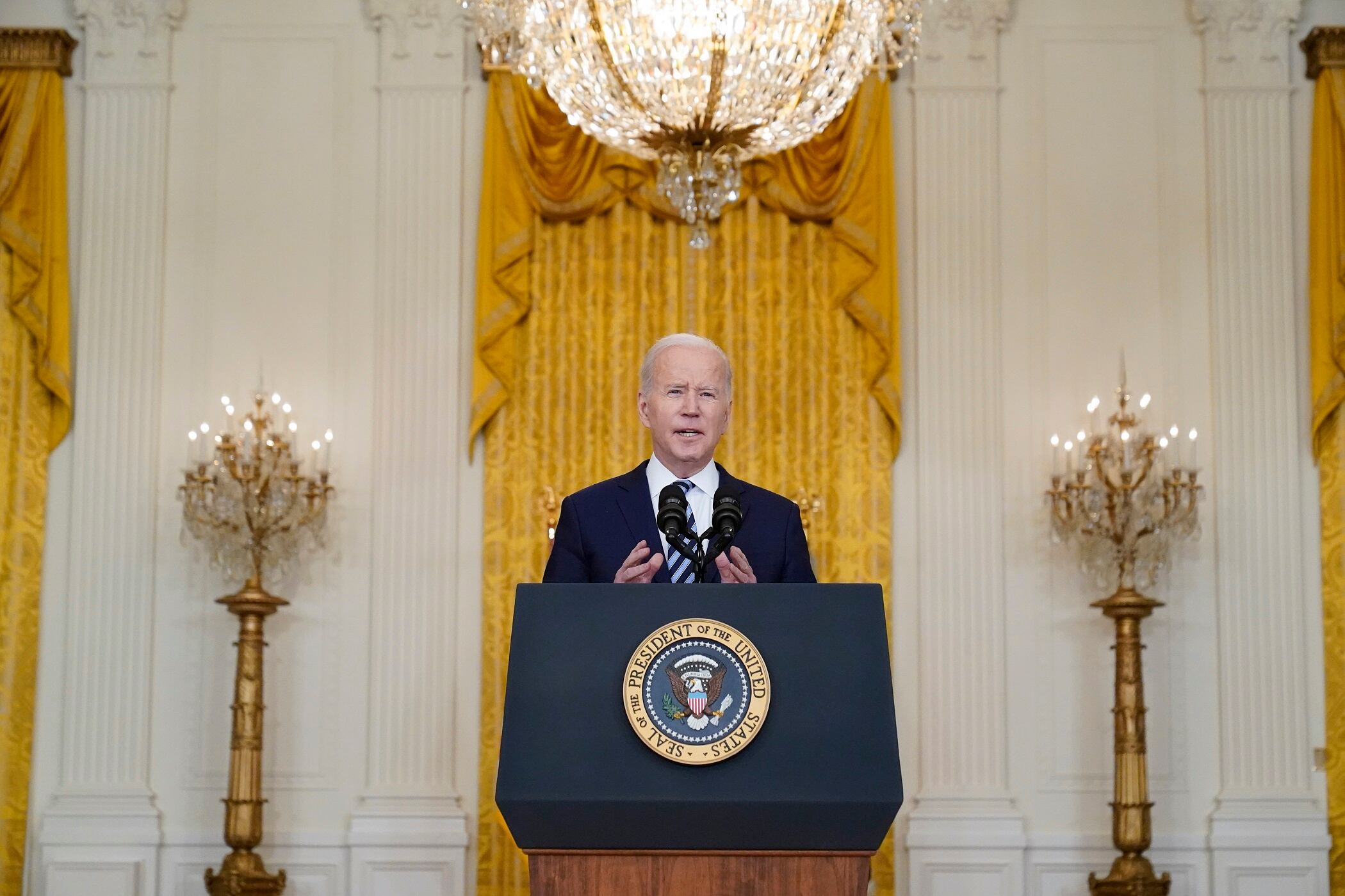
President Biden has hit back against Russia’s invasion of Ukraine, unleashing robust new sanctions, ordering the deployment of thousands of additional troops to NATO ally Germany, and declaring that America will stand up to Russia’s Vladimir Putin.
Grant Stark, Director of Research at CapWealth, joins Cheddar News' Closing Bell, where he says that his firm is closely monitoring oil prices amid the geopolitical conflict between Russia and Ukraine, and elaborates on how inflation will continue to be a problem across multiple sectors.
A private prison company plans to run a new pilot program that would place hundreds of migrants caught crossing the U.S.-Mexico border under house arrest. The "home curfew" pilot program is part of "impactful detention reforms," according to a spokesperson for the U.S. Department of Homeland Security. Jacinta Gonzalez, senior campaign organizer with Mijente, joins Cheddar News to discuss.