By Mark Sherman
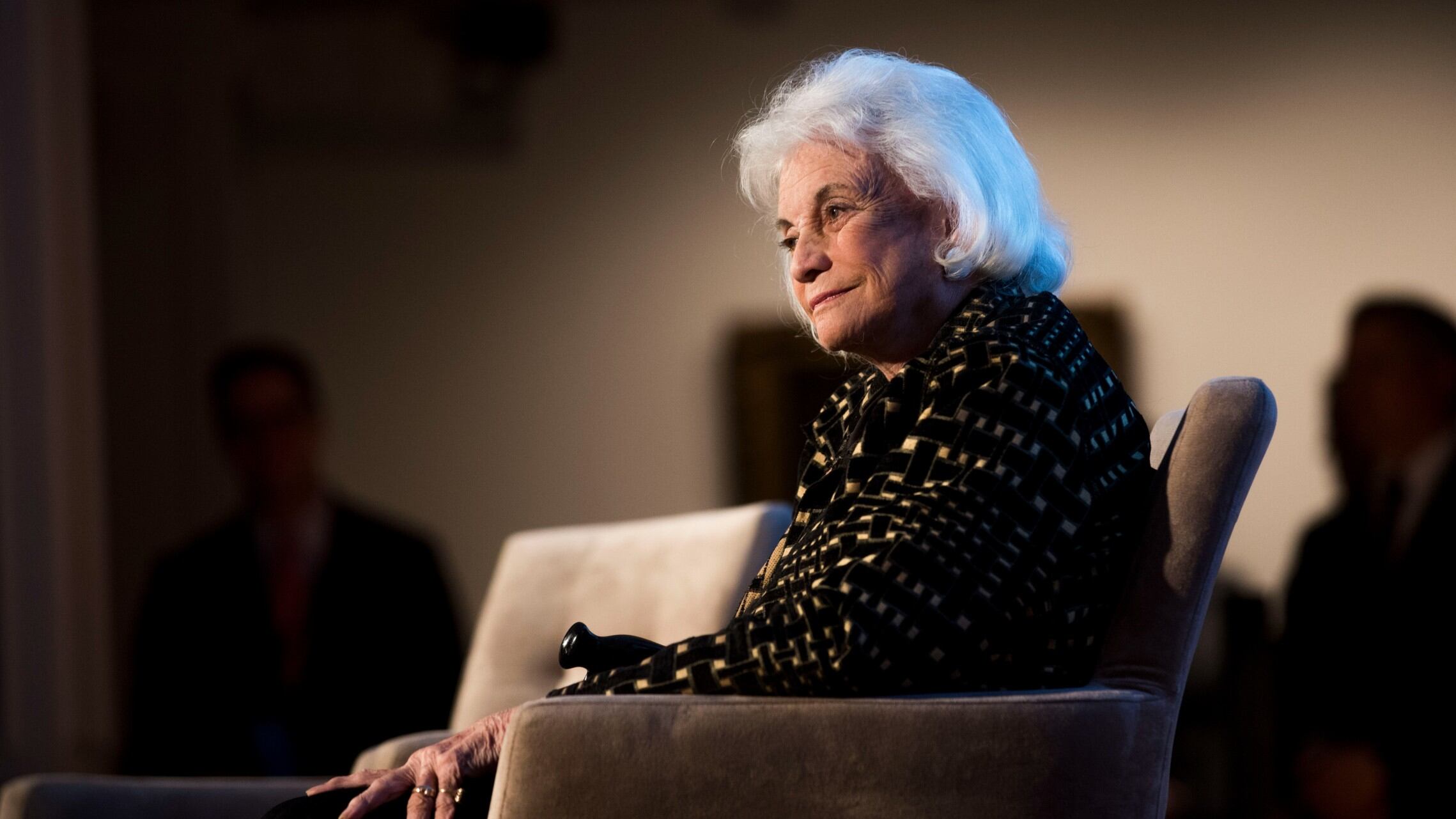
Former Supreme Court Justice Sandra Day O’Connor, an unwavering voice of moderate conservatism and the first woman to serve on the nation’s highest court, has died. She was 93.
The court says she died in Phoenix on Friday, of complications related to advanced dementia and a respiratory illness.
In 2018, she announced that she had been diagnosed with “the beginning stages of dementia, probably Alzheimer’s disease.” Her husband, John O’Connor, died of complications of Alzheimer’s in 2009.
O’Connor’s nomination in 1981 by President Ronald Reagan and subsequent confirmation by the Senate ended 191 years of male exclusivity on the high court. A native of Arizona who grew up on her family’s sprawling ranch, O’Connor wasted little time building a reputation as a hard worker who wielded considerable political clout on the nine-member court.
The granddaughter of a pioneer who traveled west from Vermont and founded the family ranch some three decades before Arizona became a state, O’Connor had a tenacious, independent spirit that came naturally. As a child growing up in the remote outback, she learned early to ride horses, round up cattle and drive trucks and tractors.
“I didn’t do all the things the boys did,” she said in a 1981 Time magazine interview, “but I fixed windmills and repaired fences.”
On the bench, her influence could best be seen, and her legal thinking most closely scrutinized, in the court’s rulings on abortion, perhaps the most contentious and divisive issue the justices faced. O’Connor balked at letting states outlaw most abortions, refusing in 1989 to join four other justices who were ready to reverse the landmark 1973 Roe v. Wade decision that said women have a constitutional right to abortion.
Then, in 1992, she helped forge and lead a five-justice majority that reaffirmed the core holding of the 1973 ruling. “Some of us as individuals find abortion offensive to our most basic principles of morality, but that can’t control our decision," O’Connor said in court, reading a summary of the decision in Planned Parenthood v. Casey. “Our obligation is to define the liberty of all, not to mandate our own moral code.”
Thirty years after that decision, a more conservative court did overturn Roe and Casey, and the opinion was written by the man who took her high court seat, Justice Samuel Alito. He joined the court upon O’Connor’s retirement in 2006, chosen by President George W. Bush.
In 2000, O’Connor was part of the 5-4 majority that effectively resolved the disputed 2000 presidential election in favor of Bush, over Democrat Al Gore.
O’Connor was regarded with great fondness by many of her colleagues. When she retired, Justice Clarence Thomas, a consistent conservative, called her “an outstanding colleague, civil in dissent and gracious when in the majority.”
She could, nonetheless, express her views tartly. In one of her final actions as a justice, a dissent to a 5-4 ruling to allow local governments to condemn and seize personal property to allow private developers to build shopping plazas, office buildings and other facilities, she warned the majority had unwisely ceded yet more power to the powerful. “The specter of condemnation hangs over all property,” O’Connor wrote. “Nothing is to prevent the state from replacing ... any home with a shopping mall, or any farm with a factory.”
O’Connor, whom commentators had once called the nation’s most powerful woman, remained the court’s only woman until 1993, when, much to O’Connor’s delight and relief, President Bill Clinton nominated Justice Ruth Bader Ginsburg. The current court includes a record four women.
Updated December 1, 2023 at 10:17 a.m. ET with full story.