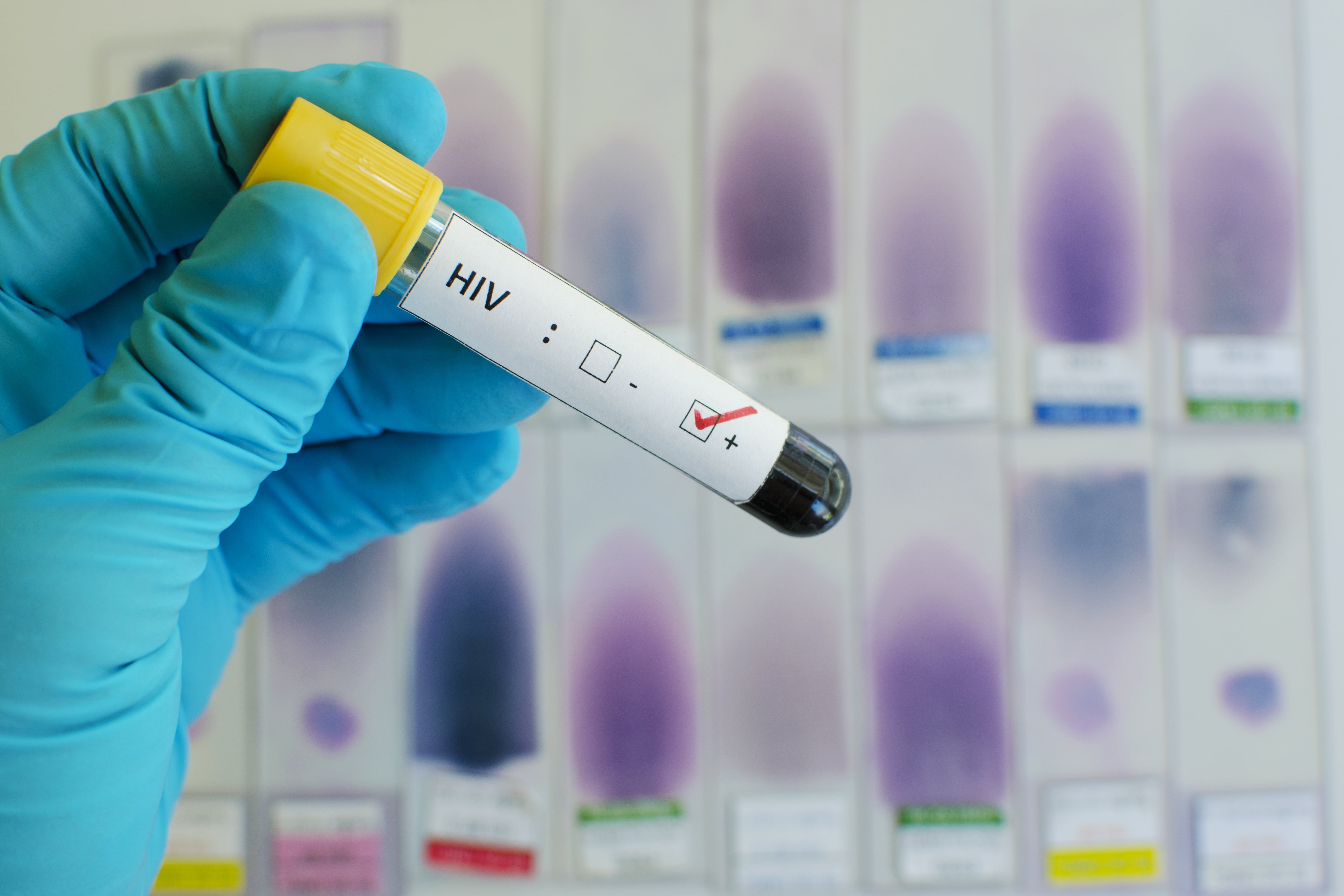
A groundbreaking new study reports that researchers were able to use gene therapy to eradicate HIV in mice. Now the team is considering how to turn that into a life-saving cure for humans.
"We actually have the tools now to go into the genome of a live animal — and inevitably into a person — and clip out, or excise out, the infectious HIV, in a means, or a pathway, towards a cure," said Howard Gendelman, a professor of internal medicine and infectious diseases at the University of Nebraska Medical Center, during an interview with Cheddar on Friday.
The treatment, which was discovered by teams at the University of Nebraska Medical Center and Temple University, works by "dampening down" the HIV virus through an antiretroviral therapy called LASER ART, and then using the gene-editing tool CRISPR-Cas9 — essentially a genetic "scissor" — to remove genes impacted by the virus.
The method led to a "total elimination" of the virus in nine of 23 animals, Gendelman said. It is the first time the virus has been completely eradicated from an animal, according to a UNMC press release.
But Gendelman cautions that applying the technique to humans requires both improving the technology for locating DNA impacted by the virus, and ensuring that the treatment doesn't damage other vital portions of the human genome.
"Every single HIV DNA that's integrated into the genome of a live host has to be excised. So we must develop even better technologies than we've developed in mice to discover where that latent virus is," explained Gendelman. "That's a major part of the research efforts ongoing now."
"We're manipulating the human genome. We're treating an HIV infection as if it was a genetic disorder. We're going into the genome and changing the structure, essentially using the HIV as a bad gene and cutting it out," he added. "So if we do that, we have to understand that there's a possibility that other genes can be affected."
More than 70 million people are reported to have been infected with HIV, according to the World Health Organization. The U.N. agency estimated that in 2017, more than 35 million people were living with the virus.
Over the past year alone, we've seen an increasing push-back on fossil fuels, legislation to reduce plastic pollution, greater protection over our worlds' forests, and a growing number of companies working to reduce total carbon footprint. To discuss the sustainability trends that defined 2021 and the changes individuals can make in 2022, J.D. Durkin is joined by Ashlee Piper, a sustainability expert and author of 'Give a Sh*t: Do Good. Live Better. Save the Planet,' joins Cheddar News.
Experts say that at some point next year, the pandemic will officially drop its pandemic status, becoming endemic. While this is a milestone to acknowledge, it does not mean we're free of infections, illnesses, and deaths. Dr. Rajeev Fernando, infectious disease specialist, Beth Israel Hospital and fellow, joins Cheddar News' Closing Bell to discuss.
Chicago-based Internist Dr. Vivek Cherian joined Wake Up With Cheddar to break down the unprecedented surge in U.S. COVID-19 as many prepare to celebrate the new year.
Dr. Soumi Eachempati, co-founder and CEO of Cleared4 and former professor of surgery and public health at Weill Cornell Medical College, joined Cheddar to breakdown what people should know about the recently FDA-approved emergency use of Merck and Pfizer's COVID-19 treatment pills. He noted that not only do people need to be aware of other medications they are taking that could cause adverse effects if coupled with COVID-19 pill treatments, he also talked about the intense in-take regiment. "The Merck pills are actually about 40 pills over five days. The Pfizer ones are three pills over five days, so people have to be prepared for that because it is a lot of pills you'll have to take to get full value from these drugs," Eachempati told Cheddar.
Twitter is exploding with a new meme after the CDC revised its Covid-19 guidelines, shortening the recommended isolation period to five days instead of 10 for when you test positive and are asymptomatic. The change came amid a skyrocketing surge of new cases is the U.S. due to the Omicron variant, drawing criticism from experts and Twitter --with users claiming the government agency is giving funny advise on a variety of issues. But what does the meme say about the public’s trust in the agency? Cheddar News speaks with political strategist Hastie Afkhami.
The list of questions should be getting shorter as we enter the pandemic's third year, but that isn't the case. There's another question to add to that list: is the U.S. doing enough to track the virus and its variants? Lawrence Gostin, faculty director of the O'Neill Institute for national and global health law at Georgetown University, joins Cheddar News.