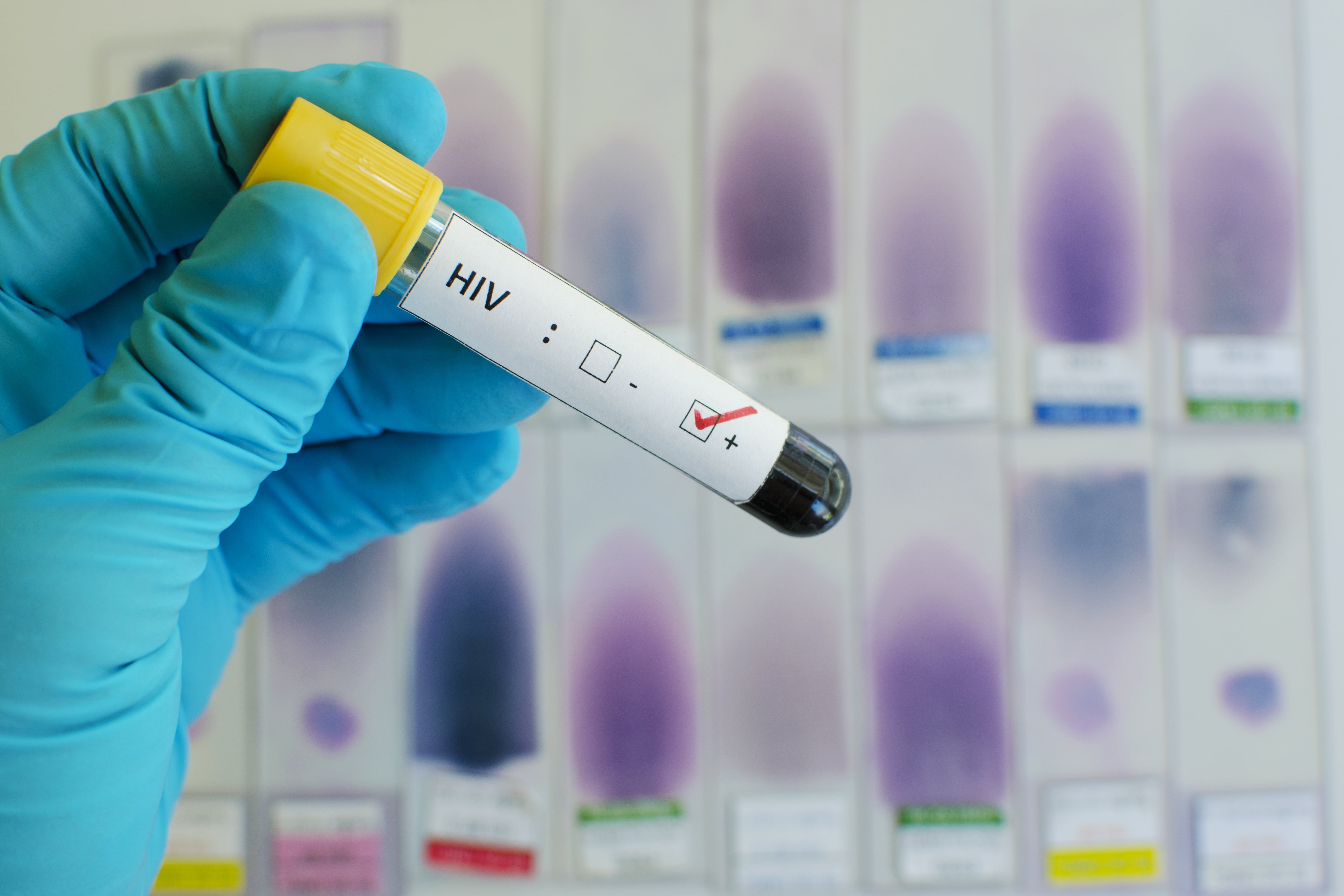
A groundbreaking new study reports that researchers were able to use gene therapy to eradicate HIV in mice. Now the team is considering how to turn that into a life-saving cure for humans.
"We actually have the tools now to go into the genome of a live animal — and inevitably into a person — and clip out, or excise out, the infectious HIV, in a means, or a pathway, towards a cure," said Howard Gendelman, a professor of internal medicine and infectious diseases at the University of Nebraska Medical Center, during an interview with Cheddar on Friday.
The treatment, which was discovered by teams at the University of Nebraska Medical Center and Temple University, works by "dampening down" the HIV virus through an antiretroviral therapy called LASER ART, and then using the gene-editing tool CRISPR-Cas9 — essentially a genetic "scissor" — to remove genes impacted by the virus.
The method led to a "total elimination" of the virus in nine of 23 animals, Gendelman said. It is the first time the virus has been completely eradicated from an animal, according to a UNMC press release.
But Gendelman cautions that applying the technique to humans requires both improving the technology for locating DNA impacted by the virus, and ensuring that the treatment doesn't damage other vital portions of the human genome.
"Every single HIV DNA that's integrated into the genome of a live host has to be excised. So we must develop even better technologies than we've developed in mice to discover where that latent virus is," explained Gendelman. "That's a major part of the research efforts ongoing now."
"We're manipulating the human genome. We're treating an HIV infection as if it was a genetic disorder. We're going into the genome and changing the structure, essentially using the HIV as a bad gene and cutting it out," he added. "So if we do that, we have to understand that there's a possibility that other genes can be affected."
More than 70 million people are reported to have been infected with HIV, according to the World Health Organization. The U.N. agency estimated that in 2017, more than 35 million people were living with the virus.
A powerful winter storm hit the Northeast over the weekend leaving 100,000 New Yorkers in the dark as well as snowfall up to 30.9 inches in parts of Massachusetts. The nor'easter hit with blizzard conditions of wind speed and poor visibility.
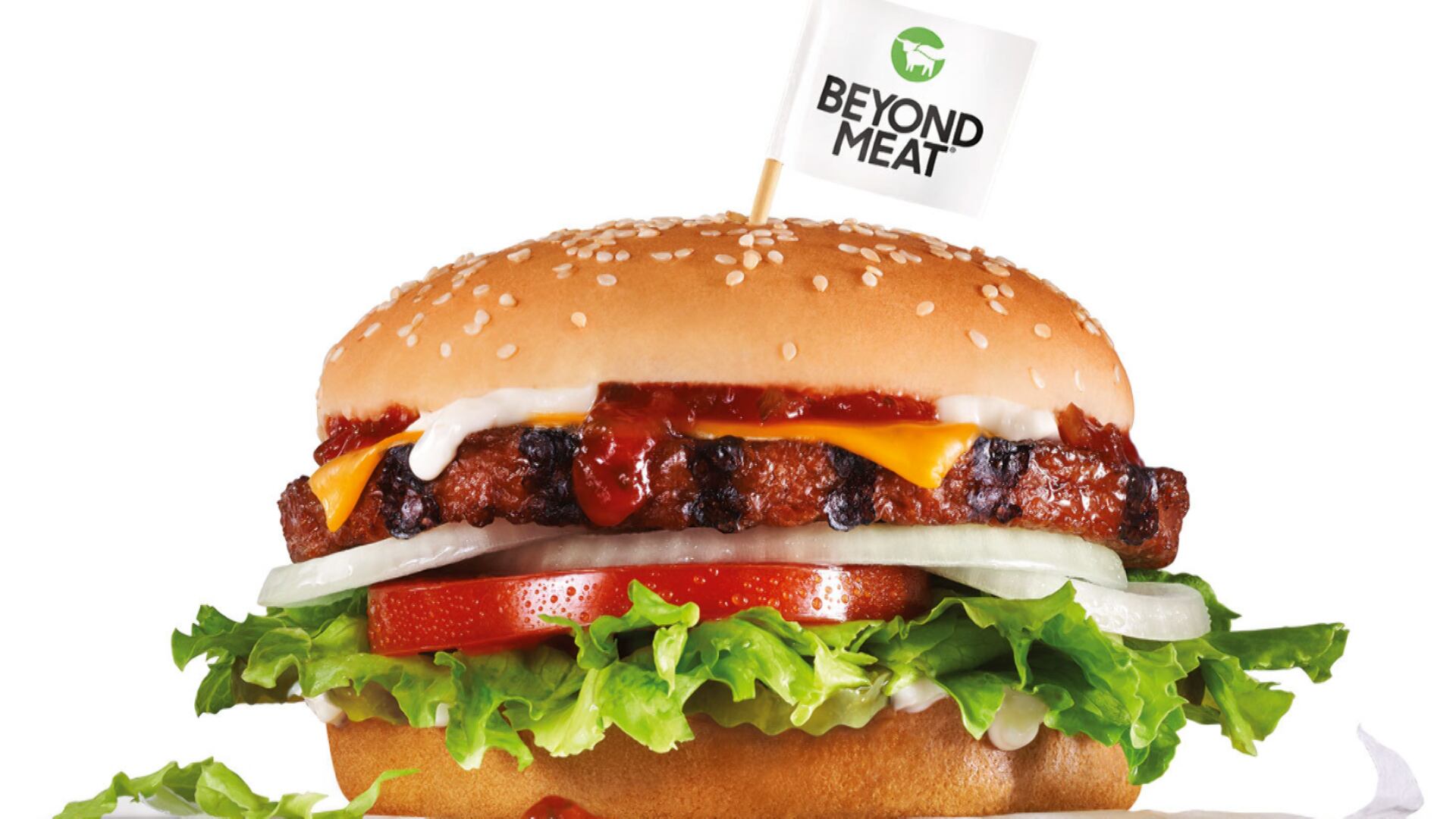
Plant-based meat giant Beyond Meat's reign over the fast food world continues, as McDonald's announced that it is expanding its test of Beyond's McPlant burger, to nearly 600 restaurants, an increase from the eight that it's been testing in since November. This comes less than two weeks after Beyond Fried Chicken made its nationwide debut at KFC restaurants, the first time that plant based chicken has been widely distributed in a fast food capacity. Arun Sundaram, Senior Equity Analyst at CFRA Research explains why these latest collaborations may be proof that Beyond Meat products could slowly be becoming an unlikely staple in the fast food and chain restaurant world as consumers opt for more healthy food options.
BD Veritor is a variation of the at-home COVID test that uses a smartphone to interpret the results. The test is taken via a nose swab test strip that is then scanned by your phone’s camera with the result clearly displayed as positive or negative. James Walker, vice president of integrated diagnostics USA for BD, joined Cheddar to discuss how the test hopefully takes the "guesswork out of testing." Walker also went into what BD is doing to deal with the surging demand for at-home tests amid the omicron spread. "While we don't disclose how much we produce, we have capacity to manufacture up to 12 million rapid antigen tests per month and are delivering on our commitments to distributors and retailers," he said.
On this episode of Cheddar Innovates: Sidechef CEO breaks down how it's building a platform to make recipe shopping easy; Luum CEO explains the process of having a robot put on eyelash extensions; A look at Curiosity Stream's new original series, 'Evolve.'
Moderna launched a clinical trial of a COVID-19 booster shot specifically targeting the omicron variant. The first participant has already received a dose, and Moderna expects to enroll about 600 adults total, split between two groups. In the first group, participants will have previously received two doses of the Moderna vaccine, and in the second, participants will have received its booster. Dr. Paul Burton, chief medical officer at Moderna, joined Cheddar’s Opening Bell to discuss the trial, yearly boosters, and what lies ahead for the company.
With the 2022 Beijing Winter Olympics right around the corner, experts are warning that climate change is threatening not only the event but also the future of snow sports. Despite being the world's top polluter, China is hoping to use the event to demonstrate the country's commitment to fighting climate change, and pledging to host a "low carbon" games. Xubin Zeng, professor of hydrology and atmospheric sciences at the University of Arizona, joins Cheddar News.
New research is suggesting that giving extra cash to low-income mothers can actually influence the brain development of their infants. These findings provide the first rigorous evidence of how payments and monetary support can affect children in the early years of life. Authors of the study, Nathan Fox, professor in the department of human development at the University of Maryland, and Sonya Troller-Renfree, postdoctoral research associate at Teachers College at Columbia University, join Cheddar News to discuss.