By Lisa Mascaro and Mary Clare Jalonick
The Senate has rejected a Republican attempt to dismiss Donald Trump's historic second impeachment trial, a vote that allows the case on “incitement of insurrection” to move forward but also foreshadows that there may not be enough votes to convict him.
The 55-45 procedural vote to set aside an objection from Kentucky Sen. Rand Paul puts the Senate on record as declaring the proceedings constitutional and means the trial on Trump's impeachment, the first ever of a former president, will begin as scheduled the week of Feb. 8. The House impeached him two weeks ago for inciting deadly riots in the Capitol on Jan. 6 when he told his supporters to “fight like hell” to overturn his election defeat.
At the same time, it shows it is unlikely there will be enough votes for conviction, which requires the support of all Democrats and 17 Republicans, or two-thirds of the Senate. While most Republicans criticized Trump shortly after the attack, many of them have rushed to defend him in the trial, showing the former president's enduring sway over the GOP.
“If more than 34 Republicans vote against the constitutionality of the proceeding, the whole thing’s dead on arrival,” Paul said shortly before the vote." Paul said Democrats “probably should rest their case and present no case at all.”
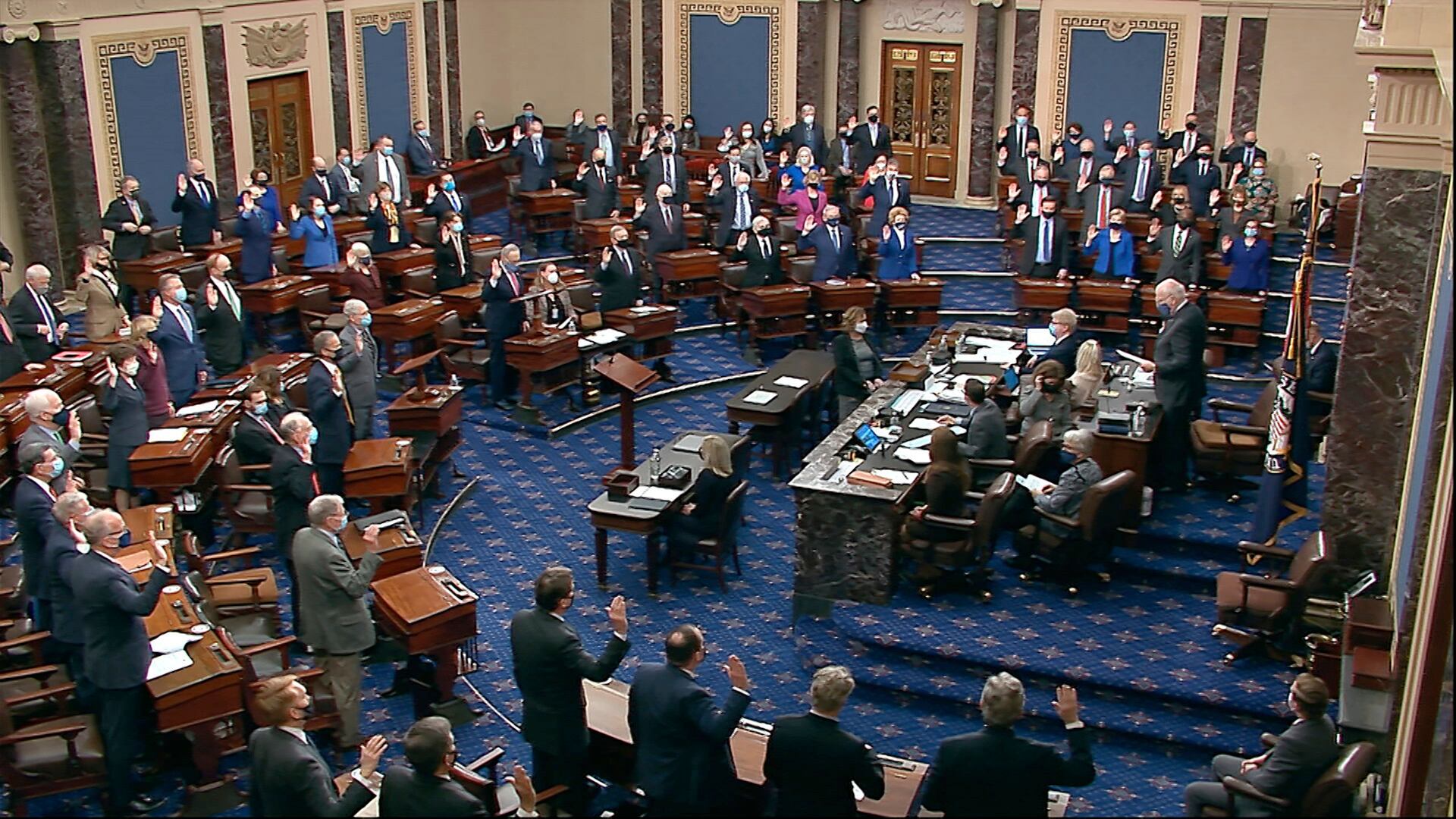
The senators took oaths Tuesday to ensure “impartial justice” as jurors in the trial, proceedings that will test Republican loyalty to the former president for the first time after the deadly siege at the U.S. Capitol.
Many Republican senators, including Paul, have challenged the legitimacy of the trial and questioned whether Trump's repeated demands to overturn Joe Biden’s election really constitute “incitement of insurrection."
So what seemed for some Democrats like an open-and-shut case that played out for the world on live television is running into a Republican Party that feels very different. Not only are there legal concerns, but senators are wary of crossing the former president and his legions of followers. Security remains tight at the Capitol.
On Monday, the nine House Democrats prosecuting the case against Trump carried the sole impeachment charge of “incitement of insurrection” across the Capitol in a solemn and ceremonial march along the same halls the rioters ransacked three weeks ago.
The lead House prosecutor, Rep. Jamie Raskin of Maryland, stood before the Senate to describe the violent events of Jan. 6 — five people died — and read the House resolution charging “high crimes and misdemeanors.”
Republicans came to Trump's legal defense.
Sen. John Cornyn, R-Texas, asked if Congress starts holding impeachment trials of former officials, what's next: “Could we go back and try President Obama?”
Besides, he suggested, Trump has already been held to account. “One way in our system you get punished is losing an election.”
For Democrats the tone, tenor and length of the trial so early in Biden's presidency poses its own challenge, forcing them to strike a balance between their vow to hold Trump accountable and their eagerness to deliver on the new administration's priorities following their sweep of control of the House, Senate and White House.
Chief Justice John Roberts is not presiding at the trial, as he did during Trump’s first impeachment, potentially affecting the gravitas of the proceedings. The shift is said to be in keeping with protocol because Trump is no longer in office.
Instead, Sen. Patrick Leahy, D- Vt., who serves in the largely ceremonial role of Senate president pro tempore, was sworn in on Tuesday.
Leaders in both parties agreed to a short delay in the proceedings, which serves their political and practical interests, even as National Guard troops remain at the Capitol because of security threats to lawmakers ahead of the trial.
The start date gives Trump’s new legal team time to prepare its case, while also providing more than a month's distance from the passions of the bloody riot. For the Democratic-led Senate, the intervening weeks provide prime time to confirm some of Biden’s key Cabinet nominees.
As Republicans said the trial is not legitimate, Democrats rejected that argument, pointing to an 1876 impeachment of a secretary of war who had already resigned and to opinions by many legal scholars.
Democrats also say that a reckoning of the first invasion of the Capitol since the War of 1812, perpetrated by rioters egged on by a president as Electoral College votes were being tallied, is necessary.
Senate Majority Leader Chuck Schumer said failing to conduct the trial would amount to a “get-out-jail-free card” for others accused of wrongdoing on their way out the door. He said there’s only one question “senators of both parties will have to answer before God and their own conscience: Is former President Trump guilty of inciting an insurrection against the United States?”
A few GOP senators have agreed with Democrats, though not close to the number that will be needed to convict Trump.
___
Associated Press writer Hope Yen contributed to this report.
Updated on January 26, 2021, at 4:00 p.m. ET.