Reporter’s Notebook From Florida: Farmers Suffer as News Cycle Turns
*By J.D. Durkin*
When I arrived in southern Florida two weeks ago to cover several days of campaign trail events, I had no way of guessing that a separate national storyline — about packages, postal codes, and pipe bombs — would unfold with the same aggressive timeline just miles away.
As news was breaking across the country about a flurry of pipe bombs directed at high-profile, Democratic targets, my colleague Sam Tadelman and I were meeting with specialty crop growers, off the grid on the edge of the Everglades. News of the suspicious packages felt a world away as I talked to farmers who had suffered under NAFTA because they couldn’t compete with Mexico. Sen. Marco Rubio and Rep. Carlos Curbelo, both local Republicans, were in attendance at a roundtable at S&L Beans, a three-generation farm in the town of Homestead. At its peak, the farm spanned 7,000 acres. Today, it’s only 2,000 acres.
The day of our visit was 85 degrees and sunny — sunburn territory for me. The story of the farmers in this community is an agonizing one; several who had inherited the farms from their fathers and grandfathers told me that they each encouraged their own sons to find other work. Sal Finocchiaro explained the heart-wrenching dilemma like this: “I told my son to go to college and get a different job. I love him, I want him here, but my advice was not to come here because there is no future ... We're gonna try as hard as possible to make it work, though.”
That son, Salvatore Finocchiaro, is currently working on the farm to continue the family legacy, against his father’s wishes.
This is a community in tremendous economic pain: The open markets and opportunities afforded to Mexico in the NAFTA era steadily put farmers like Sal Finocchiaro out of business in this region of pristine farmland between Miami and the Florida Keys. The Trump Administration, at least so far, has not helped matters much here either; the recently-negotiated NAFTA replacement, known as USMCA, did not include provisions for these farmers.
Kern Carpenter, a tomato farmer in Homestead, put it in bleak terms: “We got left out of the NAFTA renegotiation ... they totally left southern Florida out. Fruits and vegetable growers were ignored, thrown under the bus.”
In my remaining days in Florida, I remembered those conversations even as the quieter voices of Florida’s farmers were drowned out by news of a frantic search for a would-be pipe bomber with vendettas against prominent Democratic leaders and Trump critics.
As fate would have it, the coming day and a half would render South Florida of all places as ground zero for the investigation and the pipe bomb story dominated our time on the ground. By Friday afternoon, Sam and I found ourselves — somehow, impossibly — standing in the very AutoZone parking lot in the sleepy community of Plantation, Fla. where suspect Cesar Sayoc has been arrested just hours before, [interviewing the sole eyewitness to the dramatic takedown](https://cheddar.com/videos/bombing-suspect-charged-but-national-nerves-remain-frayed).
Stories like the would-be pipe bomber dominate the national psyche so intensely at such a moment in time that all other narratives just seem to blur. With the news cycle turning at such a frantic pace, I thought: What chance does the story of the farmers in Homestead have of breaking through? Meeting Sal Finocchiaro and his boy reminded me that their struggle also needs attention if we are going to help them and the next generation of Florida’s farmers to survive.
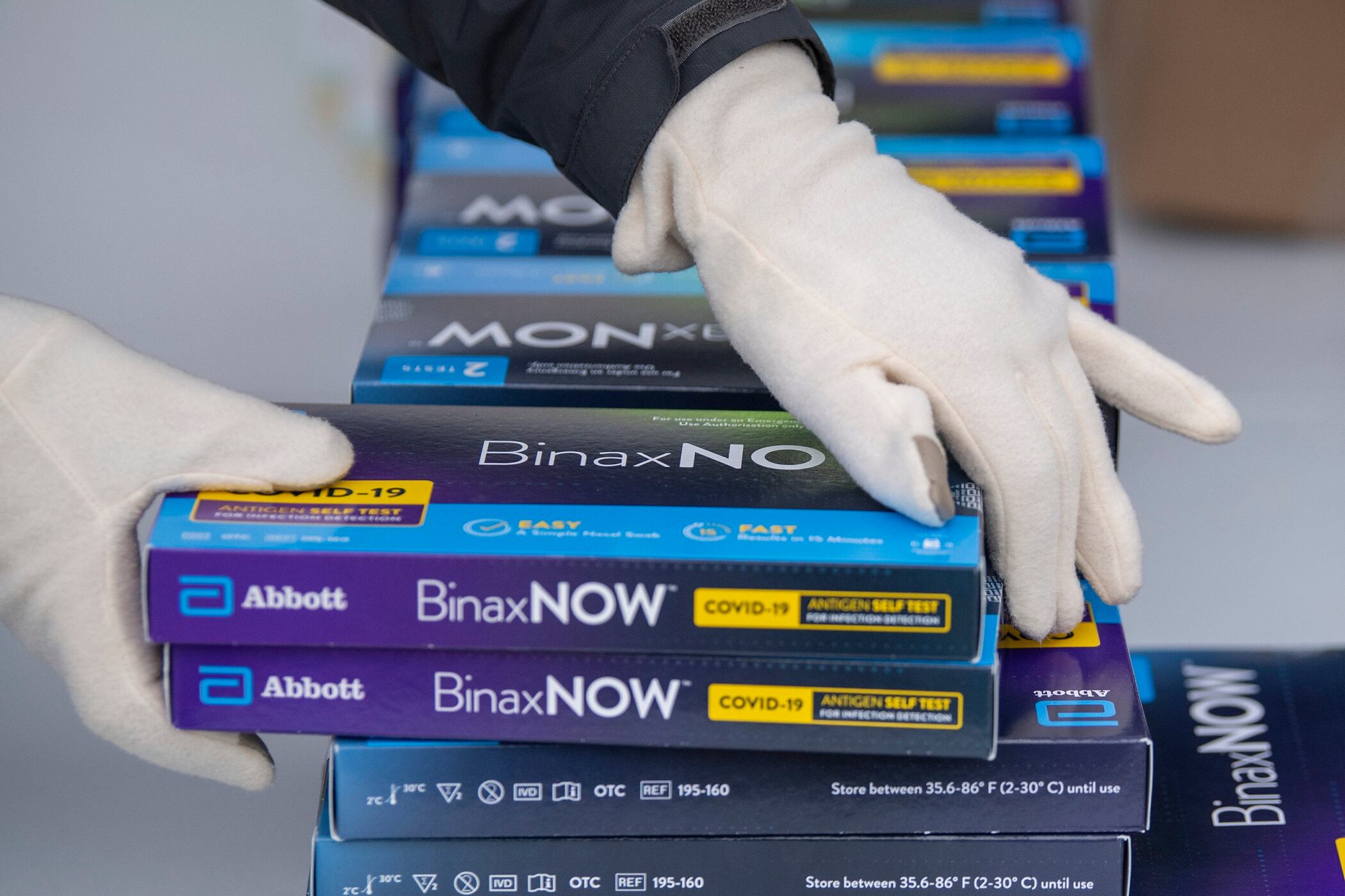
The Biden administration on Tuesday quietly launched its website for Americans to request free at-home COVID-19 tests, a day before the site was scheduled to officially launch.
Just 27% of voters aged 18-29 approve of the job Biden is doing as president, according to a survey from The Economist and YouGov late last year. Santiago Mayer, executive director of Voters of Tomorrow, joins Cheddar Politics to discuss why President Biden is losing support among young voters.
Jesse Lehrich, co-founder of Accountable Tech, joins Cheddar News to discuss it being one year since Trump was exiled from social media and the former President's new platform 'Truth Social.'
Cliff Albright, co-founder of the group Black Voters Matter, joins Cheddar Politics to discuss why he boycotted President Biden's voting rights speech this week, and the push from Senate Democrats to debate and vote on the Freedom to Vote Act and the John Lewis Voting Rights Advancement Act.
Senator Jon Ossoff (D-Ga.) has teamed up with fellow Democratic senator and former astronaut Mark Kelly to introduce the Ban Congressional Stock Trading Act, a bill to essentially end stock trading by sitting lawmakers. From the other side of the aisle, Senator Josh Hawley (R-Mo.) introduced his own legislation to enact something similar. The dueling bills come at a time when it's popular to constrain members of Congress from owning and trading stocks. Karl Evers-Hillstrom, a business and lobbying reporter at The Hill, spoke to Cheddar about the significance of the bills, and what they could mean for lawmakers, their families, and staffers moving forward.
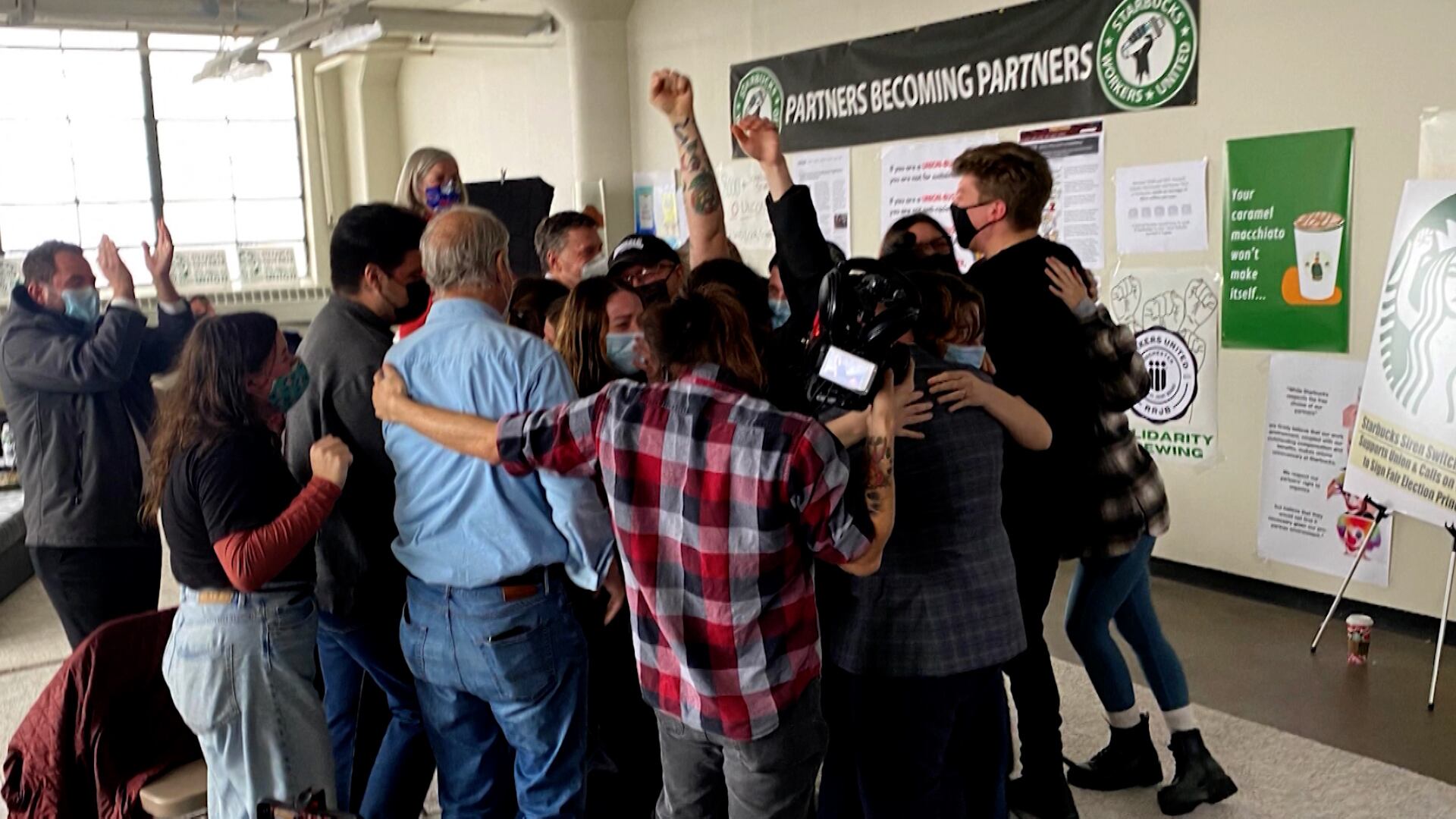
A second Starbucks location in the U.S. has officially voted to unionize. On Monday, the National Labor Relations Board announced workers at the Starbucks store located in the Buffalo, NY suburb of Cheektowaga voted 15-9 in favor of being represented by Workers United, an affiliate of the Service Employees International Union. The New York Times reports votes were tallied in December but remained inconclusive as the union challenged the ballots of several employees it said did not work at the store. A Starbucks spokesperson has said that it may appeal the labor board's decision, which comes as several other Starbucks stores across the country are also pushing to form a union. Danka Dragic, shift supervisor for the second Starbucks store in the country to unionize, joined Cheddar News' Closing Bell to discuss.
Earlier today, Minnesota Republican Representative, Tom Emmer, introduced a bill that would prevent the Federal Reserve from issuing a central bank digital currency directly to American consumers. According to the Congressman from Minnesota, requiring Americans to open a fed account to access a digital currency, would "put the Fed on insidious path akin to China's digital authoritarianism." Rep. Tom Emmer joined Cheddar's None of The Above to discuss more.
Sixteen of the country's most prestigious universities have been hit with a lawsuit claiming those schools illegally conspired to eliminate competitive financial aid offers for students. Just some of the schools mentioned include Yale, Brown, Columbia, UPenn, and Cornell. Author of "Who Gets In and Why" and Professor of practice at Arizona State University, Jeff Selingo, joined Cheddar to discuss more.