Rep. Tim Ryan (D-Ohio 13th District) said on Friday that the $1 trillion stimulus package currently being negotiated by lawmakers won't be nearly enough to make Americans whole again.
"Quite frankly I think the package that we're seeing coming out of Washington, DC is not even close to meeting the big need that we have," Ryan told Cheddar. "I think we need to be talking more like $2 trillion than $1 trillion, and at least a trillion for the workers."
The former Democratic primary candidate also advocated for bolstering unemployment insurance to ensure that people are making the same amount they did before their jobs.
"These are really essential things to keep the workforce safe, so when we go to kickstart things back up again, they're ready to slide back into the jobs that they lost," he said. "We need to be thinking much, much bigger and in much more innovative ways."
One important thing to keep in mind about this economic crisis, Ryan added, is that federal investment, in this case, won't grow the economy but merely keep it solvent, which may be difficult to swallow for those seeking a return on their investment for any kind of stimulus.
"This isn't like the Great Depression where you put money in people's pockets and then they go out and buy stuff," he said. "Now you're giving people money and basically saying pay your rent, pay your mortgage, pay your auto loan, and then buy food because you can't go anywhere."
The representative also believes the current package is skewed toward companies rather than workers and doesn't want to bail out companies without specific conditions banning stock buybacks or corporate bonuses.
"This is revealing the kind of corruption and rotting of the supply-side economic theory," he said. "The same people that just got the huge tax cuts are coming to the taxpayer to ask us to bail them out. So they get all the profits, and then they socialize the losses."
Matt Hayden, vice president of govtech solutions at Exiger and a former assistant secretary of cyber at Department of Homeland Security, joined Cheddar to discuss the surprise phone call initiated by Russian President Vladimir Putin to President Joe Biden, ahead of January security talks about the rising tensions over Ukraine. "We're hoping to hear that we're able to talk about the aggression and the leadup of the Ukrainian militarization," Hayden said. "But we're also looking to hear is how the Kremlin leveraged their talking points to try to test their negotiation stance with the United States leading into this January 10th meeting."
The No Surprises Act begins implementation on January 1, 2022. The legislation is meant to curb the practice of unexpected billing for care from providers the patient was unaware were out-of-network from their insurance. Patricia Kelmar, director of health care campaigns for U.S. PIRG joined Cheddar to describe the hundreds, sometimes thousands, of dollars charged to unsuspecting patients and how things will change under the new law. "If we are picking an in-network doctor and an in-network hospital, we should not see those added costs from anesthesiologists, radiologists, scrub-in surgeons," she said. "The other area it protects you is in air ambulances — not ground ambulances, unfortunately — but the helicopters or the airplanes you might need to transport you in an emergency situation."
President Joe Biden and Russian President Vladmir Putin are expected to have another conversation surrounding escalating tensions between Russia and Ukraine. Ariel Cohen, senior fellow at the Atlantic Council, joined Cheddar's Ken Buffa to discuss the ongoing tensions and why Putin's request for a conversation with Biden comes now. "This is very serious. This is the worst security crisis we had since the collapse of the Soviet Union," Cohen told Cheddar.
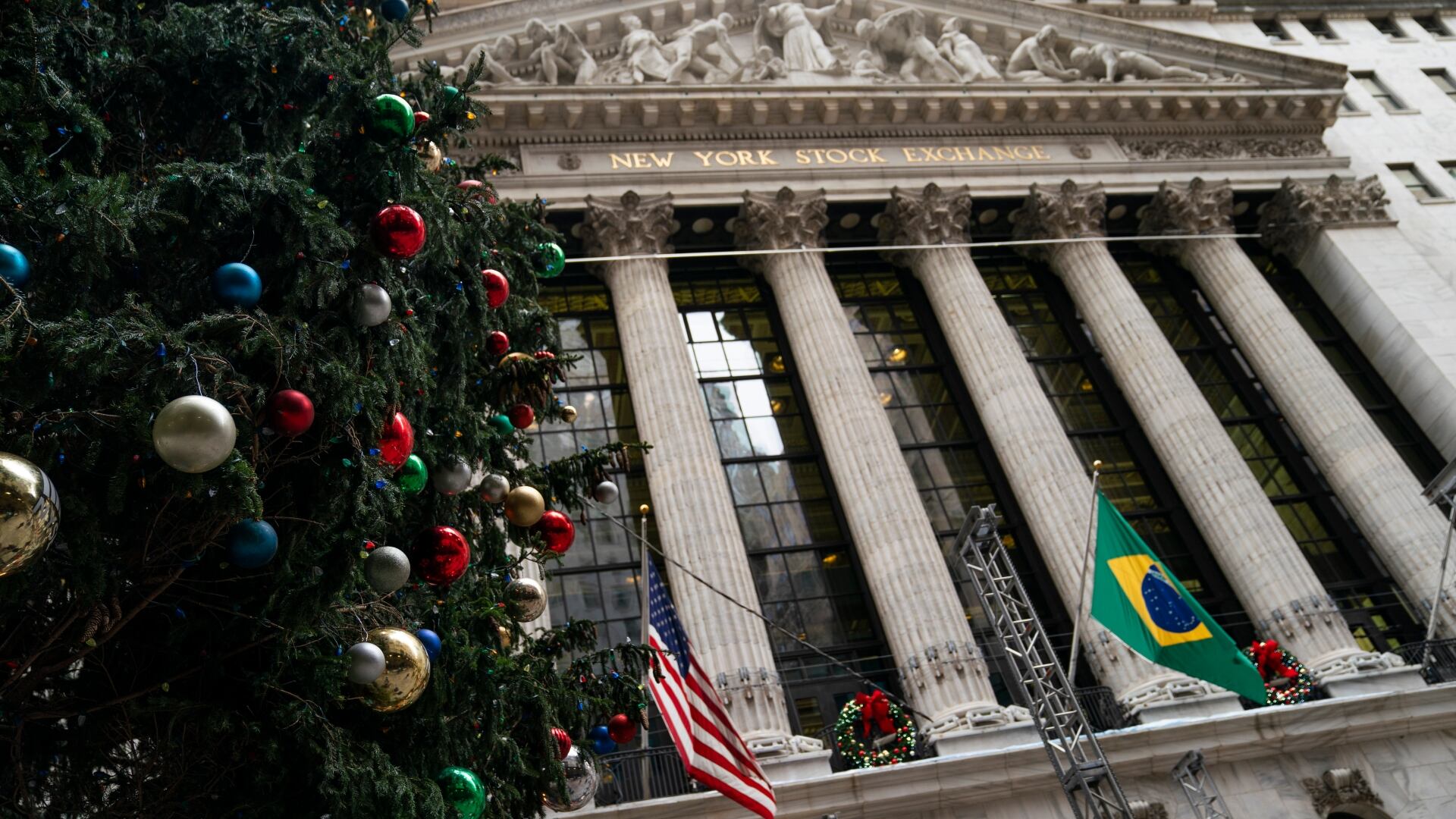
Stocks closed mixed on Wednesday, but two indexes - the Dow and the S&P 500 - ended the session with a new record. Akshata Bailkeri, Equity Analyst at Bruderman Asset Management, joins Cheddar News' Closing Bell, where she says there is a consensus for robust consumer spreading in 2022, especially as the Omicron variant is proving to be milder than other COVID-19 strains.
John Quelch, Dean of Miami Herbert Business School, joins Cheddar News' Closing Bell, where he says the retail giant is acting in accordance to President Biden's new law banning goods from China's Xinjiang region. Quelch also elaborates on the importance of China in Walmart's overall strategy.