Rep. Ro Khanna: Jobs Will Be the Focus of White House A.I. Summit
*By Alisha Haridisani*
Dozens of Silicon Valley executives are scheduled to descend on the White House for a summit meeting Thursday to discuss how artificial intelligence can be used to strengthen the economy.
“I think the big question is ‘what are the new jobs going to look like?’” said Representative Ro Khanna, a Democrat from California’s tech-heavy 17th district.
The summit, organized by the Office of Science and Technology Policy, will provide a forum for tech leaders and lawmakers to discuss how manufacturing, transportation, and healthcare can integrate A.I. without losing too many jobs and, hopefully, creating new ones.
A.I. is expected to automate at least 13 million jobs in the United States, according to a [paper](https://www.oecd-ilibrary.org/docserver/2e2f4eea-en.pdf?expires=1525898765&id=id&accname=guest&checksum=0EC91AF21400A0A43F18E3466CB1449A) published by the international Organization for Economic Co-Operation and Development (OECD) earlier this year. The paper also predicted that the effect on America's workforce may be greater than the disruption caused by automation of the auto industry in the 1950s, which resulted in large job losses in some local economies.
“You’re not just going to solve that issue by tax cuts or corporate giveaways,” said Khanna. “You really need to prepare a workforce for the jobs of the future."
Michael Kratsios, the White House's deputy chief technology officer, recently [told The Washington Post](https://www.washingtonpost.com/news/the-switch/wp/2018/05/08/white-house-will-host-amazon-facebook-ford-and-other-major-companies-for-summit-on-ai/?noredirect=on&utm_term=.610bec66f6d7) the potential applications for A.I., robots and machine learning touched nearly every industry.
“Whether you’re a farmer in Iowa, an energy producer in Texas, a drug manufacturer in Boston, you are going to be using these techniques to drive your business going forward,” Kratsios was quoted by The Post.
Khanna said the potential far-reaching impact of new technology required the administration to come up with a detailed plan for preparing American workers. "I thought the president, who made his reputation on ‘The Apprentice,’ would announce a lot of apprenticeship and tech programs," he said.
Alphabet, Microsoft, Facebook, Amazon, and IBM are reportedly among the companies that will attend the meeting at the White House with academics and lawmakers.
U.S. stocks closed Thursday at session lows to end the month of March, posting their worst quarter since the pandemic crash of 2020. However, March was the first positive of 2022. MJP Wealth Advisors President Brian Vendig joined Cheddar News' Closing Bell to discuss.
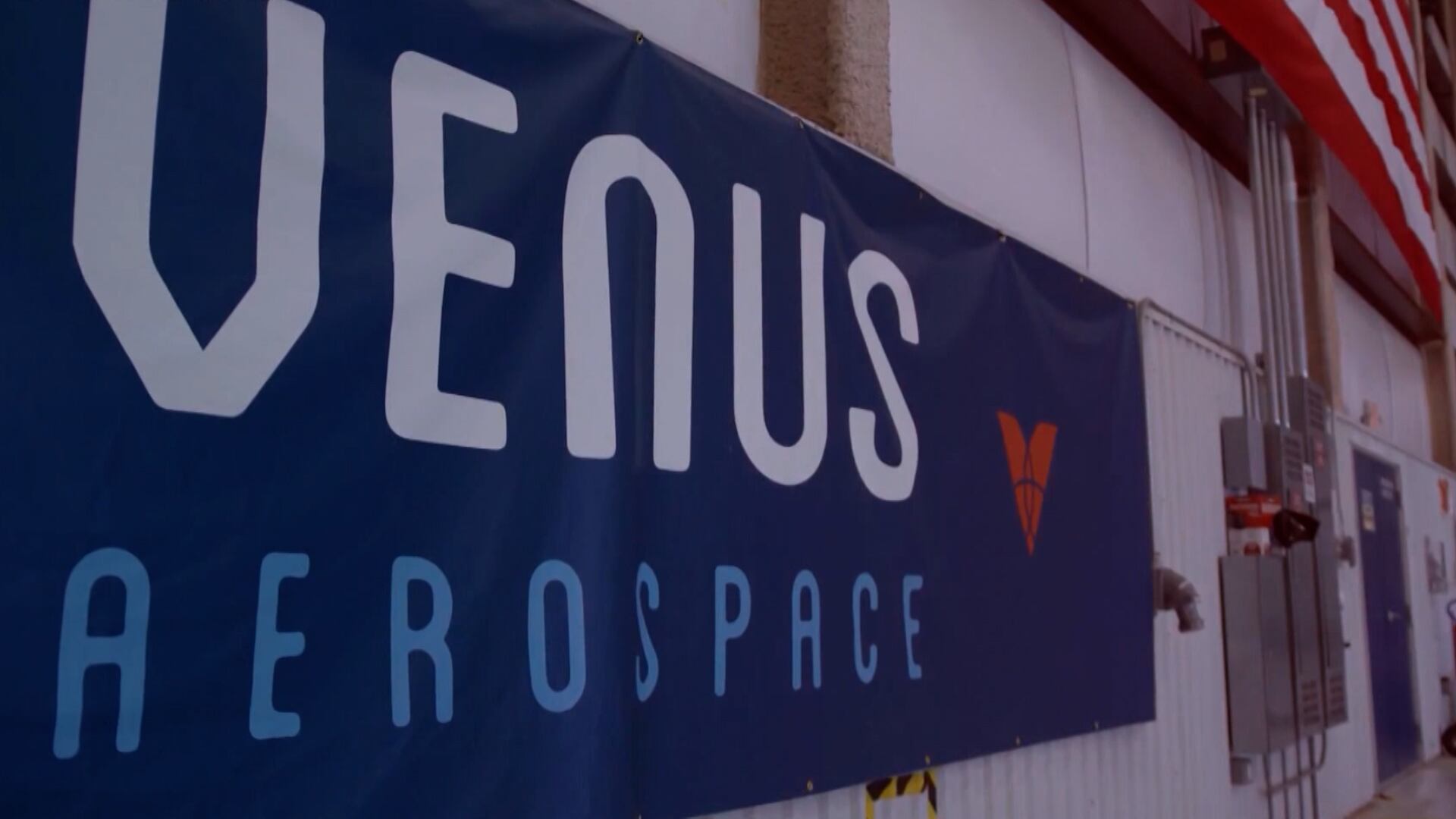
Venus Aerospace is joining the space tourism race in a nonconventional way. Instead of taking passengers to Mars or the Moon, the startup’s goal is to take passengers around the Earth — in less than an hour. Sarah "Sassie" Duggleby, CEO and co-founder, joined Cheddar News to talk about her company's innovative approach to travel and when she expects to carry passengers. "We would hope in the next five years we'll have our plane fully developed and then start entering into all the FAA certifications and qualifications in order to get to commercial flights," she said.
Ride-hailing service Uber has unveiled its plans to become a travel super app, which will include options for users to make plane and train arrangements directly.
If you've sold or exchanged any crypto in 2021, the IRS wants to know. Henry Yoshida, Co-founder & CEO, OF Rocket Dollar joined Cheddar's Opening Bell to discuss which crypto activities are taxable and how to best spend your tax refund.
The $2 trillion crypto market will soon be subject to much greater governmental oversight. SEC Chair Gary Gensler announced this week that his agency plans to register and regulate digital currencies. He also revealed that the U.S. will focus on three different areas - crypto platforms, stablecoins, and crypto tokens. Jarrod Loadholt, partner at the law firm Ice Miller, LLP, joined Cheddar News' Closing Bell to discuss.
Blueprints and paper maps might soon be a thing of the past as more cities potentially turn to digital twin technology to create virtual models of urban environments. Michael Jansen, CEO of the digital twin platform CityZenith, broke down how this technology works, what it's being used for, and how it might be a game-changer for the future of urban planning.
"Our focus at CityZenith is on helping cities to decarbonize," Jansen said. "We joined the World Economic Forum recently to work in their net-zero carbon cities program. So what digital twins can do here with cities is aggregate all this complex data around that issue: transport, building emissions, etc., and scenario-ize how they interrelate and then how to optimize the entire process of decarbonizing, which is itself complex."