From Hollywood to Capitol Hill, the allegations of sexual harassment against prominent figures in their industries seem to be piling up.
And one policymaker wants to change how claims of harassment are handled in the nation's capital.
“I would like to know how much money was spent [to settle claims of] sexual harassment,” Representative Gregory Meeks tells Cheddar, adding that there’s a lot to be done in terms of changing the prevailing system.
Current policy for harassment claims in Washington doesn’t require that the amount of settlements are disclosed. Meeks says that not only do taxpayers deserve to know when their money is being used as a settlement, but that there needs to be a space that encourages victims to come forward.
The New York Democrat is calling for a “zero tolerance” policy.
Meeks’ statements come after Rep. John Conyers (D-MI) resigned from his position as a ranking member of the House Judiciary Committee amid a wave of accusations. The eighty-eight year old reportedly reached a $27,000 taxpayer-funded settlement in 2015 with a staffer who reportedly refused his advances. While Conyers has denied any wrongdoing, he said he’s decided to step aside to allow the House Ethics Committee to conduct its investigation.
Sen. Al Franken (D-MN) has also had to respond to allegations that he groped or forcibly kissed women without their consent. In a short press conference Monday, the SNL alum apologized for his behavior and promised he’ll work to regain voters’ -- and women’s -- trust. Franken was recently defended by female co-stars of SNL who called him a family man and stood in solidarity with him.
Then there’s Alabama Senatorial candidate Roy Moore, who’s running to fill the seat vacated by now-Attorney General Jeff Sessions. The GOP judge has been accused of preying on teenage girls while he was in his early thirties. He has rejected those claims and won the endorsement of President Donald Trump.
Many have called for the politicians involved to step down entirely. Meeks supports an investigation into allegations against Franken and others, but draws a sharp distinction between that and those who have a track record of abuse.
“Roy Moore is a whole different thing, even Charlie Rose, where you see a pattern of consistent and persistent aggression trying to lure someone into bed,” he said. “Or even the words of the current President of the U.S. who said that he felt, because of his celebrity, status to grab women where he wanted to grab them.”
House Minority Leader Nancy Pelosi, meanwhile, came under fire for her defense of Conyers this weekend. After calling for an ethics investigation against her colleague, the California Democrat went on NBC’s “Meet the Press” and made statements that some perceived as bipartisan or tone-deaf.
In an interview Sunday, before Conyers stepped down from the Judiciary Committee, Pelosi touted his record in support of women and questioned the identity of his accusers.
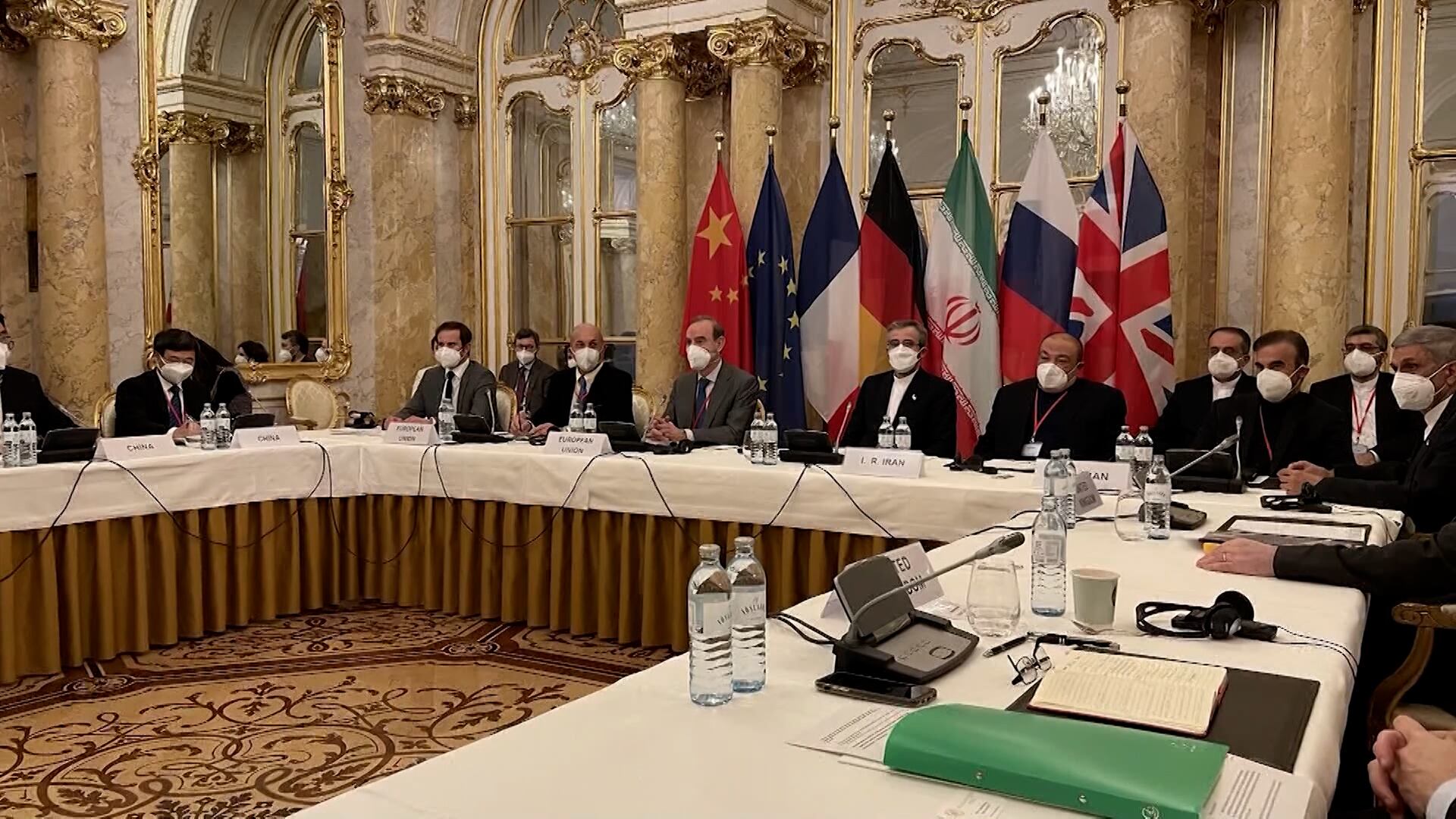
The U.S. is back in negotiations for a nuclear deal with Iran, years after former President Donald Trump withdrew the country from the Joint Comprehensive Plan of Action (JCPOA), which had been meant to curtail the Middle Eastern nation's nuclear ambitions. Former State Department senior advisor to the George W. Bush and Trump administrations, Christian Whiton, joined Cheddar News Wrap to discuss. “It appears to be very similar to the original JCPOA, which does put some constraints on Iran's nuclear program, but also has sunset provisions, including some that in the original plan were expected to take effect in 2025," he said. "And so, if we just reenter that plan, really it just buys perhaps a few years of slowing down, stopping, whatever you want to say, Iran's nuclear program."
The U.S. has announced the first of what could be multiple levels of sanctions against Russia after Moscow recognized two regions of Ukraine as independent. This comes as Britain imposes sanctions on five Russian banks and two oligarchs, and Germany freezes the Nord Stream gas pipeline. Terrell Star, a foreign affairs reporter at The Atlantic Council, joins from Kyiv to discuss.
Growing tensions in Ukraine might soon be impacting consumers in the United States. With Russia on an invasion footing in the region, gas prices are predicted to go up 10 to 15 cents a gallon in the next coming weeks, according to Robert Sinclair, spokesperson for AAA. Sinclair joined Cheddar to break down what could happen even further. "We've been seeing prices go up, and there's been nothing that's happened to affect supplies," he said. "But it's something known as the fear tax where just the talk of something that might interfere with supplies leads to prices going up speculatively."
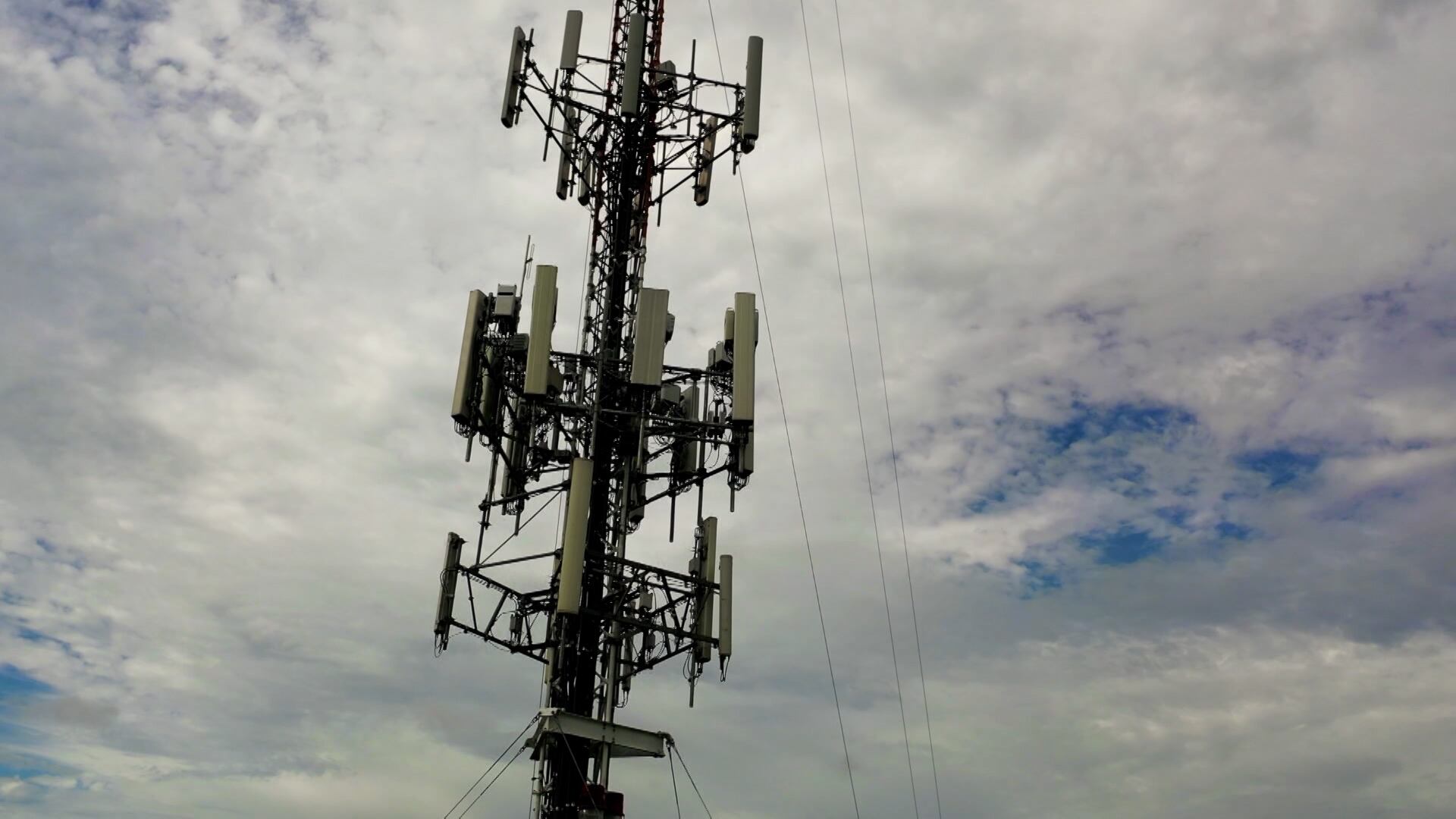
The end of 3G is upon us. On Tuesday, AT&T became the first major provider to disable its 3G services, and T-Mobile and Verizon plan to follow suit later this year. The shutdowns are expected to impact millions of vehicles that use 3G networks for updates, remote connection, and certain emergency and convenience features. Lance Ulanoff, the U.S. Editor-in-Chief of TechRadar, joined Cheddar's Closing Bell to discuss the ramifications of the changeover.
A new report shows nearly 240 former officials in Congress, the White House, and regulatory agencies have changed careers to work in the crypto industry.
President Biden unveiled new economic sanctions on Russia for what he called "the beginning of a Russian invasion". This came one day after Putin sent troops into two breakaway regions of eastern Ukraine. Alex Ward, national security reporter for POLITICO, explains what these sanctions might do to the global economy.
U.S. stocks ended today's session sharply lower on the heels of rising geopolitical tensions between Russia and Ukraine. Melissa Brown, Managing Director of Applied Research at Qontigo, joins Cheddar News' Closing Bell to discuss.
President Joe Biden said Tuesday that the U.S. will begin to impose sanctions on Russia, calling recent troop movement into Ukraine an 'invasion.' Biden and other government officials including from the State Department have begun to classify the Russian troop movement as an invasion after Russian President Vladimir Putin ordered troops to two independent Ukrainian areas in an alleged "peacekeeping" mission — which the West considers an act of aggression. Biden said Russia will continue to pay 'an even steeper price' if it continues sending troops into Ukraine. What happens next? Will Putin find a way around these sanctions? Ariel Cohen, senior fellow at the Atlantic Council, joins Closing Bell to discuss Biden's remarks, how the West will protect Ukraine since it doesn't belong to NATO, and more.