Rep. Khanna Thinks Congress Needs Some Outside Help to Solve Shutdown
*By Justin Chermol*
California Rep. Ro Khanna has a novel idea about how to solve the government shutdown: call in some experts.
"Why don't we get an independent group of experts? The president appoints two people. The House appoints two people. The Senate appoints two people," the Silicon Valley-based Democrat suggested. "Put them in a room ー six folks ー and have them come up with proposals that are going to be 6-0."
"Arbitrators do this all the time. Mediators do this all the time," he told Cheddar's J.D. Durkin. " People sue each other, they have disputes and somehow it gets resolved. "It’s only in the United States government that we’re unable to move forward."
Well into its fourth week, the partial government shutdown shows no signs of ending. As the California congressman representing Silicon Valley, Khanna understands its impact not only on federal workers, but also his tech-based constituency. Private companies looking to file an IPO have been stalled by the government stalemate, which has hampered the work of the Securities and Exchange Commission.
"You ... don't have startups being able to go public, and there is a whole line of companies that can't get public, can't go public because of the shutdown," Khanna explained.
He said this should concern President Trump, who has taken credit for last year's stock market increases ー and may find himself shouldering the blame if the market continues to show weakness.
"If the President obsesses over the stock market ー he's hurting the stock market, he's hurting our innovation, he's hurting our entrepreneurship. This is actually having real damage," Khanna said.
Deputy Commerce Secretary Don Graves spoke to Cheddar's Alex Vuocolo about the ongoing semiconductor shortages and the push from the Biden administration to cover the supply chain problem as well as look ahead to future-proofing it.
President Maxx Fenning and Vice President CJ Walden of PRISM, a Florida non-profit providing resources for LGBTQ youth, joined Cheddar News to discuss the negative repercussions of a Florida bill banning discussions of sexuality and gender identity in some classrooms.
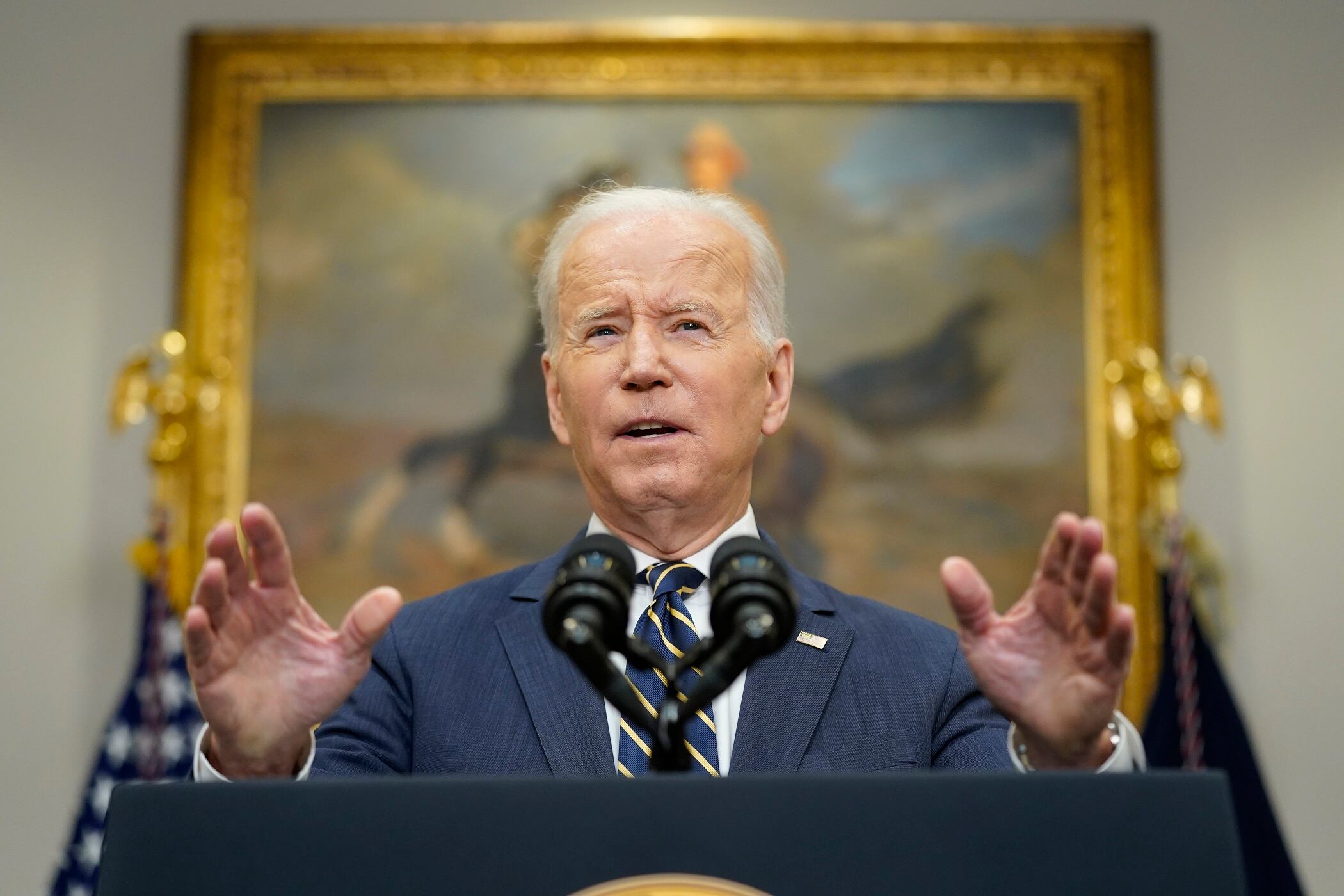
President Joe Biden announced Friday that along with the European Union and the Group of Seven countries, the U.S. will revoke “most favored nation” trade status for Russia over its invasion of Ukraine.
The consumer price index jumped 7.9 percent in February, marking a 40-year high for inflation in the U.S. This report comes less than a week ahead of the Fed's all important meeting. Kayla Bruun, Economic Analyst, Morning Consult, joined Cheddar's Opening Bell to discuss.
Markets opened lower amid hotter-than-expected inflation data, which surged to its highest level in nearly 40 years. Lisa Erickson, Senior Vice President and Co-Head, Public Markets Group, U.S. Bank joined Cheddar's Opening Bell to discuss the significance of this figure ahead of the Federal Reserve's FOMC meeting.
As the Russia-Ukraine war disrupts the global economy, sending markets on a roller coaster ride, gold remains hovering around $2,000 an ounce. Often seen as a safe haven in times of economic crisis, Jason Cozens, founder and CEO of gold-as-currency platform Glint Pay, joined Cheddar’s Opening Bell to discuss the latest gold rush, how the war is impacting prices, and how people can use Glint to trade in the precious metal. “You know the stock markets and cryptocurrencies are risky investments," he stated. "Whereas gold is just reliable money. It's no one else's liability if you own."
As Western sanctions weigh on Russia's economy, the country is at the risk of defaulting on its debt. Fitch ratings agency has downgraded Russia's debt for the second time in a week, warning a "sovereign default is imminent." Jesse Wheeler, Economic Analyst at Morning Consult, explains what that means, and how it could have ripple effects across the global economy.
Uber Lyft and Doordash are all set to spend $1 million dollars on a campaign and efforts to stop lawmakers from classifying their gig workers as employees. The campaign features TV and online ads highlighting Washington area workers who say they prefer the flexibility of being an independent contractor rather than following the model of a company employee. Professor at NYU. Stern School of Business and author of the sharing economy, Arun Sundararajan, joined Cheddar to discuss more.