Federal Reserve officials signaled Wednesday that they still expect to cut their key interest rate three times in 2024 despite signs that inflation was surprisingly high at the start of the year. Yet they foresee fewer rate cuts in 2025, and they slightly raised their inflation forecasts.
After ending their latest meeting, the officials kept their benchmark rate unchanged for a fifth straight time.
In new quarterly projections they issued, the policymakers forecast that stronger growth and inflation above their 2% target level would persist into next year. As a result, they suggested that interest rates would have to stay slightly higher for longer.
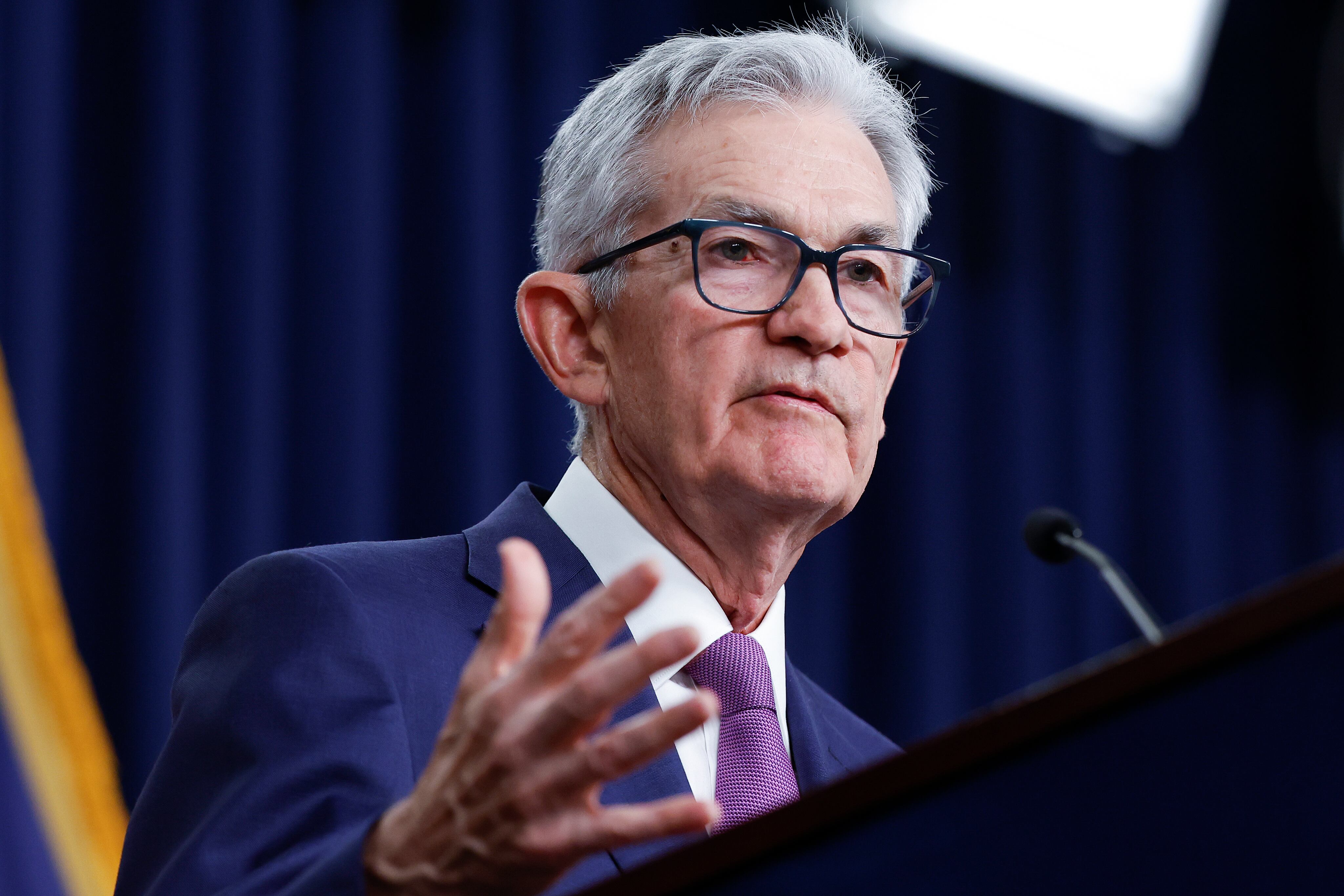
Speaking at a news conference, Chair Jerome Powell noted that inflation has cooled considerably from its peak. But, he added, "inflation is still too high, ongoing progress in bringing it down is not assured and the path forward is uncertain.”
“The risks are really two-sided here,” Powell said. "We’re in a situation where if we ease too much or too soon, we could see inflation come back. And if we ease too late, we could see unnecessary harm to employment.”
Rate cuts would, over time, lead to lower costs for home and auto loans, credit card borrowing and business loans. They might also aid President Joe Biden’s re-election bid, which is facing widespread public unhappiness over higher prices and could benefit from an economic jolt stemming from lower borrowing rates.
On Wall Street, traders sent stock prices surging Wednesday, evidently out of relief that the Fed kept its projection of three rate cuts this year. Traders had feared that the Fed might downgrade the number of expected rate cuts for 2024. Investors may also have been pleased that at his news conference, Powell didn't sound alarmed by signs of higher-than-expected inflation.
One recent government report showed that consumer prices jumped from January to February by much more than is consistent with the Fed’s target. Another showed that wholesale inflation came in surprisingly high — a possible sign of inflation pressures in the pipeline that could cause consumer price increases to remain elevated.
Those two reports, Powell said, “haven’t really changed the overall story, which is that of inflation moving down gradually on a sometimes bumpy road towards 2%.”
For 2025, though, the policymakers now foresee only three rate cuts, down from four in their December projections. One reason may be that they expect “core” inflation, which excludes volatile food and energy costs, to still be 2.6% by the end of 2024, up from their previous projection of 2.4%. In January, core inflation was 2.8%, according to the Fed's preferred measure.
As a whole, Wednesday's forecasts suggest that the policymakers expect an unusual combination: A healthy job market and economy in tandem with inflation that continues to cool — just more gradually than they had predicted three months ago.
The Fed’s officials signaled that they now foresee their benchmark rate as being higher in the future than it was in recent years — high enough to keep inflation in check but low enough to keep the economy growing. They had long pegged such a “neutral" rate at 2.5%. But on Wednesday, the officials estimated that it's now 2.6%. If so, this means rates are less likely to return to the ultra-low levels that prevailed for years before the pandemic struck.
When the Fed raises its benchmark rate above the neutral rate, it seeks to slow growth and tame inflation. If the neutral rate is actually higher than the Fed had thought, it means its benchmark rate should be higher, too, to cool the economy and inflation.
Most economists have pegged the Fed’s June meeting as the most likely time for it to announce its first rate cut, which would begin to reverse the 11 hikes it imposed beginning two years ago. The Fed’s hikes have helped lower annual inflation from a peak of 9.1% in June 2022 to 3.2%. But they have also made borrowing much costlier for businesses and households.
Though consumer inflation has tumbled since mid-2022, it has remained stuck above 3%. And in the first two months of 2024, the costs of services, like rents, hotels and hospital stays, remained elevated. That suggested that high borrowing rates weren’t sufficiently slowing inflation in the economy’s vast service sector.
While the Fed’s rate hikes typically make borrowing more expensive for homes, cars, appliances and other costly goods, they have much less effect on services spending, which doesn’t usually involve loans. With the economy still healthy, there is no compelling reason for the Fed to cut rates until it feels inflation is sustainably under control.
At the same time, the central bank faces a competing concern: If it waits too long to cut rates, a long period of high borrowing costs could seriously weaken the economy and even tip it into a recession.
In most respects, the U.S. economy remains remarkably heathy. Employers keep hiring, unemployment remains low, and the stock market is hovering at record highs. Yet average consumer prices remain much higher than they were before the pandemic — a source of unhappiness for many Americans for which Republicans have sought to pin blame on Biden.
And there are signs that the economy could weaken in the coming months. Americans slowed their spending at retailers in January and February, for example. The unemployment rate has reached 3.9% — still a healthy level, but up from a half-century low last year of 3.4%. And much of the hiring in recent months has occurred in government, health care and private education, with many other industries barely adding any jobs.
Other major central banks are also keeping rates high to ensure that they have a firm handle on consumer price spikes. In Europe, pressure is building to lower borrowing costs as inflation drops and economic growth stalls. The European Central Bank’s leader hinted this month that a possible rate cut could come in June, while the Bank of England isn’t expected to open the door to any imminent cut when it meets Thursday.