FILE - A supermoon rises through clouds over the skyline of lower Manhattan, Aug. 1, 2023, as seen from West Orange, N.J. Stargazers are in for a double treat on Wednesday night, Aug. 30: a rare blue supermoon with Saturn peeking from behind. The cosmic curtain rises Wednesday night with the second full moon of August, the reason it’s considered blue. It’s dubbed a supermoon because it’s closer to Earth than usual, appearing especially big and bright. (AP Photo/Seth Wenig, File)
By Marcia Dunn
Stargazers are in for a double treat on Aug. 30: a rare blue supermoon with Saturn peeking from behind.
The cosmic curtain rises Wednesday night with the second full moon of the month, the reason it’s considered blue. It’s dubbed a supermoon because it’s closer to Earth than usual, appearing especially big and bright.
This will be the closest full moon of the year, just 222,043 miles (357,344 kilometers) or so away. That’s more than 100 miles (160 kilometers) closer than the Aug. 1 supermoon.
As a bonus, Saturn will be visible as a bright point 5 degrees to the upper right of the moon at sunset in the east-southeastern sky, according to NASA. The ringed planet will appear to circle clockwise around the moon as the night wears on.
If you missed the month’s first spectacle, better catch this one. There won’t be another blue supermoon until 2037, according to Italian astronomer Gianluca Masi, founder of the Virtual Telescope Project.
Clouds spoiled Masi's attempt to livestream the supermoon rising earlier this month. He’s hoping for clearer skies this time so he can capture the blue supermoon shining above St. Peter’s Basilica at the Vatican.
Weather permitting, observers don’t need binoculars or telescopes — “just their own eyes." said Masi.
“I’m always excited to admire the beauty of the night sky,” he said, especially when it features a blue supermoon.
The first supermoon of 2023 was in July. The fourth and last will be in September.
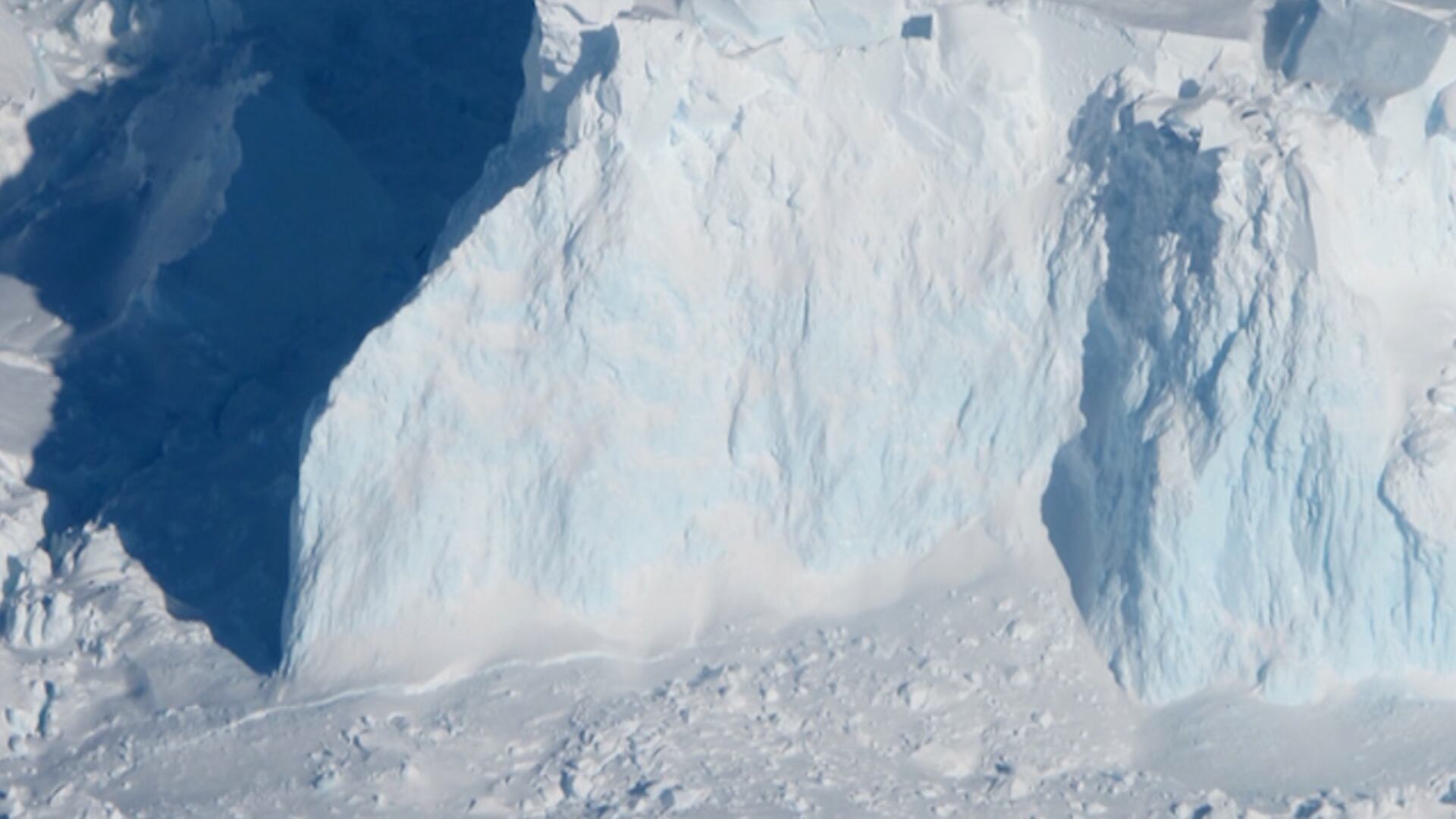
The potential collapse of the Thwaites glacier in Antarctica has been deemed a potential "doomsday event" — researchers and scientists say its melting and collapse could raise global sea levels by at least two feet, enough to destroy coastal communities around the world. One team of scientists is traveling to the Thwaites glacier to drill below in order to gauge current ocean temperatures and attempt to model possible outcomes. David Holland, professor at NYU and Principal Investigator for the International Thwaites Glacier Collaboration, joins Cheddar Climate to discuss the glacier's potential collapse, his team's research plan, and more.
As winter break wraps up and COVID-19 cases hit record levels, the majority of school districts are returning to in-person classes. While some public schools in large cities have shifted to remote learning for the beginning of the year, the schools that are reopening campuses are determined to avoid the academic, social, and logistical challenges that come with a virtual classroom. Cheddar News is joined by Keith Powers, NYC Council Member, to discuss.
With a rising number of COVID-19 cases due to the omicron variant, the FDA is making big moves. First, Pfizer's COVID-19 booster has been authorized for those ages 12 to 15. The agency also reduced the amount of time to wait between receiving a second vaccine dose and booster from six months to five. Finally, a third primary series dose of Pfizer's shot is approved for immunocompromised children five to 11 years old. Professor Peter Pitts joins Cheddar News to discuss.
California's new composting law will affect what residents do in their kitchens. As of this week, Californians will have to recycle excess food in an effort to reduce emissions caused by food waste. Cities and counties will turn recycled food into compost or use it as a renewable energy source. California's new law is the largest mandatory residential food waste recycling program in the country. Rachel Wagoner, Director of the California Department of Resources, Recycling and Recovery called the law 'the biggest change to trash' since recycling started in the 1980s. She joined Cheddar Climate to discuss.
Deborah Brosnan, President of Deborah Brosnan & Associates, joins Cheddar Climate, where she explains why global warming brought about 'a year of reckoning' in 2021 and why previously unprecedented weather events could become the norm going forward.
On this episode of Cheddar Reveals, Dr. Anita Gupta, Adjunct assistant professor of anesthesiology and critical care medicine at the Johns Hopkins University School of Medicine, shares her forecast for the healthcare industry in 2022; Waseem Asghar, Ph.D., Associate Professor, Department of Computer & Electrical Engineering and Computer Science, Florida Atlantic University, breaks down the latest progress, trends, and innovations in wearable health tech; Cheddar gets a look at Curiosity Stream's 'Hacking our Biome.'
Dr. Anita Gupta, Adjunct assistant professor of anesthesiology and critical care medicine at the Johns Hopkins University School of Medicine, joins Cheddar Reveals to share her forecast for the healthcare industry in 2022.
Waseem Asghar, Ph.D., Associate Professor, Department of Computer & Electrical Engineering and Computer Science, Florida Atlantic University, joins Cheddar Reveals to break down the latest progress, trends, and innovations in wearable health tech.
Washington DC and the surrounding areas saw a record breaking snow storm Monday as a strong storm system works its way across the eastern U.S. The extreme weather event caused extensive damage in the greater Washington area, leaving thousands in the region without power. Jonathan Porter, Chief Meteorologist, AccuWeather, joined Wake Up with Cheddar to discuss the fierce storm.