By Vladimir Isachenkov
Russian President Vladimir Putin on Friday hailed the military's performance during recent Arctic drills, part of Moscow's efforts to expand its presence in the polar region.
Navy chief Adm. Nikolai Yevmenov reported to Putin that the exercise has featured three nuclear submarines simultaneously breaking through Arctic Ice, and warplanes flying over the North Pole.
This week’s drills were conducted around Alexandra Land, an island that is part of the Franz Josef Land archipelago where the military has recently built a base.
Russia has prioritized beefing up its military presence in the Arctic region, which is believed to hold up to one-quarter of the Earth’s undiscovered oil and gas. Putin in the past has cited estimates that put the value of Arctic mineral riches at $30 trillion.
Russia, the United States, Canada, Denmark and Norway all have been trying to assert jurisdiction over parts of the Arctic, as shrinking polar ice opens new opportunities for tapping resources and opening new shipping lanes.
As part of its efforts to project its power over the Arctic, the Russian military has rebuilt and expanded numerous facilities across the polar region in recent years, revamping runways and deploying additional surveillance and air defense assets.
As part of this week's maneuvers, a pair of MiG-31 fighters flew over the North Pole, Yevmenov said. A Defense Ministry video featured them being refueled by a tanker plane.
The video also showed three nuclear submarines that smashed through the Arctic ice next to one another.
Putin noted that the exercise was unprecedented for the military and praised its skills. He added that the maneuvers also have proven the reliability of Russian weapons in polar conditions.
“I order to continue Arctic expeditions and research in the Far North to help ensure Russia's security,” Putin told the navy chief.
The Russian military has expanded the number and the scope of its war games amid bitter tensions in ties with the West, which have sunk to post-Cold War lows after Russia’s 2014 annexation of Ukraine’s Crimea.
Stocks are inching higher on Wall Street Monday in more volatile trading as investors try to assess whether global authorities can do enough to nurse the economy through the damage caused by the coronavirus outbreak.
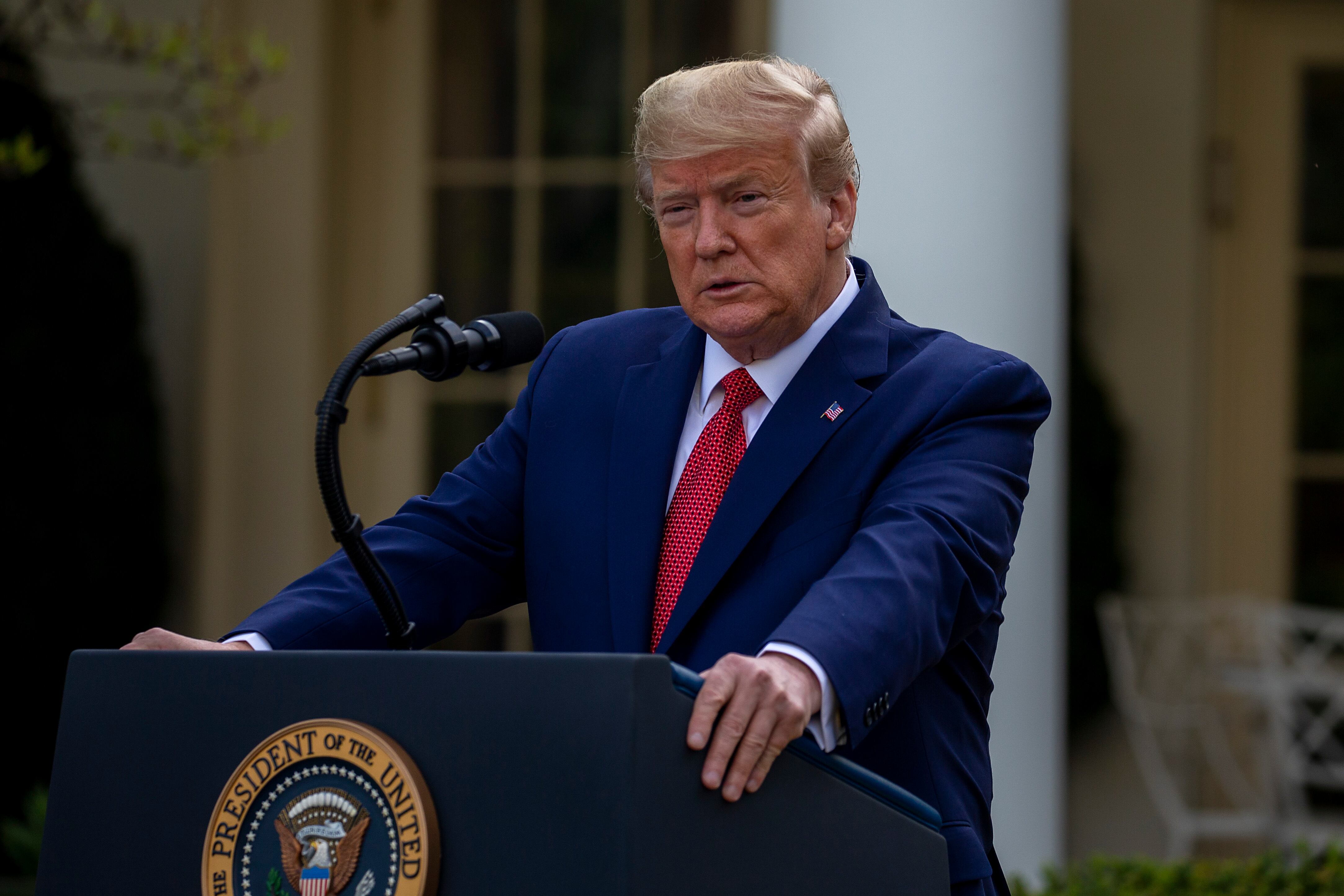
Bracing the nation for a coronavirus death toll that could exceed 100,000 people, President Donald Trump extended restrictive social distancing guidelines through April, bowing to public health experts who presented him with even more dire projections for the expanding coronavirus pandemic.
Trump said that the order will “require General Motors to accept, perform, and prioritize Federal contracts for ventilators." In a statement, he said the contracting process with the automaker was not moving quickly enough.
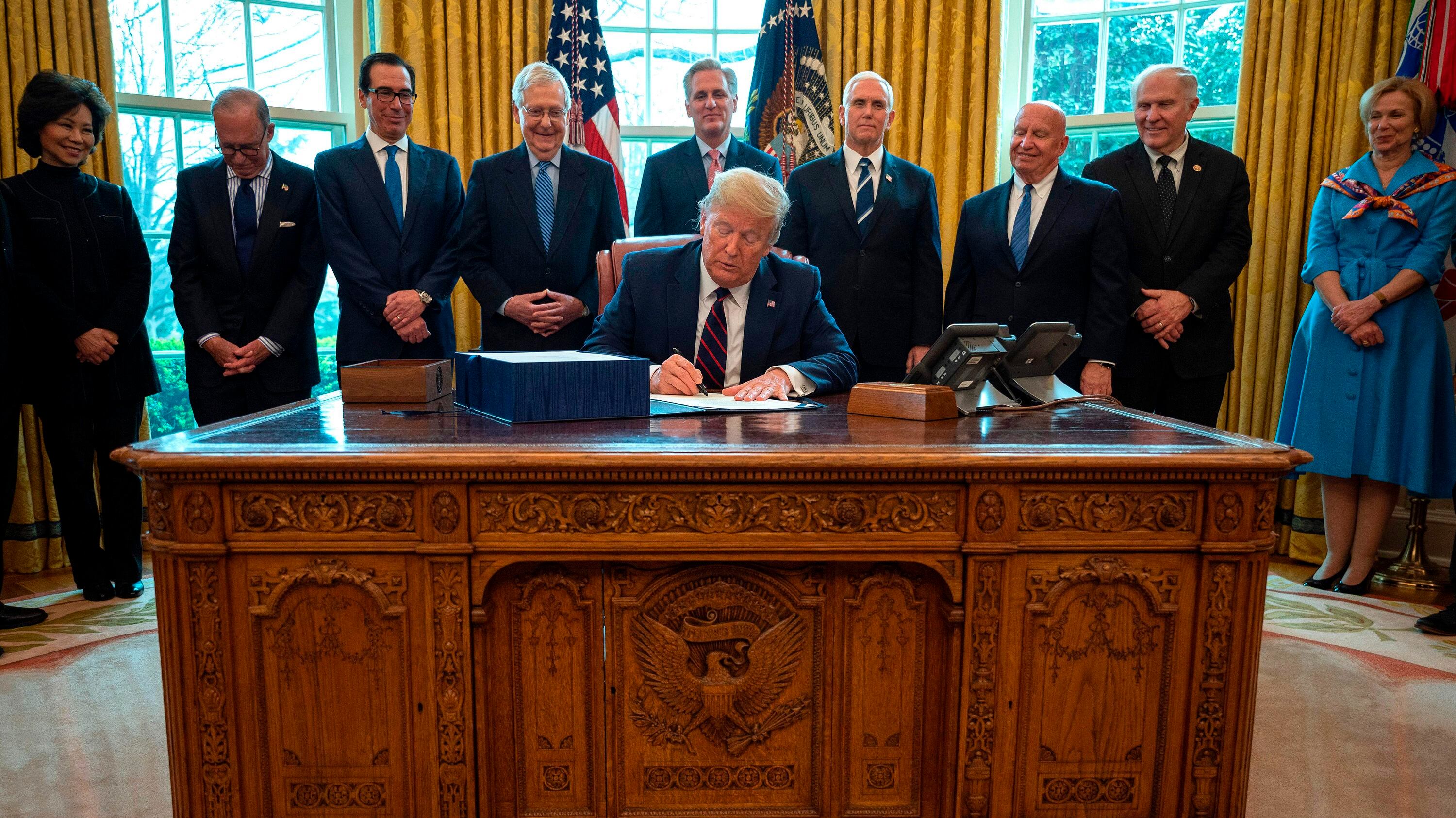
President Donald Trump has signed an unprecedented $2.2 trillion economic rescue package into law, after swift and near-unanimous action by Congress this week.
From Wall Street to Silicon Valley, these are the top stories that moved markets and had investors, business leaders, and entrepreneurs talking this week on Cheddar.
Stocks are moving lower on Wall Street as the market gives back some of the gains it piled up over the past three days. Major indexes are down more than 2% in afternoon trading Friday.
Restaurants are getting creative with private solutions as they hope to continue doing business, even while most of them are physically closed to the public, but the potential for saving most of these businesses may be a long shot.
Healthcare workers have launched their own campaigns for gathering personal protective equipment as they fight the coronavirus on the frontlines, with #GetUsPPE trending across social media.
The House of Representatives overwhelmingly passed the $2.2 trillion coronavirus aid package Friday afternoon, but what was expected to be a smooth confirmation process devolved into a mad dash in the Capitol after one of the House’s own threatened to derail the vote with a procedural objection.
Despite President Donald Trump’s call to put the economy back to work by Easter, one Johns Hopkins physician says there may have to be “variability” in when states and cities restart their economies.