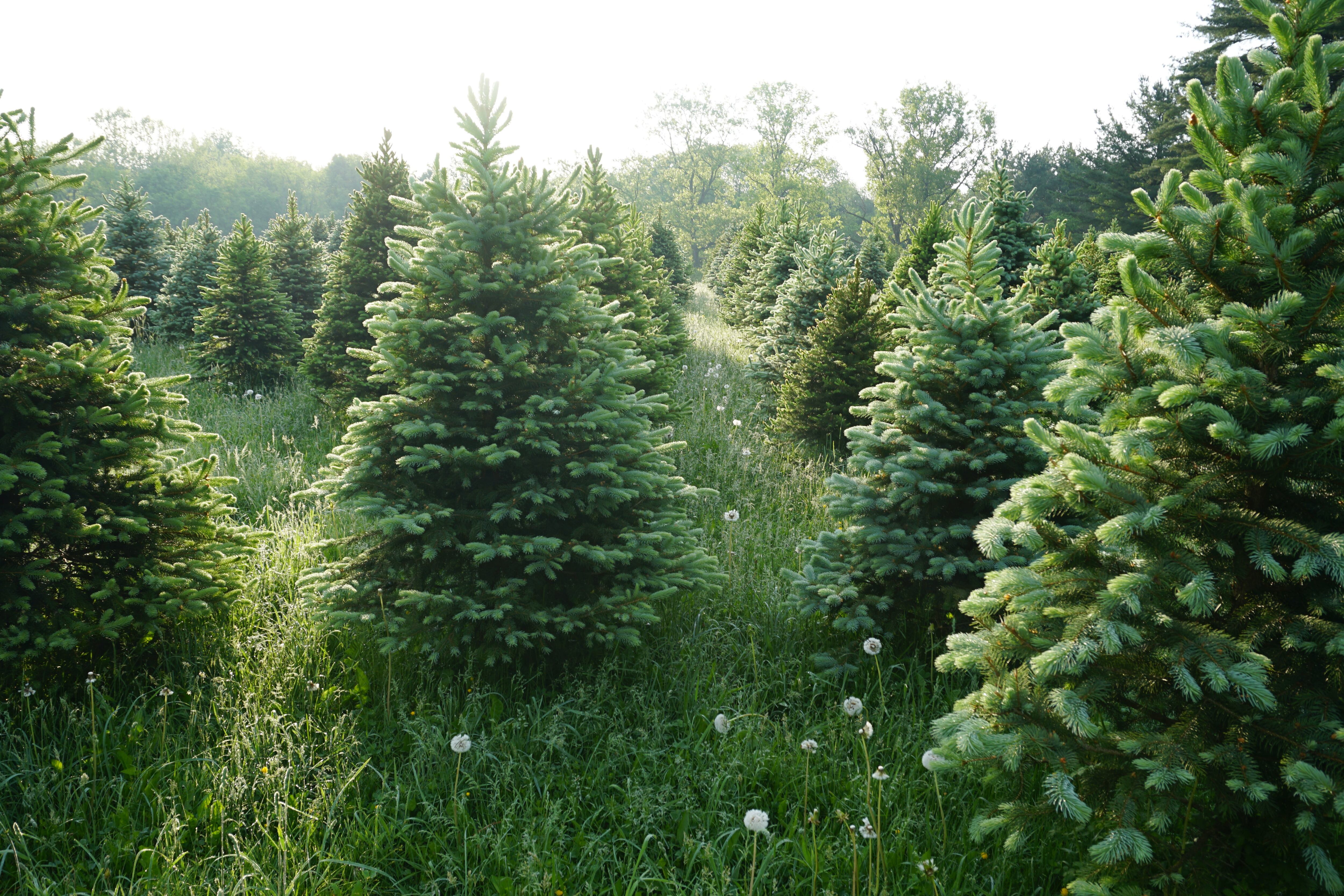
This year, consumers might not be as surprised by what's under their trees as by the trees themselves.
James Leach from Islip, New York, found his perfect tree at Stew Leonard's in Farmingdale.
"It's like 60 bucks…Which is a lot for a tree but you've got to do it," Leach said.
The specialty grocery store does Christmas big, selling some 50,000 real trees across seven locations in the tri-state area. Despite a tighter market for trees, Stew Leonard's was able to secure its entire stock of Christmas trees from a supplier in Quebec. But some prices jumped this year as a result of increased costs for shipping and labor amid the COVID-19 pandemic.
"Getting the deliveries from Canada shipped over to New York, or just to any one of our stores, the prices did go up on that, so we absorbed a lot of that cost within ourselves," said store director Felix Rodriguez. "But we did have to go up a little bit on our Fraser [firs]."
The cost of real Christmas trees has climbed about 5 to 8 percent annually — or roughly 40 percent — since 2015, according to Doug Hundley, seasonal spokesperson for the National Christmas Tree Association. He credits run-of-the-mill inflation, as well as supply issues new and old.
A heat wave in Oregon last summer, for example, wiped out significant portions of Christmas tree crops. But that wouldn't necessarily impact supplies nationwide. The most serious threat to Christmas tree supplies dates back about a decade.
"It takes 10 years to grow a Christmas tree," Hundley said. "Ten years ago, we were in the midst of the Great Recession. And sales were poor, prices were low, the growers were barely making a profit."
With less money to purchase seedlings, fewer trees were planted. Some farmers even dropped out of the business. Today, there's a tighter market for trees. But Hundley said that's enabled prices to recover from stagnation during and following the recession.
"Since 2015, to today, we've had this tighter market. And what it's done is it's allowed the prices to rise," Hundley said.
"We're now back to where we need to be in terms of a reasonable profit for Christmas trees. And I doubt the price is going to go up much more, " he added.
When a tighter market meets pricing pressure from COVID-19, it can be shocking for consumers. But Lee Itzler, owner and proprietor of Elwood Pumpkin and Christmas Tree Farm, welcomes the change.
"Everybody thinks growing trees is a high-profit business. It's not. There's a lot of heartbreak in it and a lot of hard work," he said.
There's joy in Christmas trees, too. Itzler said he's seen people cling to tradition for comfort amid the COVID-19 pandemic, first in pumpkin season, then during Christmas.
"It's the experience for the family. That's what a place like this exists for," Itzler said. "People come here with big smiles on their faces … just happy to walk around for an hour and a half, pick a tree, and then, you know, tie it to the car."