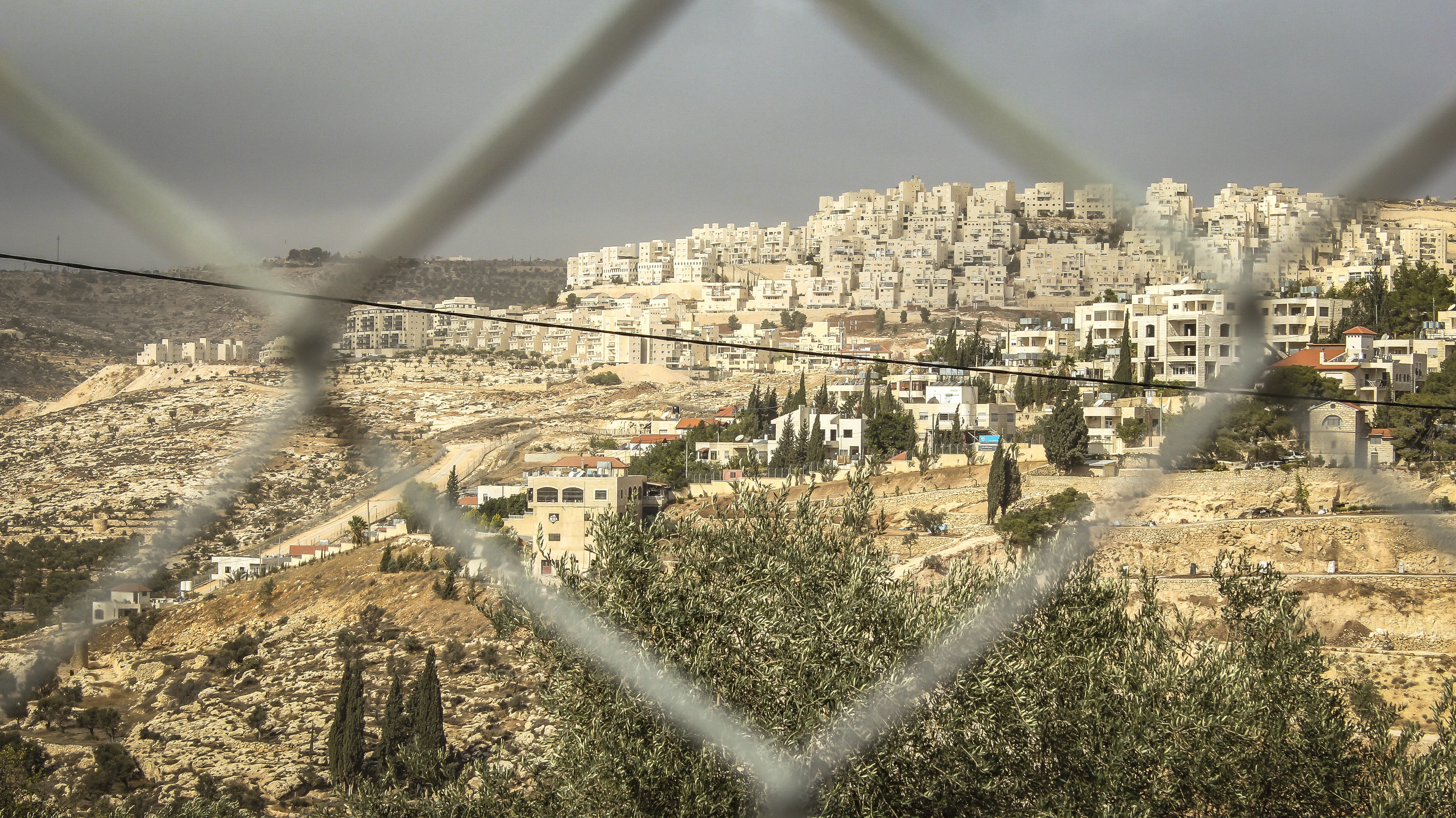
TripAdvisor, a leading recommendations platform for global tourism, came under fire last week for its scores of listings in Israeli settlements in the occupied Palestinian territories.
In an open letter to the company's employees, Amnesty International urged TripAdvisor to stop promoting housing accommodations and tourist attractions in settlements, which it said are founded on "a system of institutionalized discrimination and human rights violations" and illegal under international law.
The letter is the latest protest from humanitarian and activist groups against travel companies — including Airbnb, Expedia, and Booking.com — that promote attractions in settlements in the West Bank and East Jerusalem.
"By promoting tourism in these illegal settlements, TripAdvisor is boosting their economy, helping them to expand and contributing to the mass suffering they have caused," wrote Amnesty International.
The London-based human rights giant found that TripAdvisor lists over 70 attractions such as hotels, cafes, and tours in 27 different settlements across the occupied territories.
"We provide the listing as a platform for guests to share their genuine experiences with other travellers. As such, we do not remove listings of properties or businesses that remain active and open for business," TripAdvisor said in a statement. The company added that is understands the issue is "a sensitive matter with cultural and political implications" and that a listing on TripAdvisor "does not represent our endorsement of that establishment."
Israeli settlements were first built in East Jerusalem and the West Bank, which is referred to as Judea and Samaria by the Israeli government, following the 1967 Six Day War. Despite objections from the international community, Israeli settlements in the area — often established by ultra-conservative Jews — have grown significantly in the subsequent decades and remain a critical obstacle to peace.
As recently as 2016, the United Nations reaffirmed its position that the settlements violate international law, with the UN Security Council adopting a resolution with 14 out of 15 votes that called for Israel to immediately cease all settlement activities. The U.S. abstained from the vote, which was a major victory for Palestinian supporters given the U.S.' staunch backing of Israel and the fact that it could have vetoed the resolution altogether.
"We will continue to be a democratic State based on the rule of law and full civil and human rights for all our citizens," Danny Danon, Israel's representative at the UN, said in response to the vote. "And we will continue to be a Jewish State proudly reclaiming the land of our forefathers."
Today, there are more than 200 Israeli settlements with roughly 620,000 residents in the occupied territories, according to B'Tselem, an Israeli human rights organizations.

Amnesty International's letter comes as critics of Israel's conduct in the occupied territories increasingly employ economic protests.
Airbnb, for instance, came under enormous pressure in recent years for its accommodations in the West Bank. In November 2018, the company announced that it was removing listings in Israeli settlements from its platform — a decision lauded by Palesitian activists. Airbnb made a similar move in the Crimea peninsula following its annexation by Russia in 2014.
The platform, however, reversed its decision in April following multiple lawsuits from Airbnb hosts and intense lobbying from pro-Israel groups.
"We understand the complexity of the issue that was addressed in our previous policy announcement, and we will continue to allow listings throughout all of the West Bank," Airbnb said in a statement, adding specifically that it does not, and has never, supported an economic boycott of Israel.
Yet Airbnb decided not to take profits from its bookings in Israeli settlements, and instead donates its share of the revenue to various humanitarian groups.
In a report published last year, Human Rights Watch (HRW) found online booking platforms significantly fuel the local economies — and thus expansion — of Israeli settlements by promoting their accommodations, wineries, historical sites, and restaurants, among other attractions. HRW said the issue is especially problematic since many listings either glossed over their controversial location or inaccurately said they were located within Israel.
"For someone to occupy your land, that's illegal. For someone to build on your land, to rent it out, and profit from it – that is injustice itself," Awni Shaaeb, a Palestinian whose erstwhile land is now listed on Airbnb, told HWR.
In response to the report, Airbnb said that it is working to fix incorrectly labeled listings. Booking.com said it tries to be as transparent as possible regarding the location of its listings, but that it is merely a reservation platform and is not involved in the buying, selling, or expansion of properties.
Amnesty International also found that online travel platforms have immensely supported the expansion of settlements by promoting tourist attractions. In a report published in January, the organization even called on governments worldwide to intervene and regulate travel companies to "prevent them from fuelling the settlement economy," which accelerates their growth.
"We aim to provide travellers with an apolitical, accurate and useful picture of all accommodations, restaurants and attractions that are currently open for business around the world," TripAdvisor, which boasts nearly 500 million monthly unique users, added in their statement.
For tourists, however, discerning the controversial nuances of traveling in the occupied territories may only get more convoluted in years to come, especially given Israeli Prime Minister Benjamin Netanyahu's repeated vows to not only maintain settlements, but annex the communities entirely.