While the first presidential debate has been widely deemed a disaster and raised questions about the remaining scheduled political bouts, Senator Bob Menendez (D-N.J.) said that former Vice President Joe Biden should still gear up for the long haul.
However, Menendez called on the Commission on Presidential Debates to make some serious changes before the next scheduled rounds. Wednesday afternoon, the Commission announced it will rethink conditions of debates moving forward.
"I think there should be debates but there has to be a different system in which the moderator has to have some control because otherwise the American people get nothing and the nation is further humiliated," he told Cheddar.
"I thought the debate was a national disgrace," Menendez added, placing most of the blame on Trump's incessant interruptions during Biden's responses.
The Democratic senator has long been critical of the president but more so recently, taking him to task on the Senate floor over his reported tax payments of $750 in 2016 and 2017. Menendez said it is absolutely an issue that the American people are concerned about.
"I think no one is happy to pay taxes but they are certainly extremely unhappy when the president of the country pays nothing and they pay more than their fair share," he said.
Menendez also raised questions about the vast amount of debt the president reportedly holds and whether the lenders are foreign entities. "The American people deserve to know that. Several national security experts say that raises a serious national security question."
Like many of his fellow Democrats, Menedez also opposes Trump's nomination of Judge Amy Coney Barrett to the U.S. Supreme Court, calling it a direct threat to the election and an unfair process to the American people.
"Millions of people are voting already. They should have a say in who nominates the next Supreme Court justice by virtue of being elected as president," he explained.
As more people use mail-in ballots in light of the coronavirus pandemic, Trump continues to undermine the legitimacy of the process, potentially setting up a Supreme Court battle that could decide the outcome of the election, but Menedez said that in America, "the people decide the election, not some justice on the Supreme Court."
"If this, in fact, nomination does come up for a vote, which it should not before the election, then I certainly would not be voting for her," Menedez said.
He also pointed to Barrett's position critical of the Supreme Court decision that upheld the Affordable Care Act and her potential ability to dismantle the national health care law as reasons to consider voting against her appointment to the bench.
While there wasn't much to celebrate following last night's debate, Menendez said currently he is enjoying Hispanic Heritage Month.
"Hispanic Heritage Month is important because it is a celebration of the contributions of a community that has had a history in our country since before the founding of the nation," he noted. "The largest minority, fastest-growing in the nation, a trillion-dollar domestic marketplace that comes from the community; and so, these are all the elements that we celebrate at this time every year."
Born to Cuban immigrant parents, who fled to New York City and later relocated to Union City, N.J. in the 1950s, Menendez said the values instilled in him as a young man by his parents carved the path he's currently on, ultimately leading him to become just the sixth Latino person to be elected to the U.S. Senate.
Grant Stark, Director of Research at CapWealth, joins Cheddar News' Closing Bell, where he says that his firm is closely monitoring oil prices amid the geopolitical conflict between Russia and Ukraine, and elaborates on how inflation will continue to be a problem across multiple sectors.
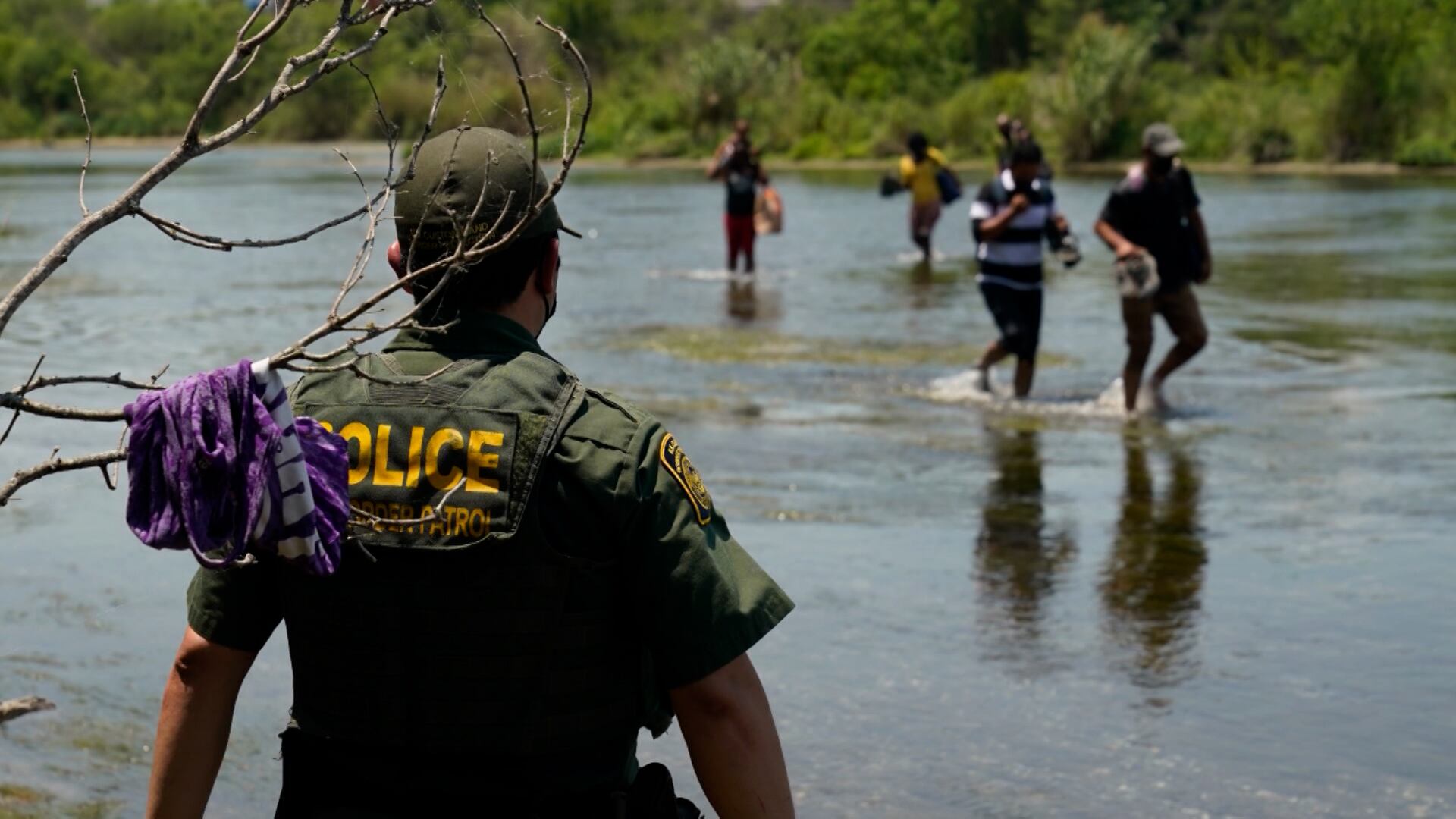
A private prison company plans to run a new pilot program that would place hundreds of migrants caught crossing the U.S.-Mexico border under house arrest. The "home curfew" pilot program is part of "impactful detention reforms," according to a spokesperson for the U.S. Department of Homeland Security. Jacinta Gonzalez, senior campaign organizer with Mijente, joins Cheddar News to discuss.
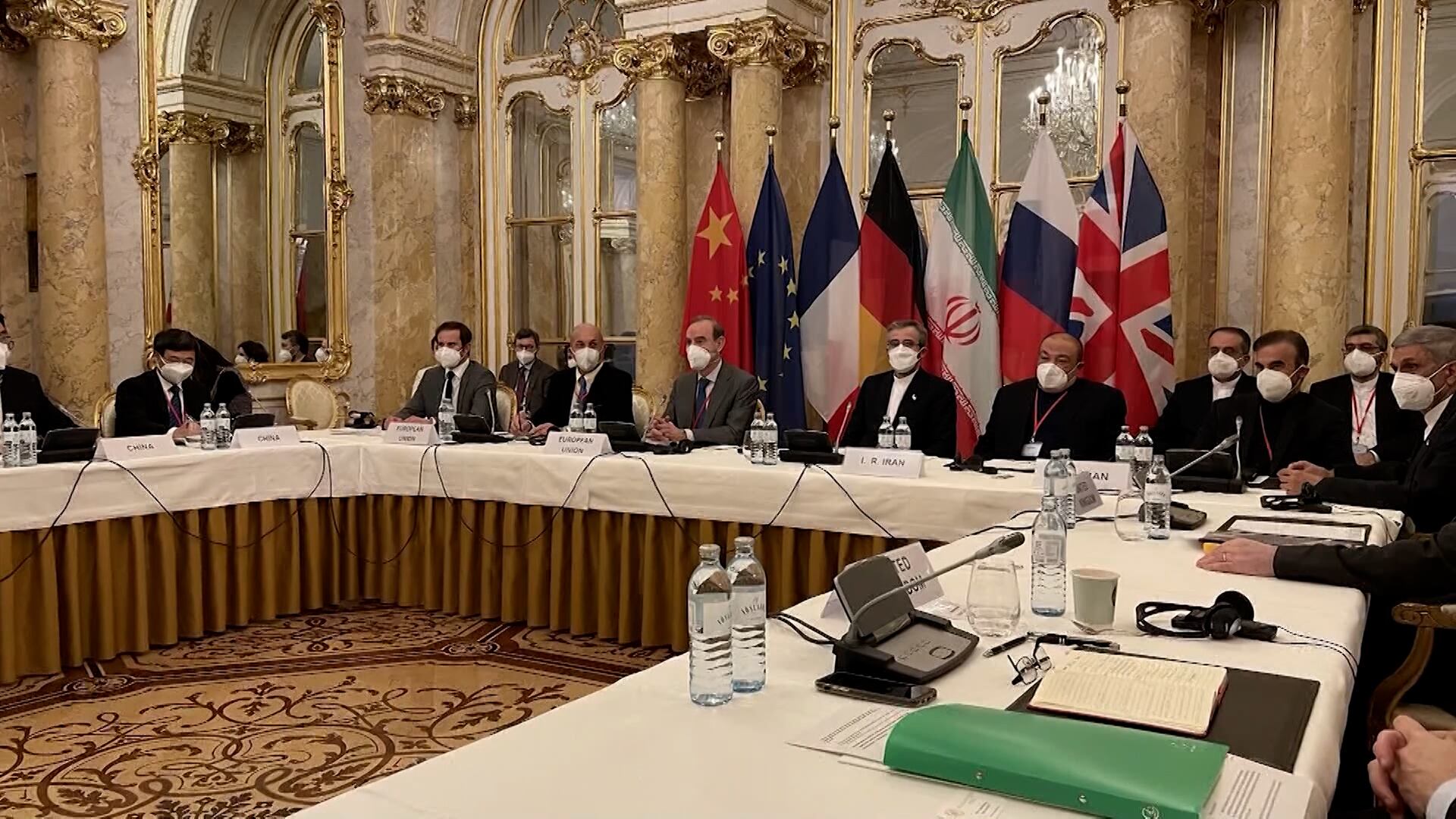
The U.S. is back in negotiations for a nuclear deal with Iran, years after former President Donald Trump withdrew the country from the Joint Comprehensive Plan of Action (JCPOA), which had been meant to curtail the Middle Eastern nation's nuclear ambitions. Former State Department senior advisor to the George W. Bush and Trump administrations, Christian Whiton, joined Cheddar News Wrap to discuss. “It appears to be very similar to the original JCPOA, which does put some constraints on Iran's nuclear program, but also has sunset provisions, including some that in the original plan were expected to take effect in 2025," he said. "And so, if we just reenter that plan, really it just buys perhaps a few years of slowing down, stopping, whatever you want to say, Iran's nuclear program."
The U.S. has announced the first of what could be multiple levels of sanctions against Russia after Moscow recognized two regions of Ukraine as independent. This comes as Britain imposes sanctions on five Russian banks and two oligarchs, and Germany freezes the Nord Stream gas pipeline. Terrell Star, a foreign affairs reporter at The Atlantic Council, joins from Kyiv to discuss.
Growing tensions in Ukraine might soon be impacting consumers in the United States. With Russia on an invasion footing in the region, gas prices are predicted to go up 10 to 15 cents a gallon in the next coming weeks, according to Robert Sinclair, spokesperson for AAA. Sinclair joined Cheddar to break down what could happen even further. "We've been seeing prices go up, and there's been nothing that's happened to affect supplies," he said. "But it's something known as the fear tax where just the talk of something that might interfere with supplies leads to prices going up speculatively."
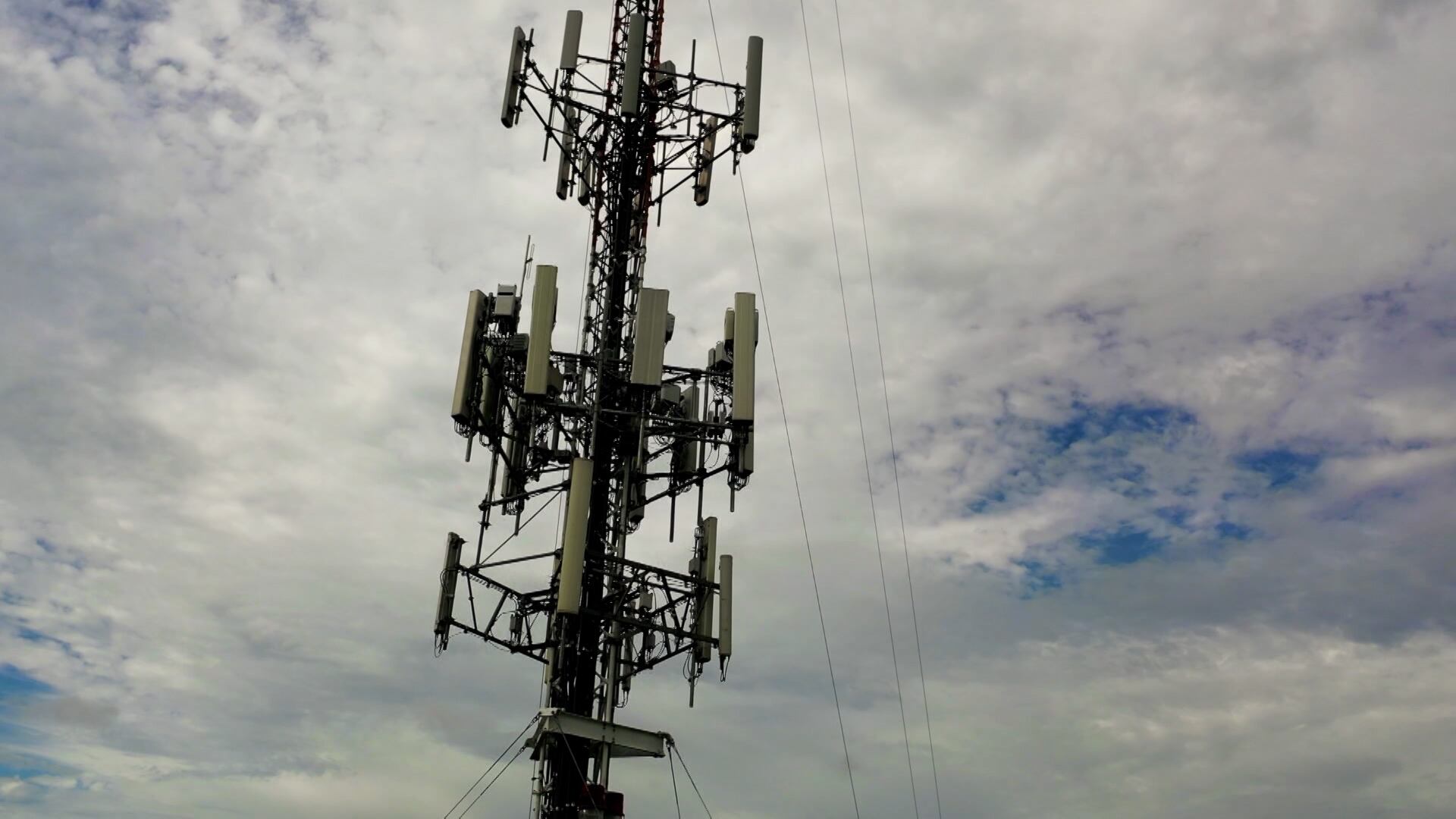
The end of 3G is upon us. On Tuesday, AT&T became the first major provider to disable its 3G services, and T-Mobile and Verizon plan to follow suit later this year. The shutdowns are expected to impact millions of vehicles that use 3G networks for updates, remote connection, and certain emergency and convenience features. Lance Ulanoff, the U.S. Editor-in-Chief of TechRadar, joined Cheddar's Closing Bell to discuss the ramifications of the changeover.
A new report shows nearly 240 former officials in Congress, the White House, and regulatory agencies have changed careers to work in the crypto industry.
President Biden unveiled new economic sanctions on Russia for what he called "the beginning of a Russian invasion". This came one day after Putin sent troops into two breakaway regions of eastern Ukraine. Alex Ward, national security reporter for POLITICO, explains what these sanctions might do to the global economy.
U.S. stocks ended today's session sharply lower on the heels of rising geopolitical tensions between Russia and Ukraine. Melissa Brown, Managing Director of Applied Research at Qontigo, joins Cheddar News' Closing Bell to discuss.