While the first presidential debate has been widely deemed a disaster and raised questions about the remaining scheduled political bouts, Senator Bob Menendez (D-N.J.) said that former Vice President Joe Biden should still gear up for the long haul.
However, Menendez called on the Commission on Presidential Debates to make some serious changes before the next scheduled rounds. Wednesday afternoon, the Commission announced it will rethink conditions of debates moving forward.
"I think there should be debates but there has to be a different system in which the moderator has to have some control because otherwise the American people get nothing and the nation is further humiliated," he told Cheddar.
"I thought the debate was a national disgrace," Menendez added, placing most of the blame on Trump's incessant interruptions during Biden's responses.
The Democratic senator has long been critical of the president but more so recently, taking him to task on the Senate floor over his reported tax payments of $750 in 2016 and 2017. Menendez said it is absolutely an issue that the American people are concerned about.
"I think no one is happy to pay taxes but they are certainly extremely unhappy when the president of the country pays nothing and they pay more than their fair share," he said.
Menendez also raised questions about the vast amount of debt the president reportedly holds and whether the lenders are foreign entities. "The American people deserve to know that. Several national security experts say that raises a serious national security question."
Like many of his fellow Democrats, Menedez also opposes Trump's nomination of Judge Amy Coney Barrett to the U.S. Supreme Court, calling it a direct threat to the election and an unfair process to the American people.
"Millions of people are voting already. They should have a say in who nominates the next Supreme Court justice by virtue of being elected as president," he explained.
As more people use mail-in ballots in light of the coronavirus pandemic, Trump continues to undermine the legitimacy of the process, potentially setting up a Supreme Court battle that could decide the outcome of the election, but Menedez said that in America, "the people decide the election, not some justice on the Supreme Court."
"If this, in fact, nomination does come up for a vote, which it should not before the election, then I certainly would not be voting for her," Menedez said.
He also pointed to Barrett's position critical of the Supreme Court decision that upheld the Affordable Care Act and her potential ability to dismantle the national health care law as reasons to consider voting against her appointment to the bench.
While there wasn't much to celebrate following last night's debate, Menendez said currently he is enjoying Hispanic Heritage Month.
"Hispanic Heritage Month is important because it is a celebration of the contributions of a community that has had a history in our country since before the founding of the nation," he noted. "The largest minority, fastest-growing in the nation, a trillion-dollar domestic marketplace that comes from the community; and so, these are all the elements that we celebrate at this time every year."
Born to Cuban immigrant parents, who fled to New York City and later relocated to Union City, N.J. in the 1950s, Menendez said the values instilled in him as a young man by his parents carved the path he's currently on, ultimately leading him to become just the sixth Latino person to be elected to the U.S. Senate.
As Russia continues to invade Ukraine, its tech outsourcing sector is at risk. Over the past few years, the country has become a popular outsourcing destination for American and European tech companies, but now the future of that industry is uncertain. Isabelle Bousquette, enterprise technology reporter, for The Wall Street Journal, discusses what repercussions the crisis might have on the industry, and what companies are doing to mitigate possible disruptions.
In a nearly 3,700 page UN report, climate scientists outline the imminent dangers caused by climate change, saying fossil fuels are 'choking humanity.' The report calls some of the impacts of global warming 'irreversible,' warning of extreme consequences in the near future. Kristie L. Ebi, Professor of Global Health and Environmental and Occupational Health Sciences, University of Washington joined Cheddar's Opening Bell to discuss.
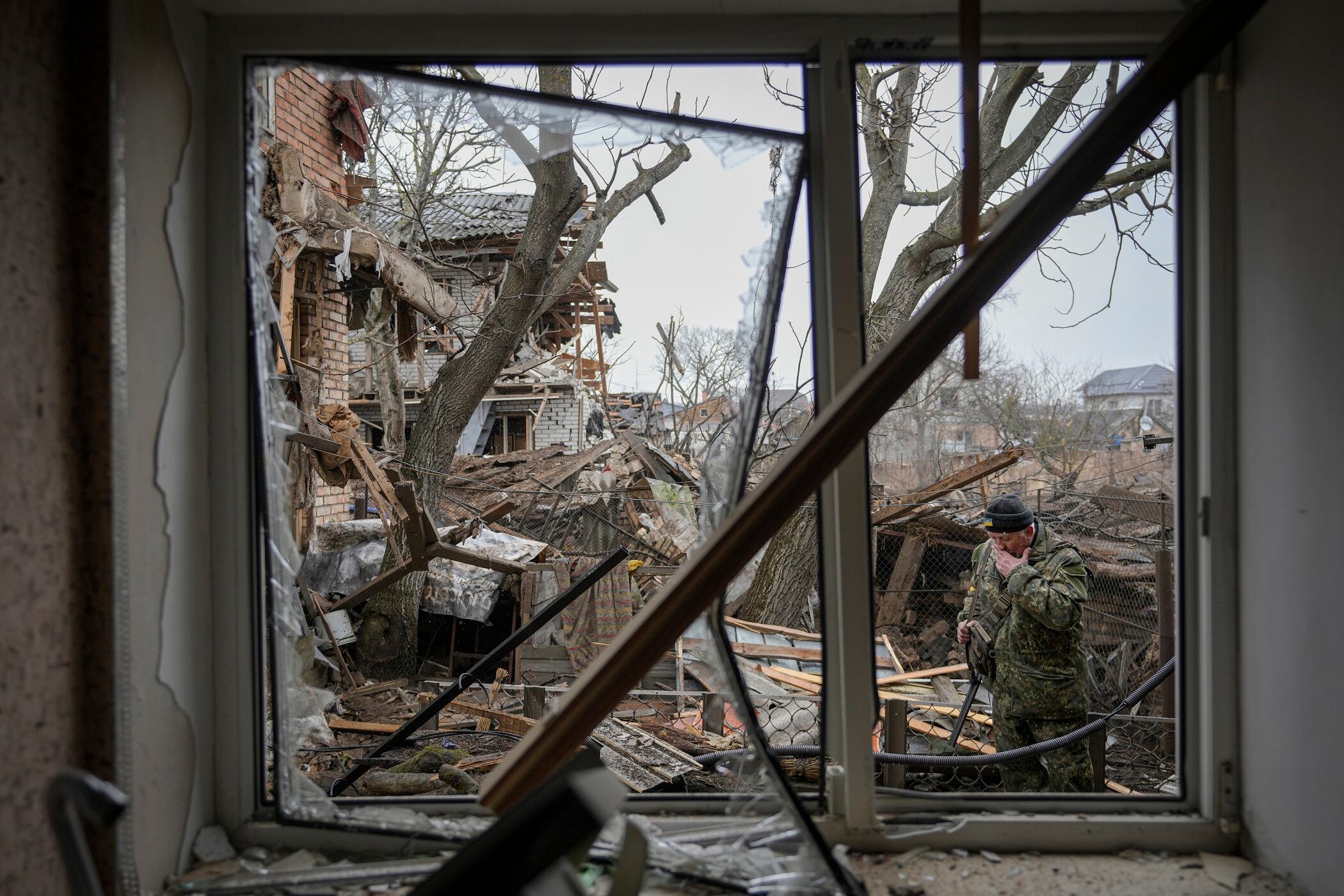
Ukrainian President Volodymyr Zelenskyy has signed an application for Ukraine's membership in the European Union, pleading with the bloc to accept this request. It comes as Russian forces push further into Ukraine, forcing at least half a million refugees to flee. Benjamin Schmitt, Postdoctoral Research Fellow at Harvard University and Senior Fellow at the Center for European Policy Analysis, breaks down the latest in Ukraine.
A growing wave of major U.S. companies have taken steps to cut ties with Russia or offer support to Ukraine, as tensions escalate in the region. Exxon, Apple and Boeing are just the latest companies to make the move, following the likes of Google, Meta and BP who have all announced plans to exit the region in response to the conflict. Courtney Vinopal, Breaking News Reporter, Quartz joined Cheddar's Opening Bell for more.
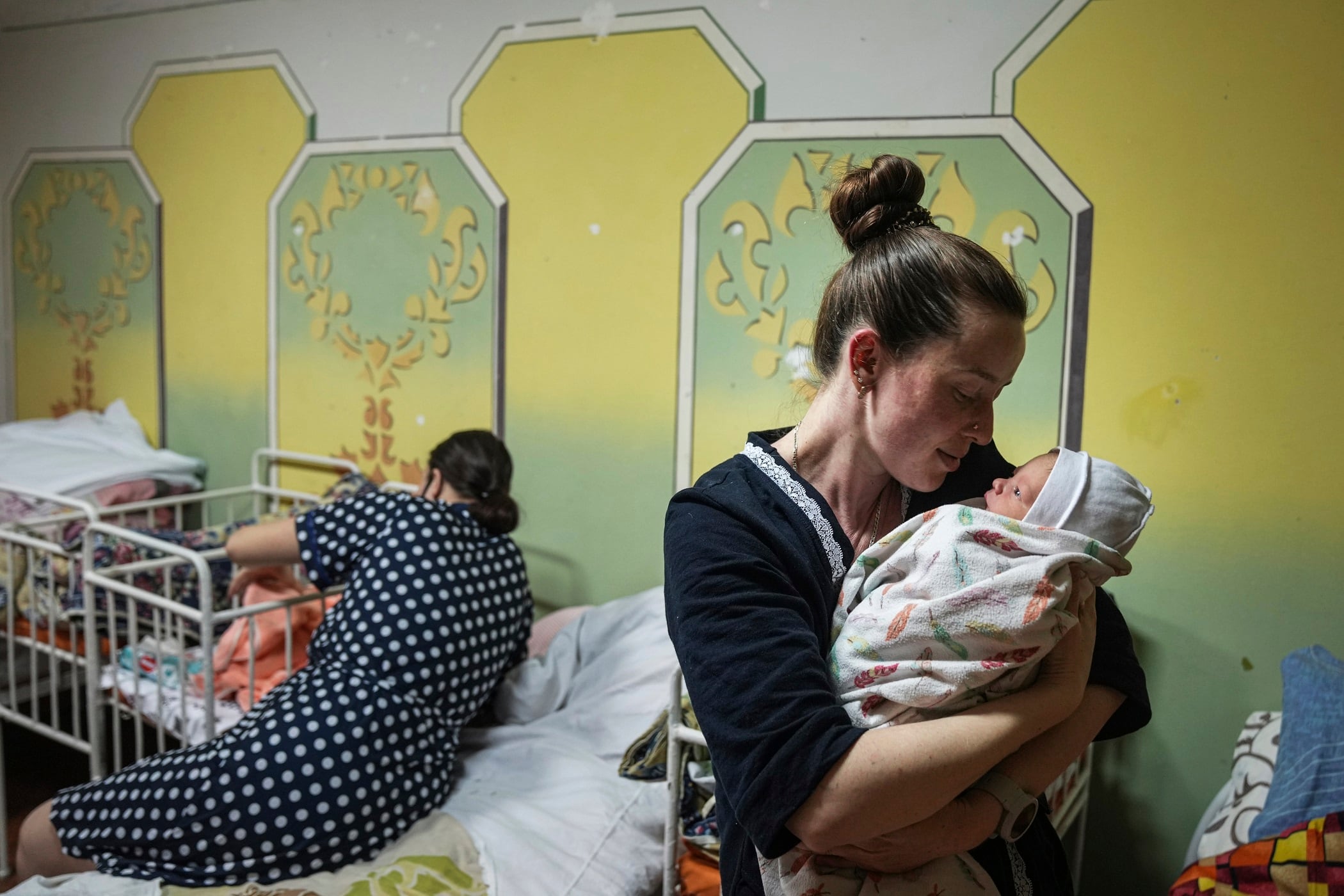
A hospital basement in Ukraine’s coastal city of Mariupol has transformed into a bomb shelter and maternity ward amid shelling during Russia’s invasion.
World leaders are currently dealing with a handful of pressing issues, including Russia's invasion of Ukraine, inflation, and not to mention the COVID-19 pandemic; but it could be argued that the most pressing issue is one that has experienced its fair share of neglect in the past -- climate change. As tensions escalate between Russia and Ukraine, there is fear the focus on climate will once again be pushed aside. However, the White House appears to be making some effort to prevent that from happening. The White House Office of Science and Technology held a first-of-its-kind roundtable discussion with some of the nation's leading climate scientists on Thursday. Michael Mann, Director of the Earth System Science Center at Pennsylvania State University, and author of the book 'The New Climate War' joins Cheddar News' Closing Bell to discuss his experience as one of the climate scientists at the White House event.
Scott Clemons, Partner and Chief Investment Strategist at Brown Brothers Harriman, joins Cheddar News' Closing Bell, where he discusses the factors leading to the sell-off on Wall Street today and explains why uncertainty is worse than bad news for the investors.
U.S. stocks rebounded to end higher on Thursday after President Biden announced new sanctions against Russia following the country's attack on Ukraine. The Dow was down 859 points at its lowest point of the session, before ultimately finishing the day in the green. Melissa Armo, founder and owner of the Stock Swoosh, joins Cheddar News' Closing Bell to discuss.
People of African and Middle Eastern descent fleeing from Russia’s invasion of Ukraine are facing the double trauma of racism at the borders. Professor of law and migration studies at the University of San Francisco, Bill Hing, joined Cheddar News Wrap to discuss what some are describing as a double standard for other refugees escaping the war. "Those that are from the Middle East and from Africa who just happen to be in Ukraine, for example on a student visa, they are not going to be able to get into Poland or another area of the Schengen area because they are not natural Ukrainian," he said.