In his first public remarks following the U.S. assassination on Iran's Major General Qassem Soleimani, President Donald Trump said the killing was an act intended to "stop a war. We did not take action to start a war."
"The world is a safer place without these monsters," Trump said, noting there had been an imminent threat to Americans in the region.
The president ordered the airstrike in Baghdad that killed Soleimani, one of the top Iranian military officials, and several others. However, on Friday Democrats quickly decried the president's failure to notify Congress and the bipartisan 'Gang of Eight' before making the decision to escalate tensions with the Middle Eastern power.
Meanwhile, Republicans have said this was a necessary action to deter the defiant nation from further aggression against the U.S.
Rep. Mike Gallagher (R-Wis. 8th District), who serves on the House Armed Services Committee told Cheddar "You don't always have the luxury of being able to notify Congress," although he noted it is better to do so, when possible.
In the past, "when we have stepped up and said 'We are the superpower here,' we were able to convince them" to back down, Gallagher said. He called today's move a defensive action and said Iran usually backs down when "confronted with a credible American threat."
However, in the immediate aftermath of Soleimani's death, Iran did not appear to be backing down, as the nation's Supreme Leader Ayatollah Ali Khamenei quickly promised severe revenge for the drone strike.
Soleimani, who led the Quds Force of the Islamic Revolutionary Guards Corps, played a large role in Iranian policy, which made him a target for years, but both presidents George W. Bush and Barack Obama opted not to escalate tensions by ordering a strike against him. Soleimani bolstered Shiite influence in the region, supported Hamas in the Gaza Strip, and was behind hundreds of American deaths in Iraq. He and four other Iranian officials were designated as terrorists in 2011.
After Iranians took to the streets to protest and the country's supreme leader Ayatollah Ali Khamenei promised retaliation, the Pentagon announced it will send 3,500 more U.S. troops to the region, further complicating the situation in the Middle East only months after the president vowed to bring home troops from Syria and Iraq. The U.S. said Soleimani was planning attacks on Americans in the region.
Democratic and Republican responses have been divided.
Speaking in front of an audience in Anamosa, Iowa on Friday, Democratic presidential contender Senator Bernie Sanders (I-Vt.) said "Trump promised to end endless wars. Tragically, his actions now put us on the path to another war." Democrats have said the move was both imprudent and done without Congressional approval.
On the Senate floor, Minority Leader Charles Schumer (D-N.Y.) noted the president failed to notify the top Congressional leaders usually briefed on military actions. However, Senator Lindsay Graham (R-S.C), who is not a member of the group, said the president did brief him during his trip to Florida. "I appreciate being brought into the orbit. I really appreciate President Trump letting the world know you cannot kill an American without impunity," Graham said on Fox & Friends.
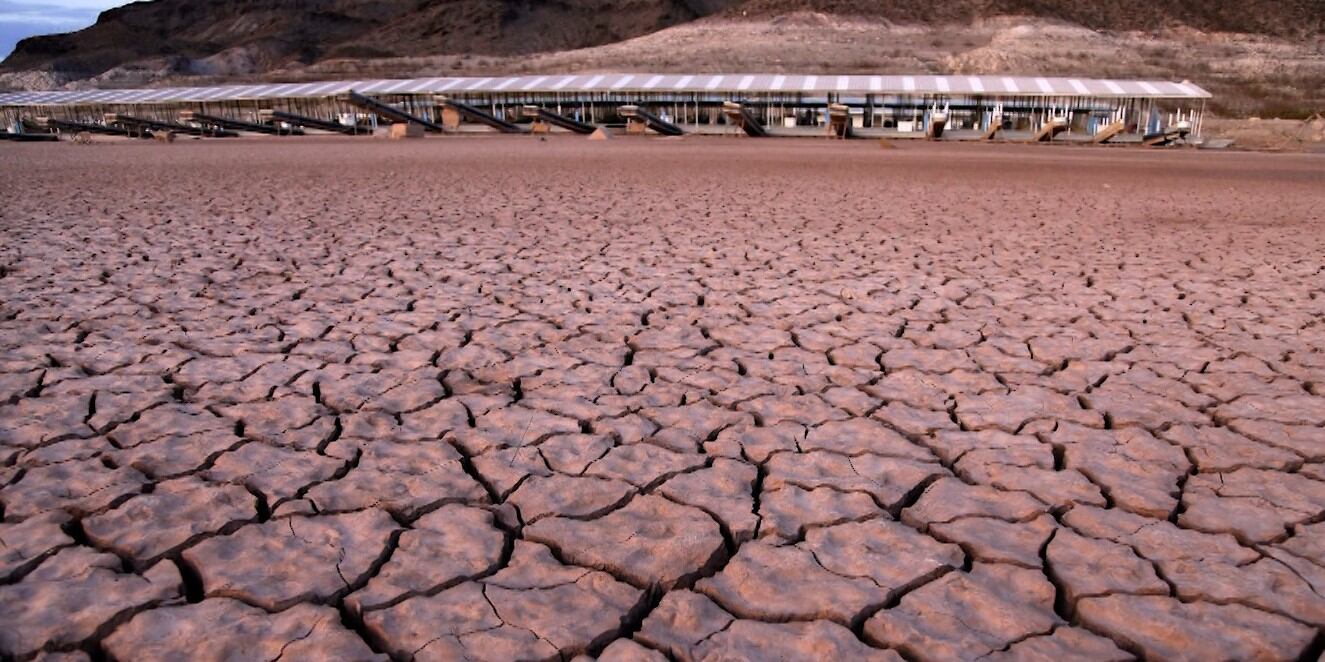
A new analysis reveals that for more than two decades, the West has been the driest it has ever been since 800 A.D. The drought which began in 2000 has brought more devastating wildfires and draining water reserves well below healthy levels. Climate Scientists and Adjunct Associate Research Scientist at Lamont Doherty Earth Observatory at Columbia University,Benjamin Cook, joined Cheddar to discuss more.
Inflation remains hot as the January PPI has increased by 1 percent, twice what analysts had been expecting with a jump of 9.7 over the year. Beth Ann Bovino, the U.S. chief economist, for S&P Global Ratings, joined Cheddar News to discuss the rapid pace of inflation alongside higher wages, predicting the Federal Reserve will act quickly and forcefully this year. "They haven't changed their forecast, yet, that's gonna come out soon. But we expect that a March rate hike is basically pretty much baked in the cake," she said. "We think six rate hikes in total for 2022."
For black history month, Cheddar is highlighting black business leaders who are driving the need for representation forward. On February 10, the U.S. Chamber of Commerce hosted an event called 'Developing the Black-Owned Business Ecosystem.' The virtual event was organized under the lobbying group's two initiatives -- the Equality of Opportunity Initiative, and the Coalition to Back Black Businesses. The event highlighted the developments needed to develop more black-owned businesses in the U.S. Dr. Anthony Wilbon, Dean of the School of Business at Howard University, joined Cheddar News' Closing Bell to discuss his experience as a speaker at the event.
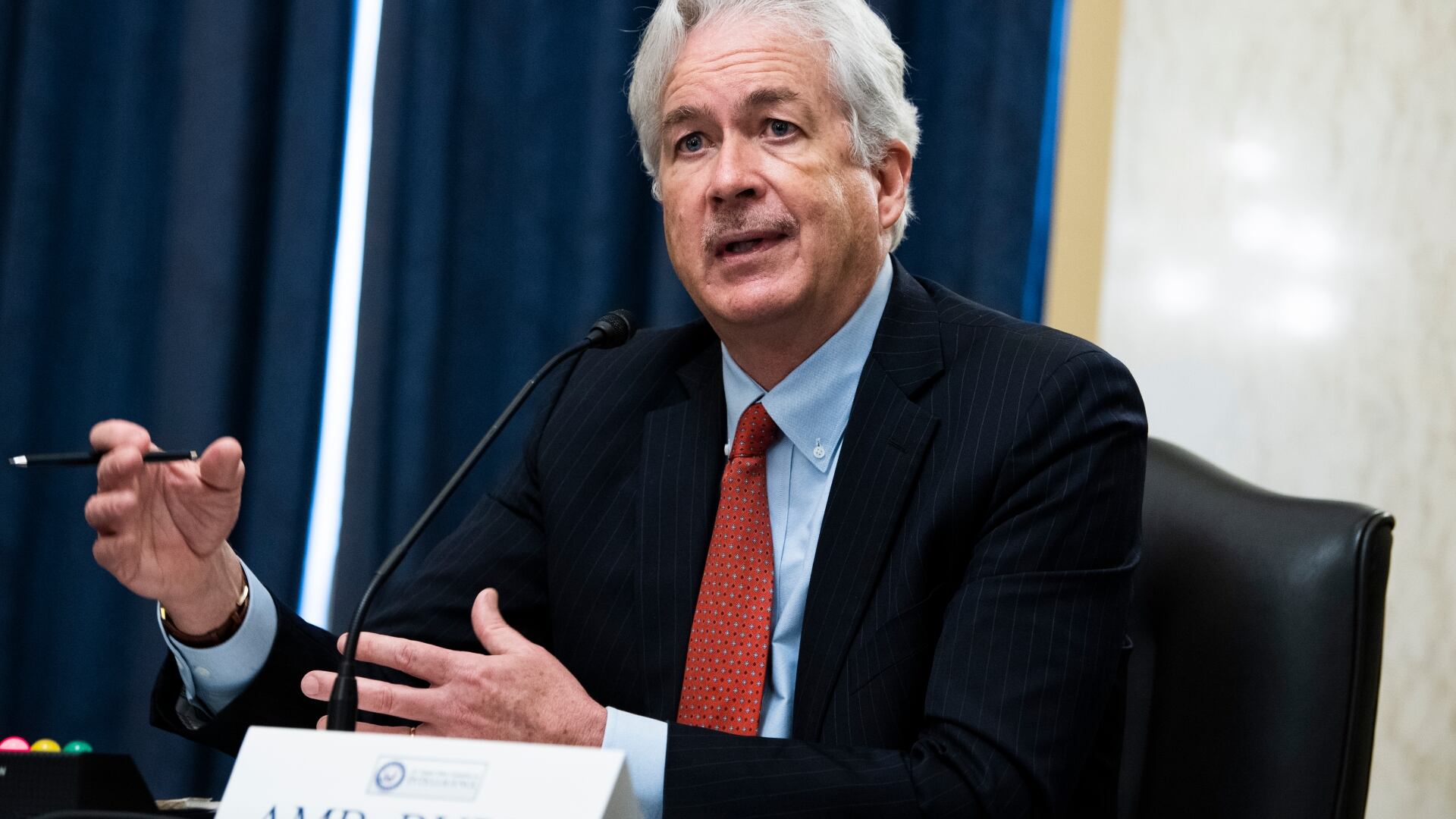
A newly declassified letter by senators Ron Wyden and Martin Heinrich claimed the CIA. has been conducting a Secret Surveillance Program which has been collecting a bulk of data from American citizens. The letter which was written in April of 2021 urges the CIA to come clean about the kind of data it collects and how many Americans have been impacted. According to these two senators, the program did not have the safeguards of congressional oversight.
Art Hogan, Chief Market Strategist at National Securities, joined Cheddar News' Closing Bell, where he says investors are taking a wait-and-see approach when it comes to the situation between Russia and the Ukraine and elaborates on the impact higher oil prices stemming from the conflict would have on the market.
Last week, Senators Ron Wyden of Oregon and Martin Heinrich of New Mexico, Democrats on the Senate Intelligence Committee, wrote a a letter airing concerns that the CIA is collecting the data of American citizens without their consent. The lawmakers fear that the program might be exploiting private data. Morgan Wright, the chief security advisor at cybersecurity firm SentinelOne, joined Cheddar News to discuss the ramifications of the letter. "We don't have all the dots in one place to connect them," said Wright, cautioning against jumping to conclusions.
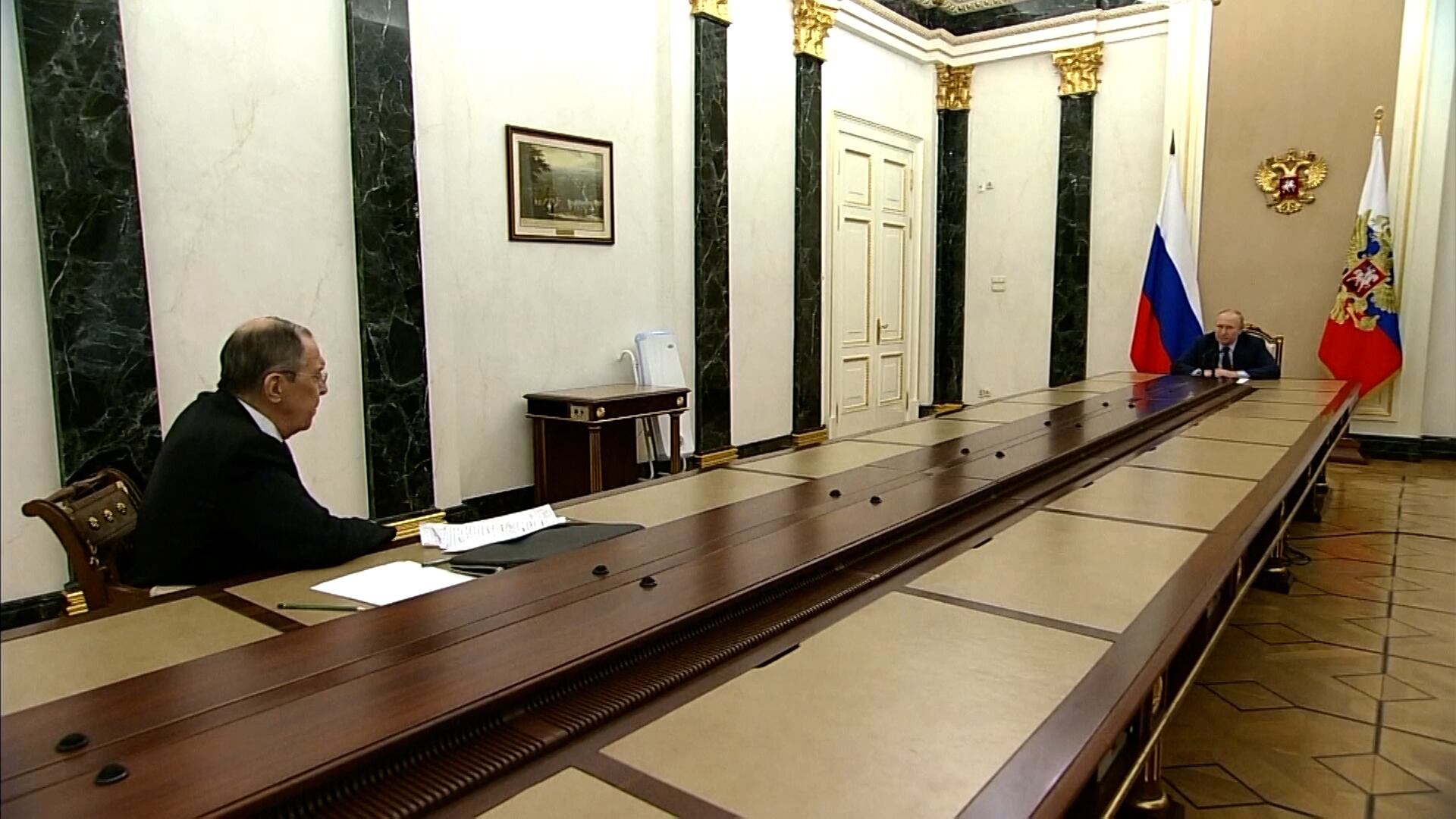
Russian President Vladimir Putin and his Foreign Minister Sergey Lavrov said that diplomacy is still possible, while U.S. officials warn that an attack on Ukraine is imminent. Cheddar News speaks with James Astill, Washington bureau chief of The Economist on the latest developments in Eastern Europe.
As the number of Russian troops rose to 130,000 along its Ukrainian border, hopes for a diplomatic solution remain among world leaders. Jason McMann, head of geopolitical risk analysis at Morning Consult, joined Cheddar News to break down the fluid situation. "We saw signs pointing towards an increase in tensions between Ukraine and Russia, whereas today we're seeing some signs that the Russian government may be willing to continue down a path of diplomatic negotiations to try and find some sort of non-military solution," he said.