The Dark Horse Lurking Among Potential SCOTUS Picks
*By Conor White*
While most reports indicate Brett Kavanaugh and Amy Coney Barrett are the two front-runners to fill the soon-to-be-vacant seat on the Supreme Court, USA Today reporter David Jackson believes President Trump could have a surprise in store for everyone.
In an interview Thursday on Cheddar, Jackson hinted that Raymond Kethledge, a Michigan-based appeals court judge, is still firmly in the mix and could be the pick.
"Trump was very impressed with the fact that he's written a book about leadership," Jackson explained. "I'm told that Trump's personal feeling in these personal interviews is going to be very important, and apparently he got along quite well with Kethledge."
But Kethledge is contending with two other popular candidates. Coney Barrett is a former Notre Dame professor and was Trump's pick for a seat on the 7th U.S. Circuit Court of Appeals. Kavanaugh is a former clerk for Justice Anthony Kennedy, who will retire at the end of the month, and worked for Ken Starr during the Bill Clinton/Monica Lewinsky investigation. Jackson believes the job is his to lose.
"He's been around a long time, he's a well known guy," he explained. "I would say he's really the favorite."
But there's an opportunity for someone to play the spoiler. Jackson pointed out not everyone is a fan of the 53-year-old Kavanaugh.
"He also has his critics, a lot of whom point out he worked for George W. Bush, which isn't a plus in Trump World."
That detail may open the door for Barrett. Jackson noted that while she's been a judge for less than a year, the 46-year-old has plenty of supporters, thanks to her religious beliefs.
"She also was involved in a very controversial confirmation earlier this year, where her Catholic faith became an issue," Jackson explained. "Some Democrats questioned whether she could fairly judge the abortion issues and privacy issues because she was such a devoted Catholic, and of course that created quite a flap and created a lot of fans for Judge Barrett among religious conservatives, who are very important to the Trump administration."
President Trump is expected to announce his pick to replace Kennedy on July 9th.
For the full segment, [click here.](https://cheddar.com/videos/two-frontrunners-emerge-for-scotus-seat)
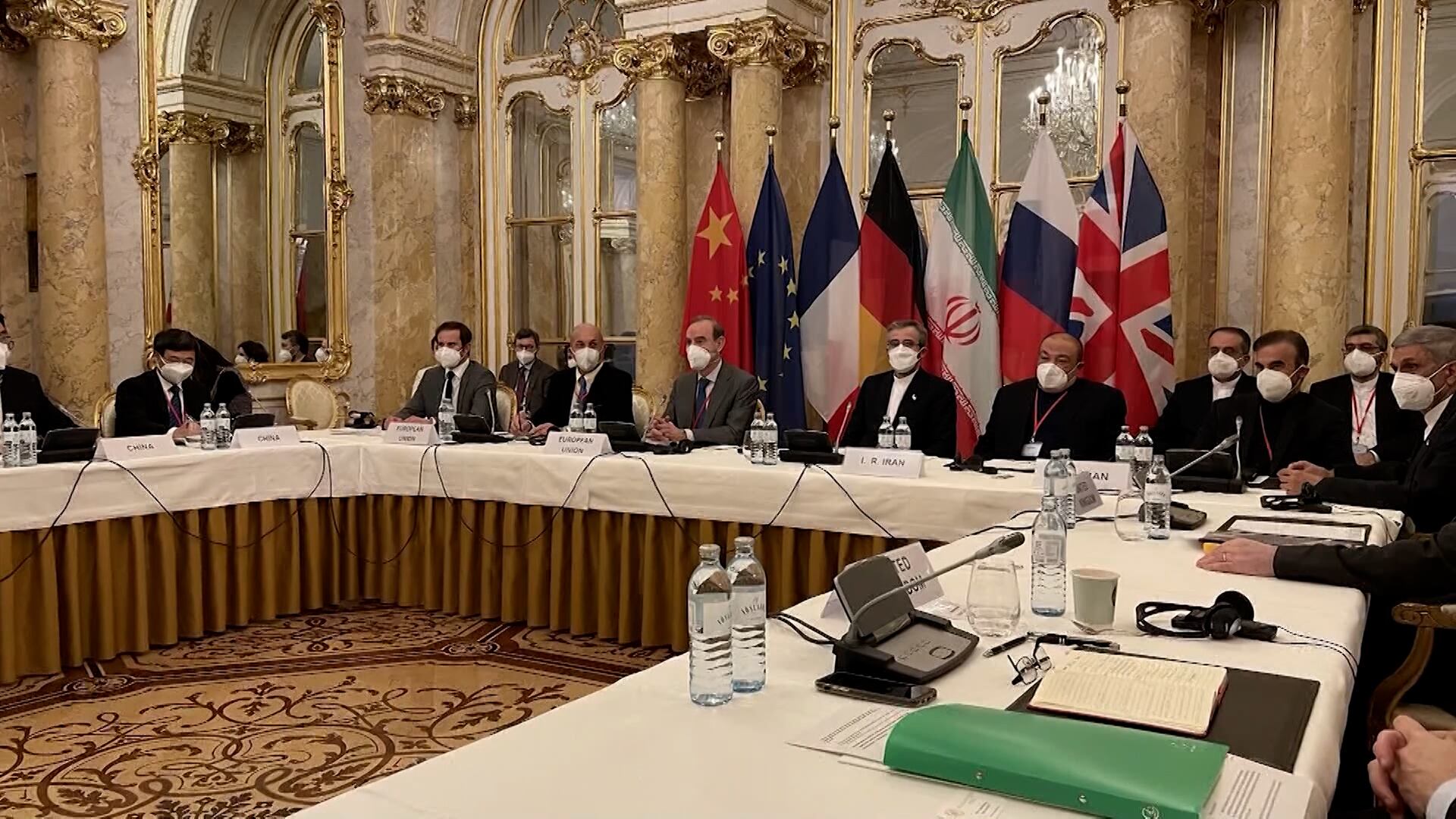
The U.S. is back in negotiations for a nuclear deal with Iran, years after former President Donald Trump withdrew the country from the Joint Comprehensive Plan of Action (JCPOA), which had been meant to curtail the Middle Eastern nation's nuclear ambitions. Former State Department senior advisor to the George W. Bush and Trump administrations, Christian Whiton, joined Cheddar News Wrap to discuss. “It appears to be very similar to the original JCPOA, which does put some constraints on Iran's nuclear program, but also has sunset provisions, including some that in the original plan were expected to take effect in 2025," he said. "And so, if we just reenter that plan, really it just buys perhaps a few years of slowing down, stopping, whatever you want to say, Iran's nuclear program."
The U.S. has announced the first of what could be multiple levels of sanctions against Russia after Moscow recognized two regions of Ukraine as independent. This comes as Britain imposes sanctions on five Russian banks and two oligarchs, and Germany freezes the Nord Stream gas pipeline. Terrell Star, a foreign affairs reporter at The Atlantic Council, joins from Kyiv to discuss.
Growing tensions in Ukraine might soon be impacting consumers in the United States. With Russia on an invasion footing in the region, gas prices are predicted to go up 10 to 15 cents a gallon in the next coming weeks, according to Robert Sinclair, spokesperson for AAA. Sinclair joined Cheddar to break down what could happen even further. "We've been seeing prices go up, and there's been nothing that's happened to affect supplies," he said. "But it's something known as the fear tax where just the talk of something that might interfere with supplies leads to prices going up speculatively."
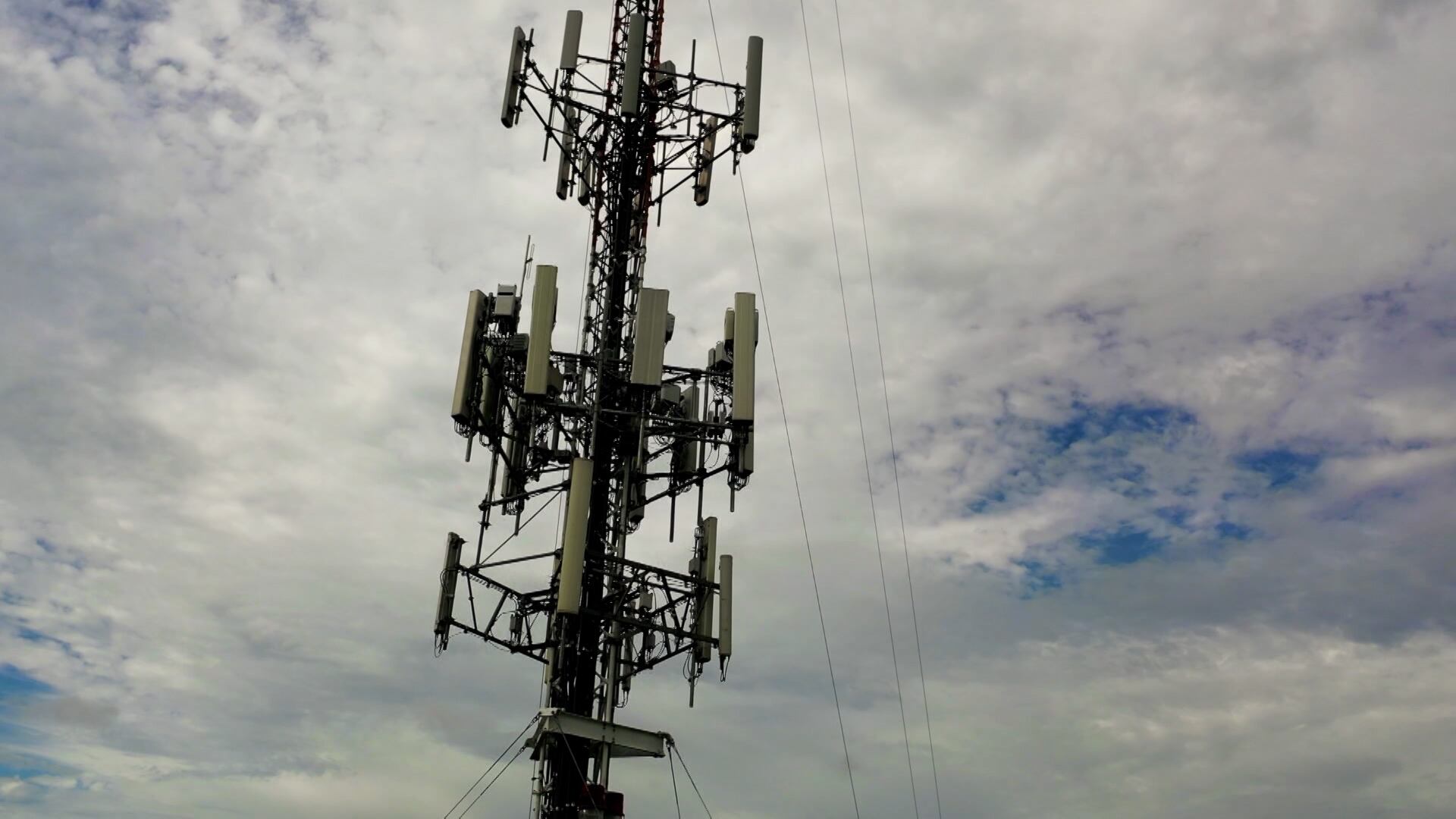
The end of 3G is upon us. On Tuesday, AT&T became the first major provider to disable its 3G services, and T-Mobile and Verizon plan to follow suit later this year. The shutdowns are expected to impact millions of vehicles that use 3G networks for updates, remote connection, and certain emergency and convenience features. Lance Ulanoff, the U.S. Editor-in-Chief of TechRadar, joined Cheddar's Closing Bell to discuss the ramifications of the changeover.
A new report shows nearly 240 former officials in Congress, the White House, and regulatory agencies have changed careers to work in the crypto industry.
President Biden unveiled new economic sanctions on Russia for what he called "the beginning of a Russian invasion". This came one day after Putin sent troops into two breakaway regions of eastern Ukraine. Alex Ward, national security reporter for POLITICO, explains what these sanctions might do to the global economy.
U.S. stocks ended today's session sharply lower on the heels of rising geopolitical tensions between Russia and Ukraine. Melissa Brown, Managing Director of Applied Research at Qontigo, joins Cheddar News' Closing Bell to discuss.
President Joe Biden said Tuesday that the U.S. will begin to impose sanctions on Russia, calling recent troop movement into Ukraine an 'invasion.' Biden and other government officials including from the State Department have begun to classify the Russian troop movement as an invasion after Russian President Vladimir Putin ordered troops to two independent Ukrainian areas in an alleged "peacekeeping" mission — which the West considers an act of aggression. Biden said Russia will continue to pay 'an even steeper price' if it continues sending troops into Ukraine. What happens next? Will Putin find a way around these sanctions? Ariel Cohen, senior fellow at the Atlantic Council, joins Closing Bell to discuss Biden's remarks, how the West will protect Ukraine since it doesn't belong to NATO, and more.