President Trump reiterated his "America first" worldview and policy agenda on Tuesday in a speech at the United Nations that bemoaned globalism and instead urged mutual support among sovereign nations.
"Wise leaders put the good of their own people and their own country first," Trump said in his third address as president to the UN General Assembly. "The free world must embrace its national foundations. It must not attempt to erase them or replace them."
However, he called for countries to work together toward common goals. "America is ready to embrace friendship with all who genuinely seek peace and respect," he said. "Many of America's closest friends today were once our greatest foes. America has never believed in permanent foes."
As with his past speeches at the UN, Trump used the platform to critique international institutions.
The president doubled down on his maximum pressure approach to Iran, a government he characterized as "one of the greatest security threats" to international peace. Trump, who pulled the U.S. out of the Iran nuclear deal last year despite global objections, threatened greater sanctions if "menacing behavior continues" and added that "no responsible government should subsidize Iran's blood lust."
Trump also called on North Korea to denuclearize and slammed Venezuelan President Nicolas Maduro, calling the embattled leader a "dictator" and "a Cuban puppet protected by Cuban bodyguards." In a not-so subtle shunning, the Venezuelan delegation in the audience visibly read a book about Simón Bolívar, the military and political leader that lead Venezuela's fight for independence.
<i>Photo Credit: Richard Drew/AP/Shutterstock</i>
On China, Trump reiterated that he will "not accept a bad deal for the American people" in order to resolve the enduring trade dispute between the two countries. He also called on Chinese President Xi Jinping to tread carefully in responding to the ongoing unrest in Hong Kong, saying that China must adhere to the governing system that protects "Hong Kong's freedom, legal system, and democractic ways of life."
He bragged of America's strong economy and lowest level of unemployment in half a century, "thanks to our pro-growth economic policies" and noted plans to meet with Japan's Prime Minister Shinzō Abe to work on a new trade agreement.
While touting the might of the U.S. military, the president said the U.S. "does not seek conflict" and desires "peace, cooperation, and mutual gain with all," although his administration will "never fail to defend America's interests." He also called on member nations to increase their contributions to global security and "pay their fair share of the tremendous defense burden" that has largely fallen on the U.S.
On migration, Trump fired back against international criticim of his illegal immigration policies, saying, "Each of you has the absolute right to protect your borders and so, of course, does our country." He also criticized "open border activists" who he said pursue a "cruel and evil" agenda that is "empowering criminal organizations that prey on innocent men, women and children."
The president also derided socialism — the "wrecker of nations and destroyer of societies" — and declared that the U.S. will never be a socialist country.
Above all, however, Trump stressed that governments lead by "patriots" are the future of the world's nation-state system.
"The true good of a nation can only be pursued by those who love it, by citizens who are rooted in its history, who are nourished in its culture, committed to its values, attached to its people, and who know that its future is theirs to build," Trump said at the end of his speech.
If some members of Congress have their way, there might finally be a 'TLDR' on sites' terms of service, introduced by the terms-of-service labeling, design, and readability act – or TLDR for short. With this act, users will actually understand what they're agreeing to or the many ways in which their data is being used before pressing 'accept.' J.D. sat down with co-sponsor of the bill and Senator Bill Cassidy, to discuss.
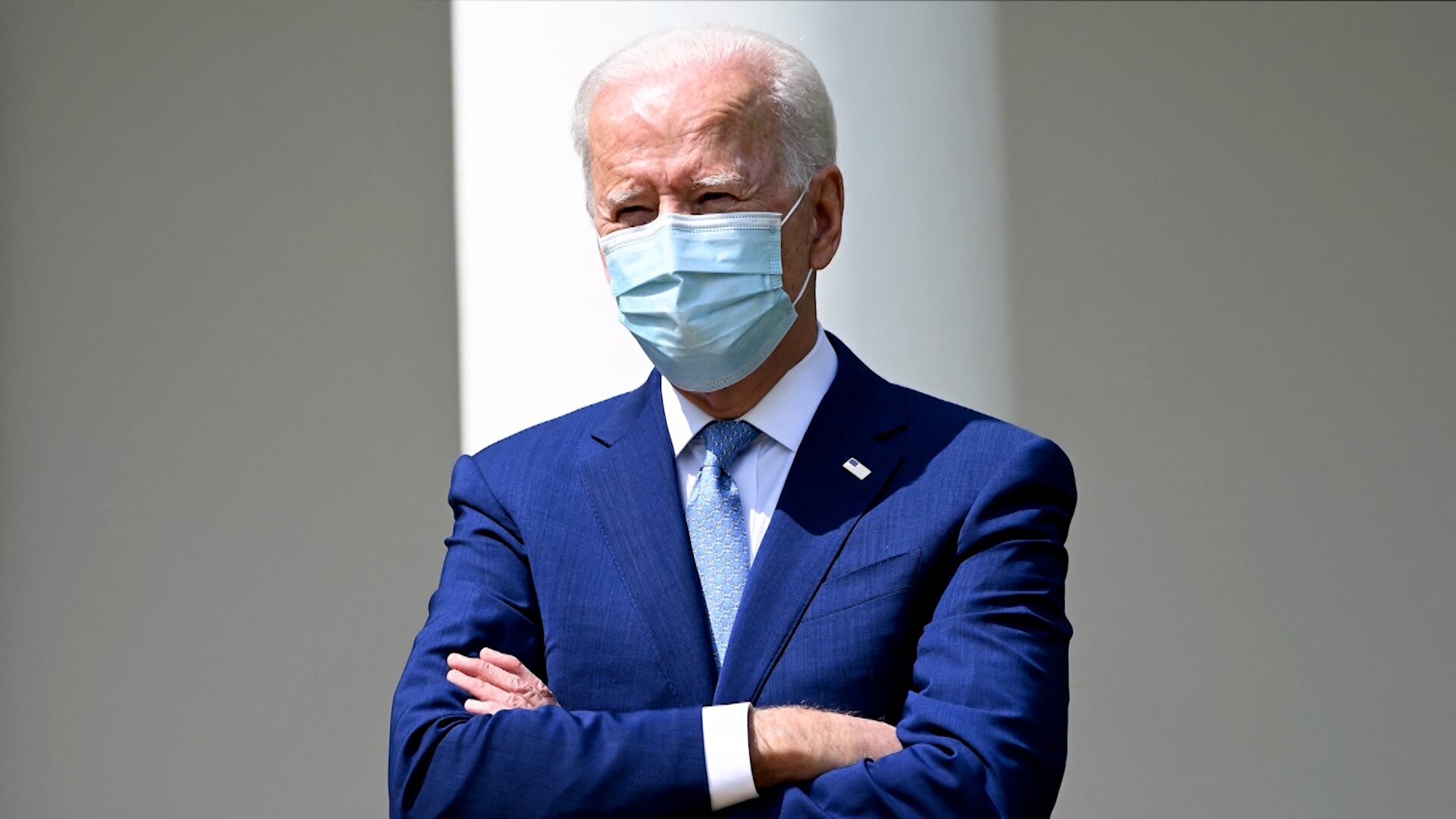
President Joe Biden's first year in office is wrapping up. What has he achieved, and what else remains on the table while the Democrats have control of Washington? Amid an ongoing pandemic and rising inflation, Biden's approval rating is at an all-time low and his party is plagued by infighting. Will he be able to continue pushing key parts of his agenda? Paul Glastris, former Bill Clinton speechwriter & Editor-in-chief of 'Washington Monthly,' joins Cheddar News' Closing Bell to discuss the president's achievements in his first year, where he's fallen short, and what he must do in order to get more of his agenda signed into law.
Tech giants Meta, Amazon, Alphabet, and Apple are faced with a bipartisan antitrust legislation effort underway in the Senate Judiciary Committee. The companies stand accused of promoting their own goods and services over smaller competitors on their platforms, holding too much monopolistic power via their app stores and services. Adam Kovacevich, founder and CEO of Chamber of Progress, a technology industry trade group, joined Cheddar to argue that the bills that are being debated currently could end up hurting consumers, rather than helping.
Concerns over inflation have become one of the biggest worries for executives. A survey from The Conference Board shows that more than 900 CEOs consider inflation a top tier concern, a major shift from last year's survey that had it as a low-level concern. Rebecca Ray, Executive Vice President, Human Capital, The Conference Board joined Cheddar's Opening Bell for more.
Jordan Zakarin, Media Producer at A More Perfect Union, joined Cheddar News to break down the latest from Colorado, where at least 8,700 Kroger employees walked off the job in demand of increased benefits and wages.
With the 2022 Winter Olympics in Beijing rapidly approaching, clouds of controversy continue to swirl around China's treatment of the Uyghur Muslim minority population, its surveillance state, and security for visiting athletes. Phelim Kine, China correspondent for Politico, joined Cheddar to break down the big storylines surrounding the Beijing Games and highlight what he saw as the complete disregard by top corporate sponsors like P&G, Airbnb, Intel, Visa, and Coca-Cola, for the controversies. "They spend $100 million for every Olympics that they sponsor, and they have frankly shown absolute willful indifference to any type of entreaty to essentially be more vocal about their concerns about human rights in China," he said. Kine also touched on the data privacy fears for athletes as visiting contingents are being told to carry burner phones to avoid security risks.
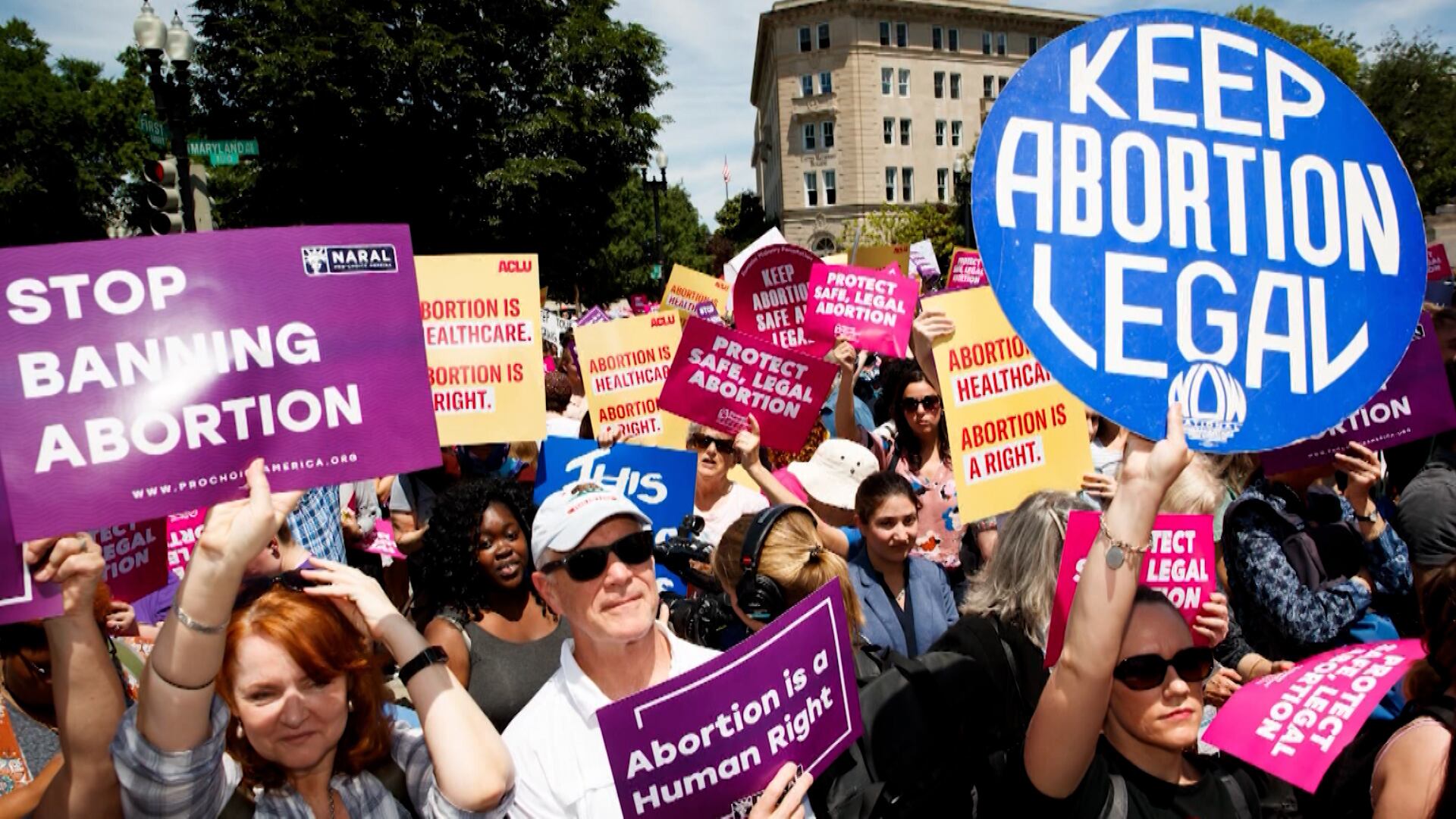
Texas's six-week abortion ban remains in effect after a federal appeals court ruling on Monday. The U.S. court of appeals for the fifth circuit temporarily transferred the case to the Texas Supreme Court, which is expected to leave the dispute in limbo for months to come. Katie Barlow, attorney and media editor of SCOTUSblog, joins Cheddar News to discuss.
Hugh Odom, founder and president of Vertical Consultants, shared his expertise on telecommunications with Cheddar on the safety issue raised about 5G deployment by airlines. The installation was partially delayed again on Tuesday as the airlines warned of potentially catastrophic delays in a letter to the Biden administration. Later, both Verizon and AT&T relented and put a pause on some of the implementations. "The first thing the Biden administration needs to do is get everybody in the room and say, look, aviation industry, identify the problem — wireless industry, come up with a solution," said Odom.
Dave Levinthal, deputy Washington Bureau chief at Insider, joins Cheddar News to discuss Gallup's new survey that reveals more Americans leaned Republican by the end of 2021.