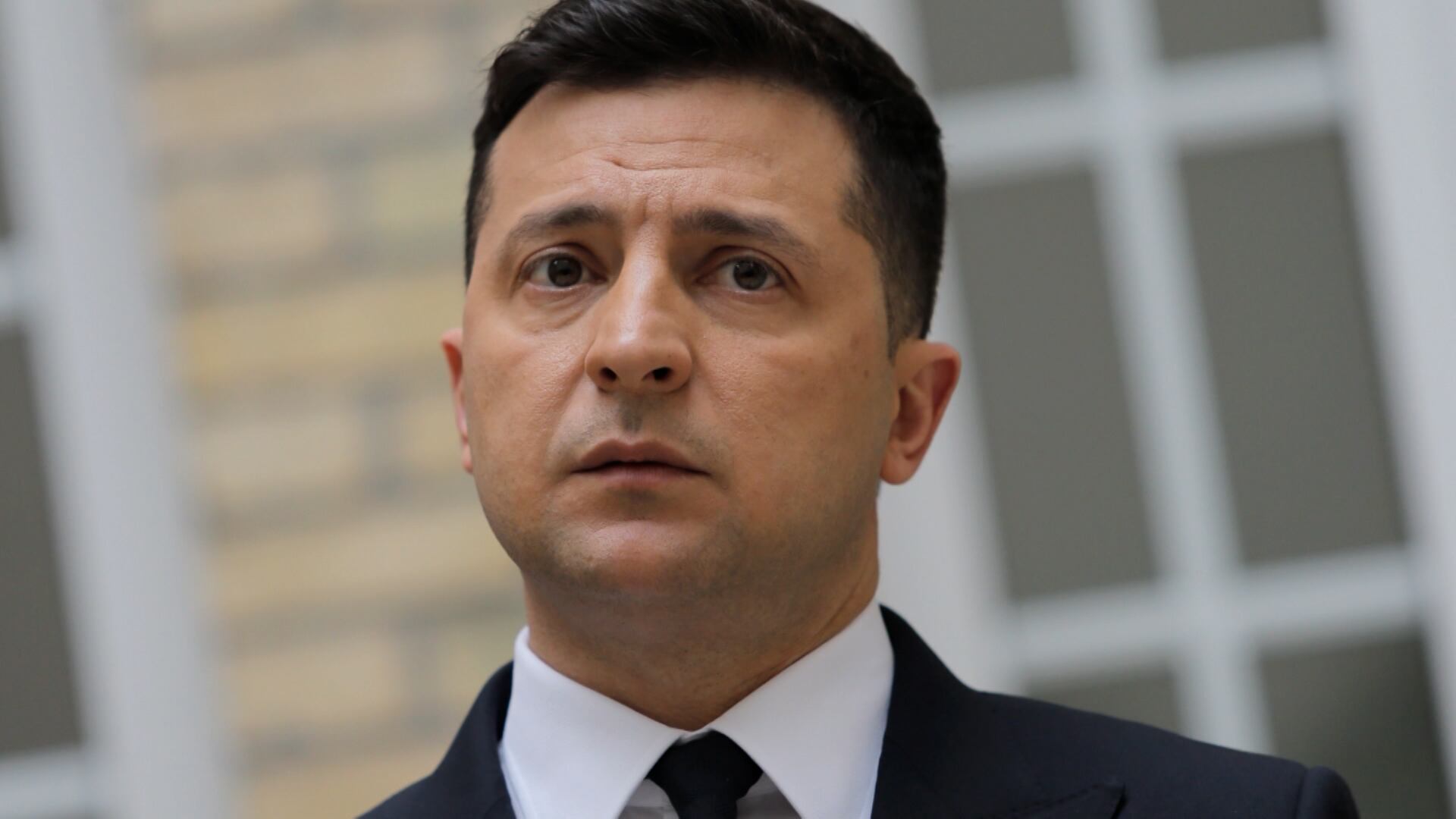
President Trump reiterated his "America first" worldview and policy agenda on Tuesday in a speech at the United Nations that bemoaned globalism and instead urged mutual support among sovereign nations.
"Wise leaders put the good of their own people and their own country first," Trump said in his third address as president to the UN General Assembly. "The free world must embrace its national foundations. It must not attempt to erase them or replace them."
However, he called for countries to work together toward common goals. "America is ready to embrace friendship with all who genuinely seek peace and respect," he said. "Many of America's closest friends today were once our greatest foes. America has never believed in permanent foes."
As with his past speeches at the UN, Trump used the platform to critique international institutions.
The president doubled down on his maximum pressure approach to Iran, a government he characterized as "one of the greatest security threats" to international peace. Trump, who pulled the U.S. out of the Iran nuclear deal last year despite global objections, threatened greater sanctions if "menacing behavior continues" and added that "no responsible government should subsidize Iran's blood lust."
Trump also called on North Korea to denuclearize and slammed Venezuelan President Nicolas Maduro, calling the embattled leader a "dictator" and "a Cuban puppet protected by Cuban bodyguards." In a not-so subtle shunning, the Venezuelan delegation in the audience visibly read a book about Simón Bolívar, the military and political leader that lead Venezuela's fight for independence.
<i>Photo Credit: Richard Drew/AP/Shutterstock</i>
On China, Trump reiterated that he will "not accept a bad deal for the American people" in order to resolve the enduring trade dispute between the two countries. He also called on Chinese President Xi Jinping to tread carefully in responding to the ongoing unrest in Hong Kong, saying that China must adhere to the governing system that protects "Hong Kong's freedom, legal system, and democractic ways of life."
He bragged of America's strong economy and lowest level of unemployment in half a century, "thanks to our pro-growth economic policies" and noted plans to meet with Japan's Prime Minister Shinzō Abe to work on a new trade agreement.
While touting the might of the U.S. military, the president said the U.S. "does not seek conflict" and desires "peace, cooperation, and mutual gain with all," although his administration will "never fail to defend America's interests." He also called on member nations to increase their contributions to global security and "pay their fair share of the tremendous defense burden" that has largely fallen on the U.S.
On migration, Trump fired back against international criticim of his illegal immigration policies, saying, "Each of you has the absolute right to protect your borders and so, of course, does our country." He also criticized "open border activists" who he said pursue a "cruel and evil" agenda that is "empowering criminal organizations that prey on innocent men, women and children."
The president also derided socialism — the "wrecker of nations and destroyer of societies" — and declared that the U.S. will never be a socialist country.
Above all, however, Trump stressed that governments lead by "patriots" are the future of the world's nation-state system.
"The true good of a nation can only be pursued by those who love it, by citizens who are rooted in its history, who are nourished in its culture, committed to its values, attached to its people, and who know that its future is theirs to build," Trump said at the end of his speech.
The United States Secretary of Agriculture, Tom Vilsack joins None of the Above to discuss the newly emerging conflict in Europe, what it means for agriculture in the states, dairy and meat consumption, and how the department is planning to promote climate-smart agriculture.
Tens of thousands of people have fled Ukraine in attempts to escape the Russian Invasion. According to the U.N. neighboring countries like Poland, Hungary, and even Romania have seen half a million refugees. While the hospitality is being welcomed by many, it also highlights the mistreatment of migrants and refugees from the Middle East and Africa. Professor of Philosophy and Director of Politics at Northeastern University Serena Parekh, joined Cheddar, to discuss more.
As Russia unleashed war in the country of Ukraine, global leaders have started inflicting punishment on Vladimir Putin's regime via commercial and financial penalties. According to President Joe Biden Putin's aggression is "a flagrant violation of international law and it demands a firm response from the international community".However, the main question is will these sanctions actually work. Partner at Jenner & Block LLP, Rachel Alpert, joined Cheddar to discuss more.
A Gallup poll finds that now 7.1% of American adults identify as LGBTQ, jumping from 3.5% in 2012. The increase is driven by Generation-Z – those born between 1997 and 2003 – of whom one out of five identify as LGBTQ. Cheddar News speaks with Washington Blade reporter Chris Johnson about the significant shift.
As the Biden administration continues to see the potential for an imminent invasion of Ukraine after contradictory reports of a Russian troop pullback or buildup, Rep. Ami Bera (D-Calif. 7th District), a member of the House Committee on Foreign Affairs, joined Cheddar News to give his insight into the tense situation. "When I was in Ukraine a couple of weeks ago and we were talking with the Ukrainian leadership with President Zelensky, they said we ought to approach Vladimir Putin as though he was a poker player," he said. "So this could be one of those head fakes where he's saying one thing and doing another thing."
The Biden Administration has now issued new guidelines when it comes to carbon capture. The new guidelines handed down this week encouraged the widespread use of climate attacks that traps and stores carbon emissions. The goal here is the process would help keep carbon out of the atmosphere without requiring a whole lot of change by big companies and manufacturing plants. Several scientists say that this method would be crucial to help us decrease the use of carbon emissions by the year 2050. Professor of Civil and Environmental Engineering at Stanford University, Mark Jacobson, joined Cheddar to discuss more.
Natalie Fertig, federal cannabis policy reporter for Politico Pro, joins Cheddar News to discuss the latest in marijuana legalization in the United States.
The Biden administration is launching a new task force to promote the use of 'cleaner' construction materials with lower life cycle emissions. This comes as the White House works to speed up government purchases of greener products. Sweta Chakraborty, climate change expert and U.S. president of "We Don't Have Time," joins Cheddar News to discuss.
Due to the staffing shortages of teachers in New Mexico, the state has been encouraging its National Guard members to fill in as licensed substitutes to keep schools open. Kurt Steinhaus, New Mexico secretary of education, joined Cheddar News to explain the state's stopgap measure amid its lack of teaching professionals. "The first thing they have to go through a fingerprint background check, just like any other substitute new Mexico. The second thing they have to do is go through some online training, and then we provided some in-person professional development about classroom management," Steinhaus explained about the qualifications process.