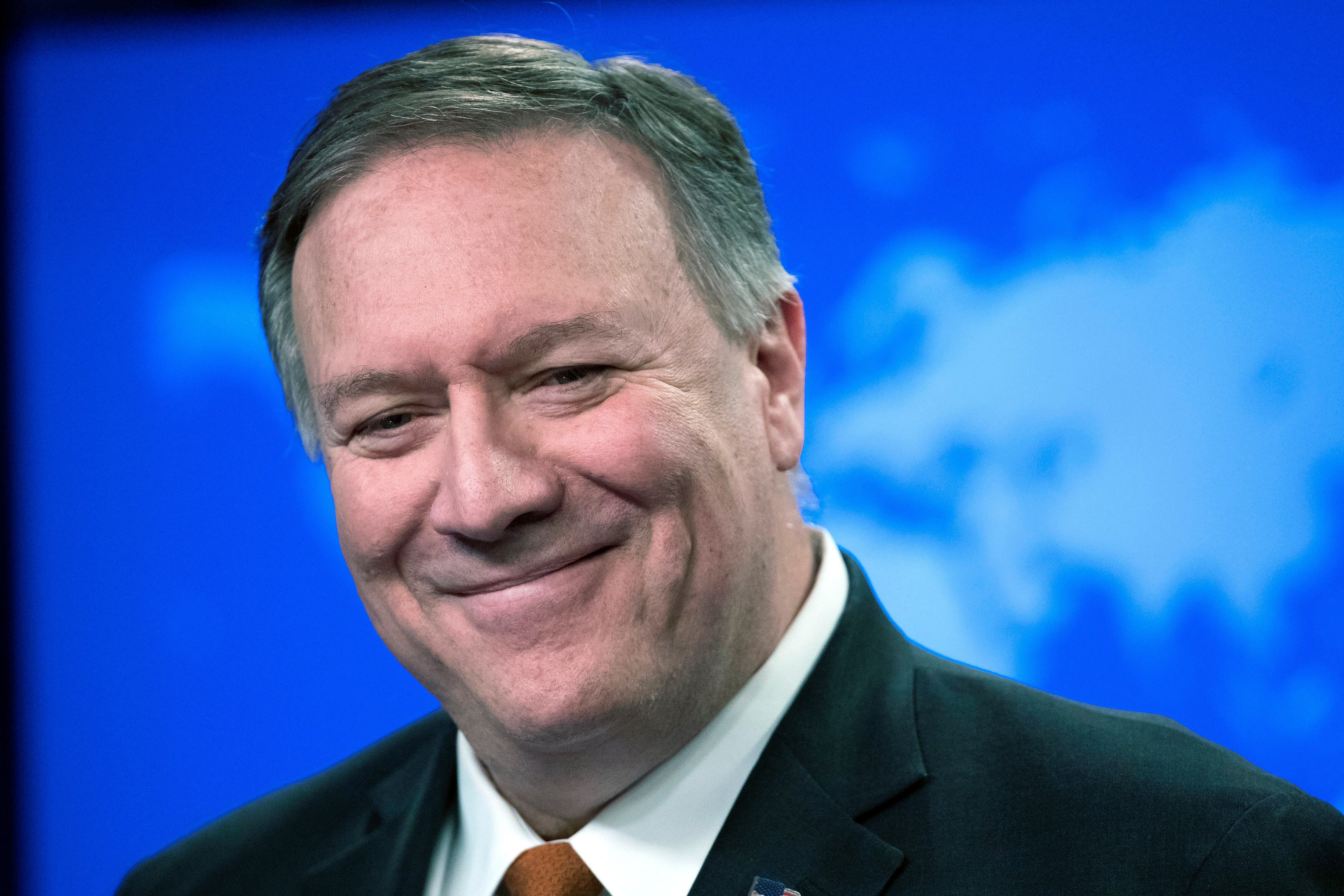
In this Nov. 26, 2019 file photo, then Secretary of State Mike Pompeo smiles as he speaks with reporters at the State Department in Washington. The State Department says it's looking into the the apparent disappearance of a nearly $6,000 bottle of whisky given to former Secretary of State Mike Pompeo by the government of Japan. (AP Photo/Alex Brandon)
By Matthew Lee
The State Department said Wednesday it’s looking into the apparent disappearance of a nearly $6,000 bottle of whisky given more than two years ago to then-Secretary of State Mike Pompeo by the government of Japan. Pompeo knows nothing about the gift or an inquiry, a representative said.
In a notice filed in the Federal Register, the department said it could find no trace of the bottle’s whereabouts and that there is an “ongoing inquiry” into what happened to the booze. The department reported the investigation in its annual accounting of gifts given to senior U.S. officials by foreign governments and leaders.
The department's Office of Protocol is required to record gifts given to U.S. officials and keep track of their disposition. Recipients have the option of turning gifts of a certain value over to the National Archives or another government entity or purchasing them for personal use by reimbursing the Treasury Department for their value.
The Japanese whisky was valued at $5,800 and was presented to Pompeo in June 2019, presumably when he visited the country that month for a Group of 20 summit that was also attended by President Donald Trump. But unlike other gifts, the department said there was no record of what had become of the bottle.
“The department is looking into the matter and has an ongoing inquiry,” it said in the Federal Register notice. The notice offered no additional detail. A representative for Pompeo said Pompeo “has no knowledge of the gift and has not been contacted by anyone regarding an investigation of it.”
Pompeo also reported receiving two carpets worth a total of $19,400 from the president of Kazakhstan and the foreign minister of the United Arab Emirates. Both floor coverings were transferred to the General Services Administration, the notice said.
The filing said Trump and his wife, Melania, received more than $120,000 worth of presents from foreign leaders in 2019, compared with $88,200 the year before. In Trump's first year in office, in 2017, they reported receiving more than $140,000 in gifts.
There was no significant common theme to the 2019 gifts. At least three foreign leaders — from Australia, Egypt and Vietnam — presented Trump with photographs or portraits of himself that collectively were valued at more than $10,000.
Trump received a painting of himself on “dual pane glass” from then-Vietnamese President Nguyen Phu Trong that was worth an estimated $5,250, according to the filing. It also says Trump got a “large double frame carved from black stone with image of President Donald J. Trump in precious metal on one side and the coat of arms of Egypt on the reverse” worth $4,450 from Egyptian President Abdel-Fattah el-Sisi. Australian Prime Minister Scott Morrison gave Trump a framed photo of himself and his wife worth $470.
Other more expensive gifts Trump received included an Ottoman Empire rifle valued at $8,500 from the prime minister of Bulgaria, a bronze sculpture of an Arabian horse from the crown prince of Bahrain worth $7,200 and a gold, onyx, emerald and diamond statue of an Arabian oryx worth $6,300 from the emir of Qatar.
All of those gifts, including the portraits and photograph, were turned over to the National Archives, according to the report.
Another significant recipient of gifts was now-retired Gen. Joseph Votel, commander of U.S. Central Command until March 2019; that command oversees American military operations in the Middle East. The government of Qatar lavished Votel with nearly $37,000 in luxury watches in 2019, including one Rolex timepiece valued at $14,995, according to the report. Votel turned those watches over to the GSA.
As Russia continues to invade Ukraine, its tech outsourcing sector is at risk. Over the past few years, the country has become a popular outsourcing destination for American and European tech companies, but now the future of that industry is uncertain. Isabelle Bousquette, enterprise technology reporter, for The Wall Street Journal, discusses what repercussions the crisis might have on the industry, and what companies are doing to mitigate possible disruptions.
In a nearly 3,700 page UN report, climate scientists outline the imminent dangers caused by climate change, saying fossil fuels are 'choking humanity.' The report calls some of the impacts of global warming 'irreversible,' warning of extreme consequences in the near future. Kristie L. Ebi, Professor of Global Health and Environmental and Occupational Health Sciences, University of Washington joined Cheddar's Opening Bell to discuss.
Ukrainian President Volodymyr Zelenskyy has signed an application for Ukraine's membership in the European Union, pleading with the bloc to accept this request. It comes as Russian forces push further into Ukraine, forcing at least half a million refugees to flee. Benjamin Schmitt, Postdoctoral Research Fellow at Harvard University and Senior Fellow at the Center for European Policy Analysis, breaks down the latest in Ukraine.
A growing wave of major U.S. companies have taken steps to cut ties with Russia or offer support to Ukraine, as tensions escalate in the region. Exxon, Apple and Boeing are just the latest companies to make the move, following the likes of Google, Meta and BP who have all announced plans to exit the region in response to the conflict. Courtney Vinopal, Breaking News Reporter, Quartz joined Cheddar's Opening Bell for more.
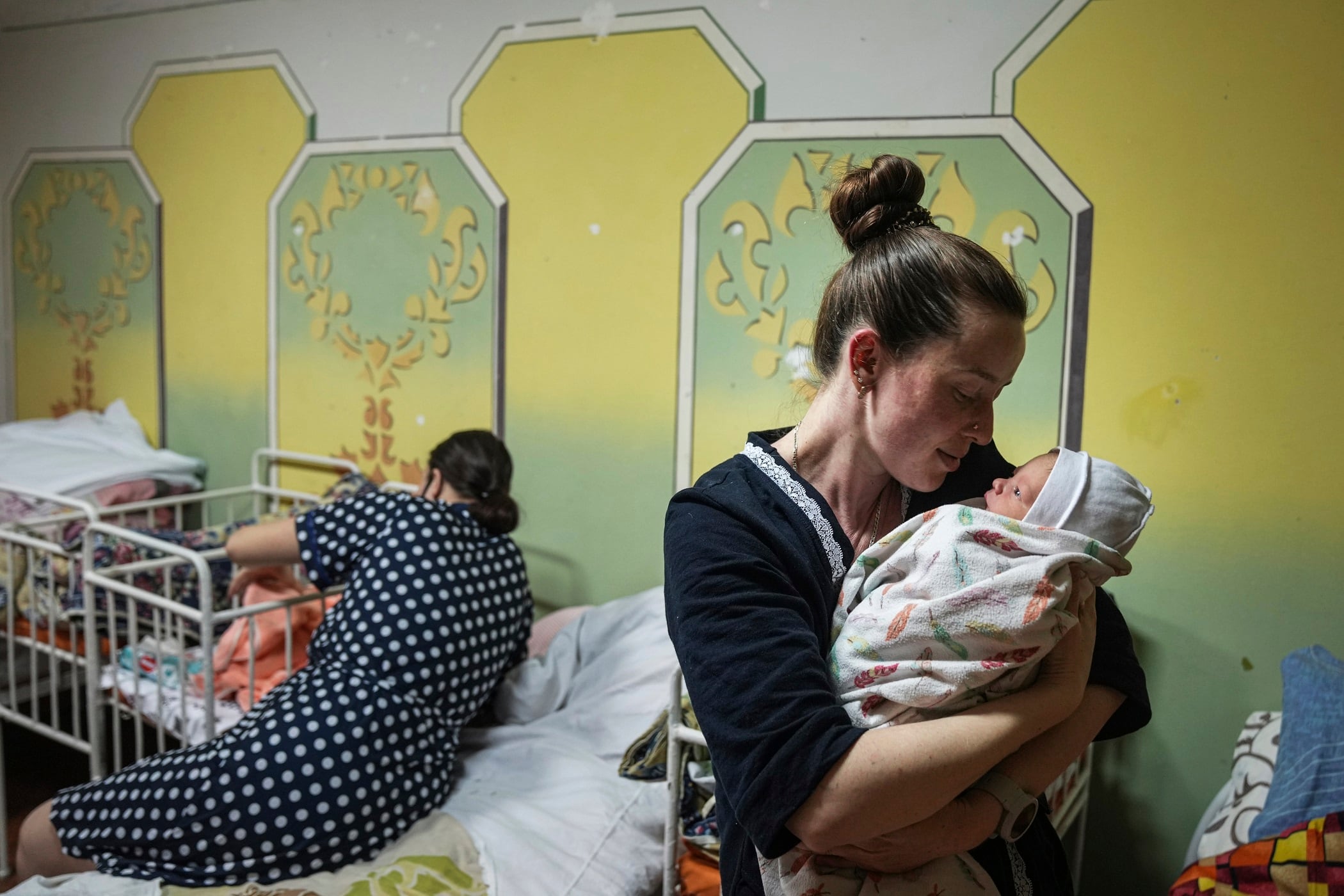
A hospital basement in Ukraine’s coastal city of Mariupol has transformed into a bomb shelter and maternity ward amid shelling during Russia’s invasion.
World leaders are currently dealing with a handful of pressing issues, including Russia's invasion of Ukraine, inflation, and not to mention the COVID-19 pandemic; but it could be argued that the most pressing issue is one that has experienced its fair share of neglect in the past -- climate change. As tensions escalate between Russia and Ukraine, there is fear the focus on climate will once again be pushed aside. However, the White House appears to be making some effort to prevent that from happening. The White House Office of Science and Technology held a first-of-its-kind roundtable discussion with some of the nation's leading climate scientists on Thursday. Michael Mann, Director of the Earth System Science Center at Pennsylvania State University, and author of the book 'The New Climate War' joins Cheddar News' Closing Bell to discuss his experience as one of the climate scientists at the White House event.
Scott Clemons, Partner and Chief Investment Strategist at Brown Brothers Harriman, joins Cheddar News' Closing Bell, where he discusses the factors leading to the sell-off on Wall Street today and explains why uncertainty is worse than bad news for the investors.
U.S. stocks rebounded to end higher on Thursday after President Biden announced new sanctions against Russia following the country's attack on Ukraine. The Dow was down 859 points at its lowest point of the session, before ultimately finishing the day in the green. Melissa Armo, founder and owner of the Stock Swoosh, joins Cheddar News' Closing Bell to discuss.
People of African and Middle Eastern descent fleeing from Russia’s invasion of Ukraine are facing the double trauma of racism at the borders. Professor of law and migration studies at the University of San Francisco, Bill Hing, joined Cheddar News Wrap to discuss what some are describing as a double standard for other refugees escaping the war. "Those that are from the Middle East and from Africa who just happen to be in Ukraine, for example on a student visa, they are not going to be able to get into Poland or another area of the Schengen area because they are not natural Ukrainian," he said.