By Matthew Lee
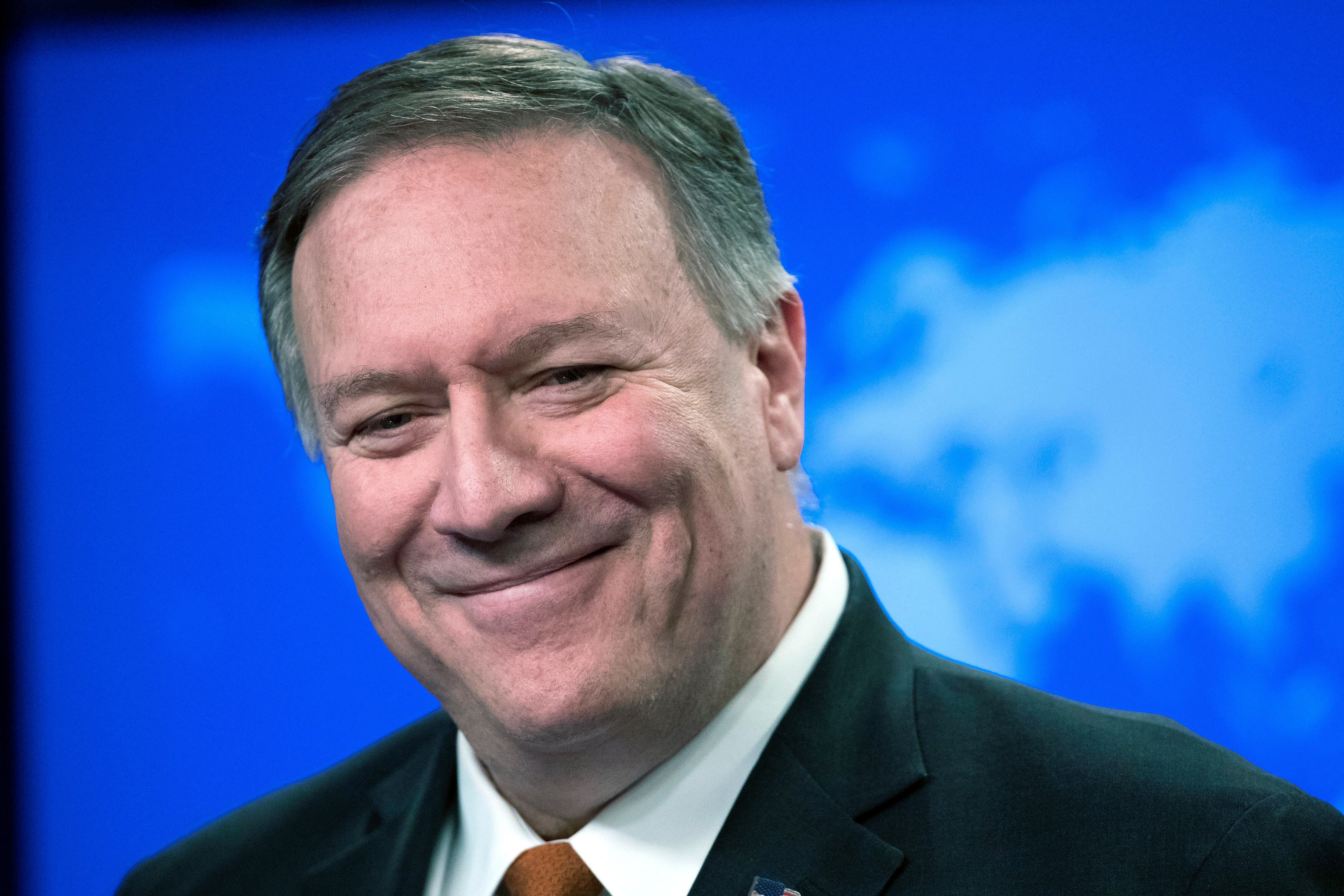
The State Department said Wednesday it’s looking into the apparent disappearance of a nearly $6,000 bottle of whisky given more than two years ago to then-Secretary of State Mike Pompeo by the government of Japan. Pompeo knows nothing about the gift or an inquiry, a representative said.
In a notice filed in the Federal Register, the department said it could find no trace of the bottle’s whereabouts and that there is an “ongoing inquiry” into what happened to the booze. The department reported the investigation in its annual accounting of gifts given to senior U.S. officials by foreign governments and leaders.
The department's Office of Protocol is required to record gifts given to U.S. officials and keep track of their disposition. Recipients have the option of turning gifts of a certain value over to the National Archives or another government entity or purchasing them for personal use by reimbursing the Treasury Department for their value.
The Japanese whisky was valued at $5,800 and was presented to Pompeo in June 2019, presumably when he visited the country that month for a Group of 20 summit that was also attended by President Donald Trump. But unlike other gifts, the department said there was no record of what had become of the bottle.
“The department is looking into the matter and has an ongoing inquiry,” it said in the Federal Register notice. The notice offered no additional detail. A representative for Pompeo said Pompeo “has no knowledge of the gift and has not been contacted by anyone regarding an investigation of it.”
Pompeo also reported receiving two carpets worth a total of $19,400 from the president of Kazakhstan and the foreign minister of the United Arab Emirates. Both floor coverings were transferred to the General Services Administration, the notice said.
The filing said Trump and his wife, Melania, received more than $120,000 worth of presents from foreign leaders in 2019, compared with $88,200 the year before. In Trump's first year in office, in 2017, they reported receiving more than $140,000 in gifts.
There was no significant common theme to the 2019 gifts. At least three foreign leaders — from Australia, Egypt and Vietnam — presented Trump with photographs or portraits of himself that collectively were valued at more than $10,000.
Trump received a painting of himself on “dual pane glass” from then-Vietnamese President Nguyen Phu Trong that was worth an estimated $5,250, according to the filing. It also says Trump got a “large double frame carved from black stone with image of President Donald J. Trump in precious metal on one side and the coat of arms of Egypt on the reverse” worth $4,450 from Egyptian President Abdel-Fattah el-Sisi. Australian Prime Minister Scott Morrison gave Trump a framed photo of himself and his wife worth $470.
Other more expensive gifts Trump received included an Ottoman Empire rifle valued at $8,500 from the prime minister of Bulgaria, a bronze sculpture of an Arabian horse from the crown prince of Bahrain worth $7,200 and a gold, onyx, emerald and diamond statue of an Arabian oryx worth $6,300 from the emir of Qatar.
All of those gifts, including the portraits and photograph, were turned over to the National Archives, according to the report.
Another significant recipient of gifts was now-retired Gen. Joseph Votel, commander of U.S. Central Command until March 2019; that command oversees American military operations in the Middle East. The government of Qatar lavished Votel with nearly $37,000 in luxury watches in 2019, including one Rolex timepiece valued at $14,995, according to the report. Votel turned those watches over to the GSA.