Crystal and Chris Martin stand outside their home, Sunday, July 19, 2020 in Burton, Mich., as one of their children looks on. The Martins, who had to defer some mortgage payments, are among millions of Americans who have struggled financially during the coronavirus pandemic. Crystal has been laid off since March from her job at a roller skating rink and Chris, an X-ray technician at a Flint hospital, was laid off, then took parental leave after the birth of a child this month. A new study by NORC at the University of Chicago finds that more than a quarter of Americans report losing income, investments and savings during the pandemic. (AP Photo/Tammy Webber)
By Tammy Webber
Crystal and Chris Martin put off some payments on their home in this blue-collar town near Flint and are pinching pennies to make ends meet until they return to work. In Windsor, Connecticut, Anne Druce's family canceled home improvement projects out of an abundance of caution but remains financially secure.
As the coronavirus pandemic drags on, a new poll finds it is having different effects on Americans' economic well-being. For some, the virus has meant lost income or struggles to pay bills on time — particularly among Hispanic, Black and younger Americans. Others, most notably college-educated and older Americans, have transitioned to working from home or have experienced the nation's economic decline through a dip in the value of their investments.
"It's just all been kind of frustrating," said Crystal Martin, who lost her job managing a roller skating rink in March and waited 10 weeks for her first unemployment check. Her husband, an X-ray technician at a Flint hospital, was laid off for about month, then took parental leave after Crystal had a baby in July, to reduce the chances of bringing home the virus.
"We had to go into our savings, and we were crunching numbers to see how long it would last," said Martin, adding that the couple, who have six children in their blended family, still aren't sure if their mortgage company will add the deferred house payments to the end of their loan or demand the money all at once later this year.
Overall, roughly a quarter of Americans say they have lost savings and about as many have lost income, according to the latest COVID Response Tracking Study, conducted by NORC at the University of Chicago. About 2 in 10 report losing a job and roughly another 2 in 10 say they have put themselves at risk of exposure to the virus for work.
Meanwhile, the survey also finds about a third of Americans say their investments were negatively impacted during the pandemic. About a quarter say they have had to change their work routine, including having to work from home.
That includes Druce, who said she and her husband, James, are fortunate to have well-paying jobs — she's a process engineering consultant for an insurance company and he works for a mutual fund company — that allow working from home.
While feeling financially stable, they're saving as much money as possible — aside from spending to take a beach vacation in August with their two young boys — because "anything can change," Druce said.
"I know it sounds insanely privileged," said Druce, "but I 1,000 percent feel fortunate."
The poll finds that disparities of economic experience during the pandemic by race and ethnicity, age, and education are stark.
Beyond the dollars-and-cents impacts of the pandemic, the survey found the economic effects taking a toll on Americans' mental health, with stress rising among those who report a loss of income, a loss of savings and trouble paying bills.
Tom W. Smith, director of the Center for the Study of Politics and Society at NORC and the study's lead investigator, said people are also feeling more lonely than might be expected given the recent easing of restrictions and the reopening of businesses. That could be because people still are severely restricting normal activities, perhaps because of finances or because they're "not willing to take the chance yet" on potentially exposing themselves to the virus.
Adding to the uncertainty and anxiety: Some initiatives meant to help people get through the crisis — including extra unemployment compensation and moratoriums on evictions and utility shut-offs — are set to expire soon, said Joy Peterman, development director at the Salvation Army in Flint.
Her organization has seen a 25 percent increase in requests for assistance during the pandemic, mostly from people who were forced to seek help for the first time and many of whom were still working.
"They just didn't have enough money to continue to pay their bills (because of) shorter hours and less pay," said Peterman, who believes needs will increase in coming months. "You still have rent, you still have utilities, you still have a car payment, insurance, and the phone bill. And you still have to feed your children."
___
The survey of 2,012 adults was conducted June 22-July 6 with funding from the National Science Foundation. It uses a sample drawn from NORC's probability-based AmeriSpeak Panel, which is designed to be representative of the U.S. population. The margin of sampling error for all respondents is plus or minus 3 percentage points.
Hinge users who have children can opt-in to a $100 stipend up to $25,000 for childcare. Logan Ury, the director of relationship science for the online dating platform, noted the issue as an obstacle for single parents who want to go out on dates. "We have heard that singles with children have a hard time going on dates for one of the reasons being that it's just hard to find childcare and it's hard to be able to afford it," she said. Ury also said that the hot topic among Hinge's users is mental health and the prioritizing of mental health.
Dolly Parton, Eminem, Lionel Richie, and Carly Simon are just a few of the nominees announced for the Rock & Roll Hall of Fame 2022 induction. Results of the voting will be released in May, however, the ceremony date has yet to be announced.
On this episode of Cheddar Innovates: CEO of HereAfter AI discusses how artificial intelligence can be used to preserve family history and stories, and allow you to 'talk' to loved ones that have passed; Creator of the board game 'Travel Explore Discover' explains how she came up with the idea for this informative and educational board game, and how she's using the proceeds to give back to her community; Cheddar gets a look at Curiosity Stream's 'The Humboldt Current.'
According to the Federal Reserve, the investment gap between Black and white Americans has remained substantial, with only 34 percent of Black households joining in on the historic rise in the markets. Stacey Tisdale, the first Black woman to have reported from the NYSE and the CEO and president of Mind Money Media Inc., said that the data might not be as disheartening as it seems. "I think that number is very deceiving. That Federal Reserve study is actually from 2019, and it's very important that we all look beneath that number and look beneath the surface because there is nothing short of an investing revolution going on in the Black community," Tisdale said.
James Vlahos, Co-Founder and CEO of HereAfter AI, joins Cheddar Innovates to discuss how artificial intelligence can be used to preserve family history and stories, and allow you to 'talk' to loved ones that have passed.
Ava Rathenberg, Creator of the board game 'Travel Explore Discover,' joins Cheddar Innovates to discuss how she came up with the idea for this informative and educational board game, and how she's using the proceeds to give back to her community.
An award-winning performance by the LSU Tiger Girls dance team is going viral on TikTok, but like many other viral tiktoks, this one had a larger story to tell. The story goes back to 2021 when for the first time in 22 years, the LSU dance team was informed it could not compete at Universal Dance Association Nationals. The team made their anticipated return to UDA Nationals this year with a performance that delivered a strong and clear message to their university. The LSU Tiger Girls walked away from the competition with their first national championship title in 12 years, redemption against the university that held them back, and of course- millions of new fans and friends on TikTok.
Solid-state battery maker Factorial Energy recently raised $200 million in a Series D round led by Mercedes-Benz and Stellantis. Factorial says the funding will be used to accelerate commercial production and deployment of its solid-state battery technology, which the company says is safer, and offers up to 50% more driving range than current lithium-ion technology. Factorial also has joint development agreements (announced in late 2021) with Mercedes-Benz, Stellantis, and Hyundai, three of the top 10 global automotive manufacturers, to commercialize its batteries. Factorial CEO Siyu Huang joined Cheddar News' Closing Bell to discuss.
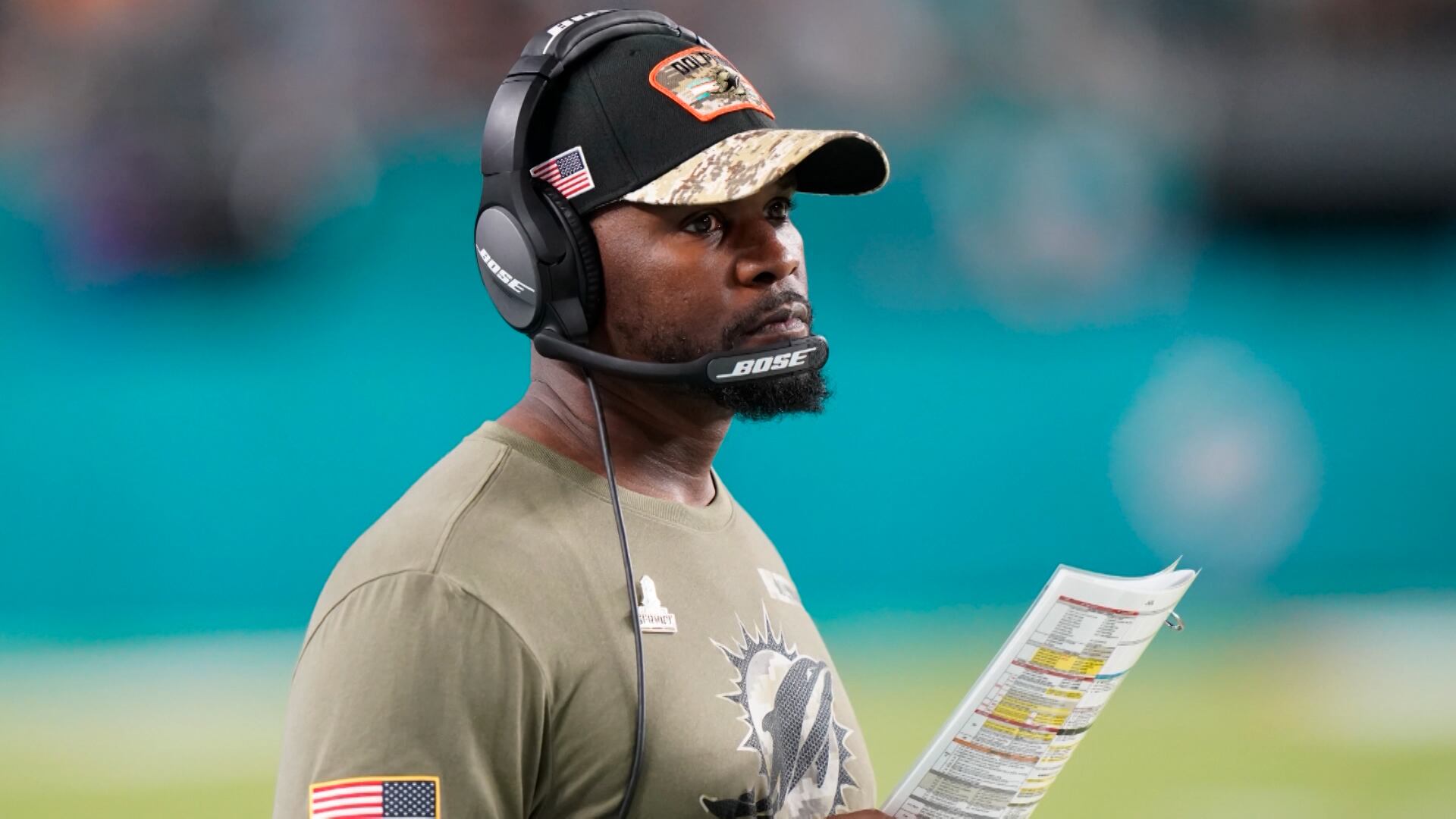
Former Dolphins coach Brian Flores filed a lawsuit against the NFL over racial discrimination, exposing a long-running problem the NFL has had with diversity in its top coaching and management positions. Eric Mitchell, the president and CEO of public relations and communications company LifeFlip Media, joined Cheddar News to delve into the scandal rocking the pro football world just before the Super Bowl. "There is a problem. If you look at who owns teams in the NFL, it's right, it's a good old boys club, it's a bunch of old white guys," he said. "So, it's exposing something that's been around for ages and now that we're sitting in 2022 has come up."
This April, Madison Square Garden will be hosting the first-ever women's boxing match to headline at the arena in its 140 years of history in boxing. Undisputed lightweight champion, Katie Taylor, and seven-division champion, Amanda Serrano, will go head-to-head for a career-high guaranteed seven-figure purse for both of them. The pair joined Cheddar News to talk about the upcoming "fight of their lives." "I mean, this is the first step I believe," said Serrano. "Unheard of, two women headlining the Garden, we get in the biggest paydays of our career, I hope it continues to break down barriers."