Jon Greenberg, staff writer for Politifact, breaks down some of the rhetoric from the left and the right around the GOP tax reform bill.
Chris Ruddy of Newsmax claimed that the GOP bill would bring in $3 trillion of offshore funds back into the economy from large U.S. corporations receiving a tax cut overseas. But just how true is this? Politifact has rated the statement half true. Greenberg notes that while corporations are receiving a reduction in overseas taxes, 45% of the $3 trillion made overseas is already in the U.S.
Greenberg also weighs in on House Minority Leader Nancy Pelosi's statement that the GOP bill would "sabotage" the healthcare of 13 million Americans. Greenberg details just what happens when the individual mandate is repealed. He explains that the repeal of the individual mandate will cause healthy people to leave the marketplace, which will cause costs to go up for those that are sick. That means some of those people won't be able to afford health insurance anymore. Politifact's overall rating of Pelosi's statement: half true.
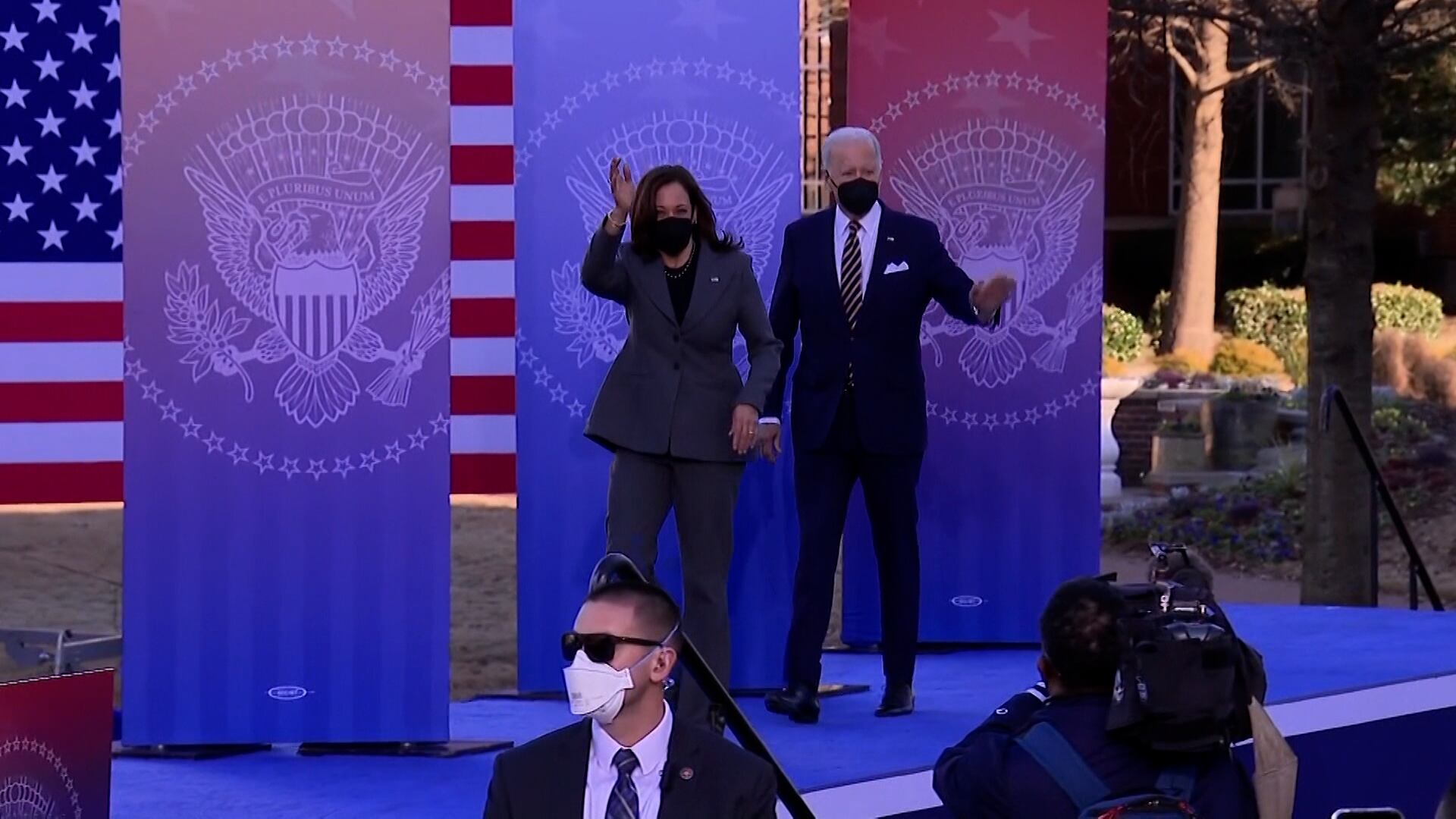
At a Wednesday news conference to mark his first year in office, President Joe Biden is admitting that the pandemic has exhausted and demoralized many Americans.
The Biden administration on Tuesday quietly launched its website for Americans to request free at-home COVID-19 tests, a day before the site was scheduled to officially launch.
Just 27% of voters aged 18-29 approve of the job Biden is doing as president, according to a survey from The Economist and YouGov late last year. Santiago Mayer, executive director of Voters of Tomorrow, joins Cheddar Politics to discuss why President Biden is losing support among young voters.
Jesse Lehrich, co-founder of Accountable Tech, joins Cheddar News to discuss it being one year since Trump was exiled from social media and the former President's new platform 'Truth Social.'
Cliff Albright, co-founder of the group Black Voters Matter, joins Cheddar Politics to discuss why he boycotted President Biden's voting rights speech this week, and the push from Senate Democrats to debate and vote on the Freedom to Vote Act and the John Lewis Voting Rights Advancement Act.
Senator Jon Ossoff (D-Ga.) has teamed up with fellow Democratic senator and former astronaut Mark Kelly to introduce the Ban Congressional Stock Trading Act, a bill to essentially end stock trading by sitting lawmakers. From the other side of the aisle, Senator Josh Hawley (R-Mo.) introduced his own legislation to enact something similar. The dueling bills come at a time when it's popular to constrain members of Congress from owning and trading stocks. Karl Evers-Hillstrom, a business and lobbying reporter at The Hill, spoke to Cheddar about the significance of the bills, and what they could mean for lawmakers, their families, and staffers moving forward.