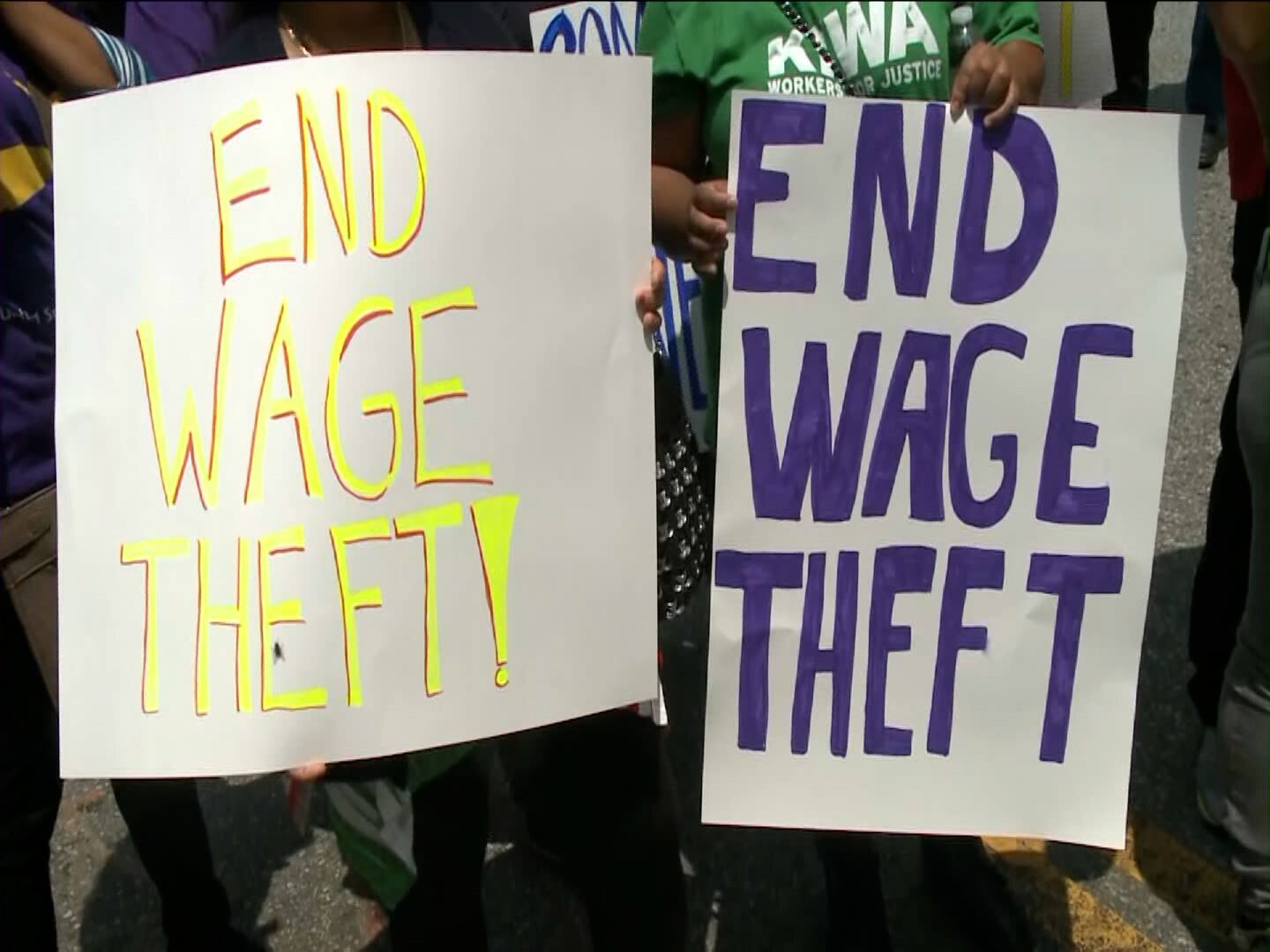
*By Carlo Versano* Americans woke up on Wednesday to a different political landscape ー if not the blue wave Democrats had hoped for. On the strength of female candidates and first-time voters, the Democrats successfully flipped the House of Representatives, gaining at least 23 seats, with more than a dozen yet to be called, according to the latest race calls from the Associated Press as of Wednesday morning at 8:30 a.m. ET. But Republicans were able to maintain control of the Senate ー in fact, they increased their hold ー in a sign of the ever-deepening rift between rural Americans (which the Senate map favored) and urban/suburban voters (which the House map favored). That means, in effect, that any legislative agenda President Trump had planned for the remaining half of his term is more than likely dead-on-arrival. And it gives Democrats their first real check on Trump's presidency. Democratic House leadership, with Rep. Nancy Pelosi the presumed speaker-elect, will have the power to initiate investigations, request the president's tax returns from the IRS, and provide some measure of protection to the special counsel's investigation into Russia. A bill to protect Robert Mueller is probably one of the first orders of business, predicted Jonathan Salant, the Washington correspondent for NJ Advance Media. He told Cheddar Wednesday that Mueller's final report on election interference just became even more crucial, as it could lead to impeachment proceedings in the new House, though the Senate would still need the support of two-thirds of the chamber to convict. "There's a new incoming chairman of the House Judiciary Committee. Jerry Sadler said in September he's not going to move unless he knows he has 67 votes in the Senate. So, Mueller's report got to be really damning and then we'll see what happens," Salant said. "And even then, it's not a sure thing." Another main storyline of this election was being written in dozens of statehouses across the country. Republicans had an iron grip on governorships going into Tuesday, and Democrats picked up seven seats, including those in Kansas and Wisconsin. In Georgia, the scene of one of the most closely-watched gubernatorial races of the season, Democrat Stacey Abrams was trailing Brian Kemp, but said she would not concede until more absentee ballots were counted. In Florida, Democrat Andrew Gillum lost to Ron DeSantis, a candidate who bet his election on his support of Trump. That paid off in the notorious swing state. Also on the ballot in several states were initiatives dealing with issues like marijuana legalization, voting rights, Medicare expansion, and the minimum wage. Michigan became the first Midwest state to legalize recreational cannabis, while Missouri voters said yes to medical pot, signaling the continued march toward decriminalization around the country. Voters in Arkansas and Missouri voted to give hundreds of thousands of workers a pay hike, becoming the latest states to approve minimum wage increases in an age of soaring corporate profits. While the blue wave did not materialize, the pink wave certainly did. More than 100 women won election or re-election, according to a tabulation from Politico. Erin Delmore, senior political correspondent for Bustle, told Cheddar that the effect of all the new women in Congress will materialize in ways it has not before. "Don't expect women to sit back and talk about birth control and reproductive rights as women's issues," she said. "Women's issues are the economy, their education, their gun control ... no more with just those 'typical' women's issues." For Democrats, the defeat of Beto O'Rourke in Texas was a major disappointment. O'Rourke had become a totem of liberal enthusiasm under Trump, running an unapologetically progressive campaign in a deep red state ー coming within three percentage points of Sen. Ted Cruz, according to the AP. Despite the loss, speculation about O'Rourke's political future is likely to intensify, according to Scott Nover, a contributing writer to the Atlantic. "Beto has the kind of x-factor personality traits that are almost presidential," he said on Cheddar Wednesday. "Democrats need to find someone who can out-Trump Trump" in terms of media attention, Nover said. "Beto might be that person." As for the Wall Street, any consensus news is good news for stabilizing a volatile market that feeds off uncertainty. The Dow was poised for a triple-digit gain as investors got the clarity they were looking for to try and sustain a record bull market. "Anything outside of consensus could have had a negative effect," said Art Hogan of B.Riley FBR. Now the focus will be back on earnings, the Fed, and the upcoming G-20 meeting in Argentina, which Hogan said could finally provide "an exit ramp on the trade war highway."