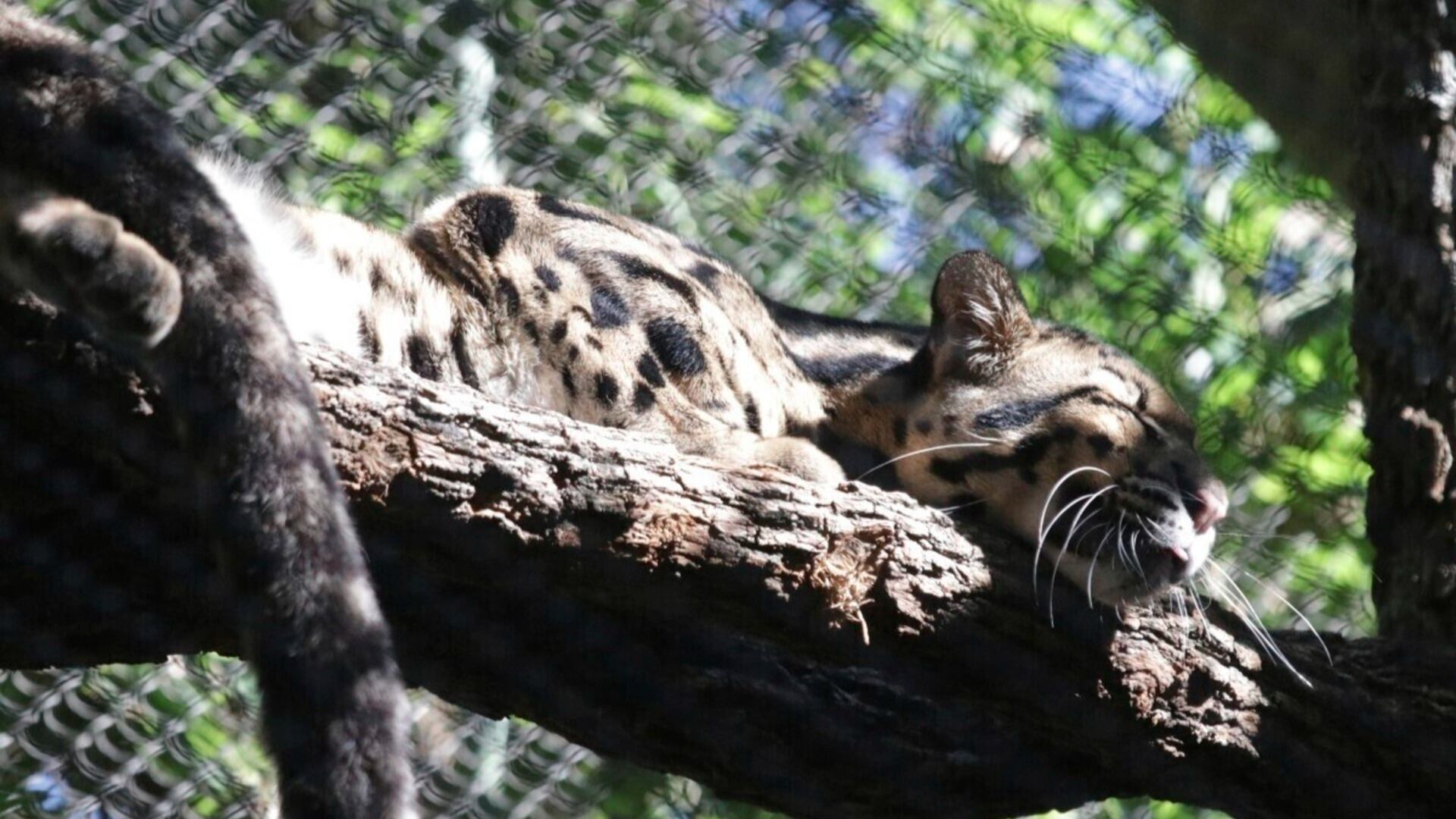
This undated image provided by the Dallas Zoo, a clouded leopard named Nova rests on a tree limb in an enclosure at the Dallas Zoo. Nova, a missing clouded leopard, shut down the Dallas Zoo on Friday, Jan. 13, 2023, as police helped search for the animal that officials described as not dangerous and likely hiding somewhere on the zoo grounds. (Dallas Zoo via AP)
A missing clouded leopard shut down the Dallas Zoo on Friday as police helped search for the animal that officials described as not dangerous and likely hiding somewhere on the zoo grounds.
The small cat weighs about 20-25 pounds (9-11 kilograms), said Harrison Edell, executive vice president of animal care and conservation at the Dallas Zoo. The search inside Texas' largest zoo was focused on scouring trees, which Edell said clouded leopards like to climb.
The zoo tweeted that the missing cat, named Nova, was a “serious situation,” but Edell said the animal posed no threat to humans.
“If anything, she's real nervous and afraid of people,” Edell said.
He did not say how the animal escaped its enclosure. Another clouded leopard at the zoo, Nova's sister, was still in its habitat, Edell said.
Animals have escaped enclosures from the Dallas Zoo before. Most notably was in 2004, when a 340-pound (154-kilogram) gorilla named Jabari jumped over a wall and went on a 40-minute rampage that injured three people before police shot and killed the animal.
Soft-spoken but brimming with confidence, the Largo, Fla., student's win marks a comeback after last year, when he didn't advance past his regional bee.
School is almost out for the summer, which means a lot of families are planning summer road trips. Here to give us some tips on which screen-free toys are best to bring on the road is editor-in-chief at Toy Insider editor-in-chief Marissa Silva.
The National Eating Disorders Association has decided to remove hundreds of helpline staffers and volunteers after they voted to unionize, and now many of these positions will be replaced by a chatbot named Tessa. Cheddar’s Ashley Mastronardi spoke to one eating disorder expert who thinks this may have harmful consequences.
Earth has pushed past seven out of eight scientifically established safety limits and into “the danger zone,” not just for an overheating planet that's losing its natural areas, but for the well-being of people living on it, according to a new study.