By Carla K. Johnson
Scientists temporarily attached a pig’s kidney to a human body and watched it begin to work, a small step in the decades-long quest to one day use animal organs for life-saving transplants.
Pigs have been the most recent research focus to address the organ shortage, but among the hurdles: A sugar in pig cells, foreign to the human body, causes immediate organ rejection. The kidney for this experiment came from a gene-edited animal, engineered to eliminate that sugar and avoid an immune system attack.
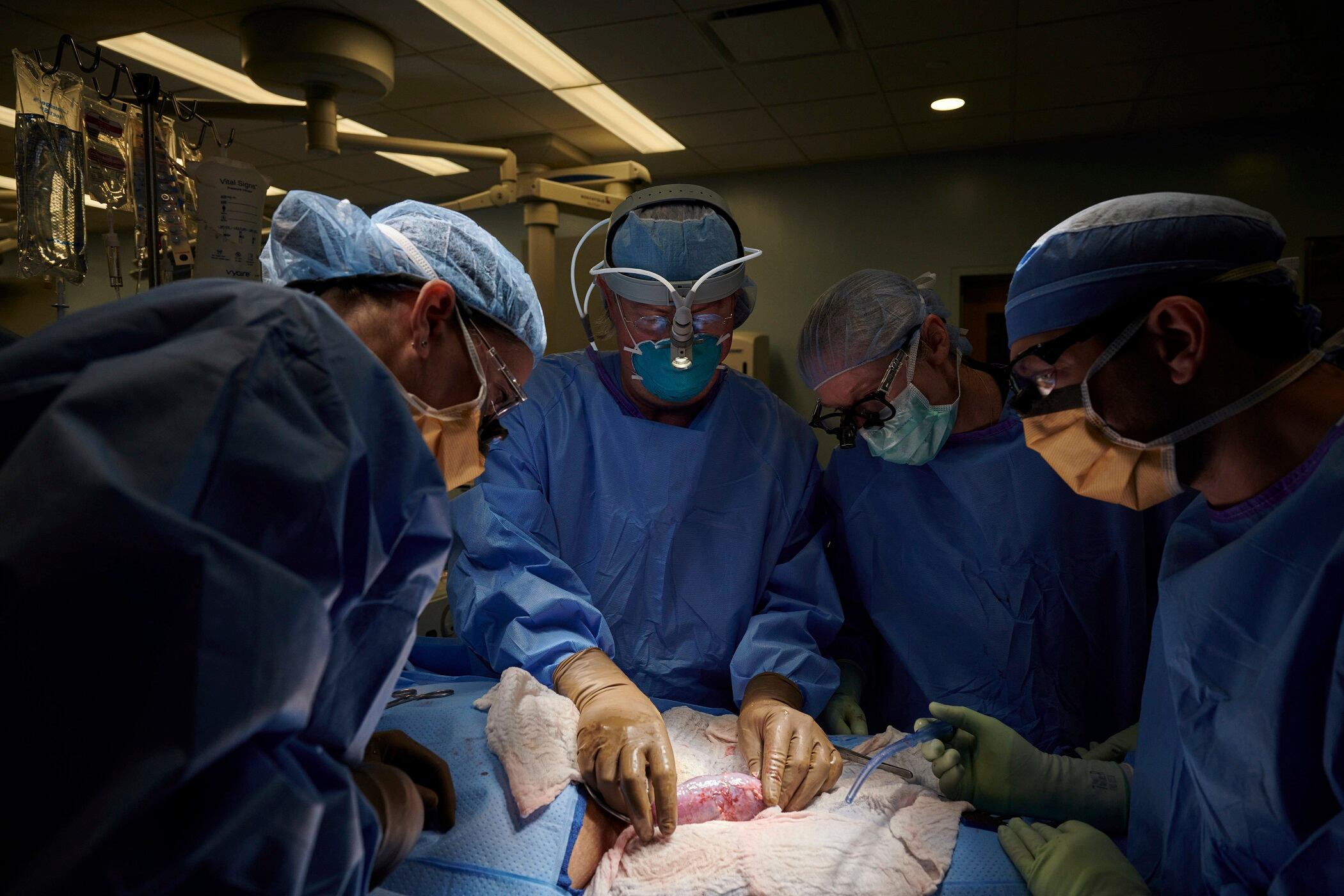
Surgeons attached the pig kidney to a pair of large blood vessels outside the body of a deceased recipient so they could observe it for two days. The kidney did what it was supposed to do — filter waste and produce urine — and didn't trigger rejection.
“It had absolutely normal function,” said Dr. Robert Montgomery, who led the surgical team last month at NYU Langone Health. “It didn’t have this immediate rejection that we have worried about.”
This research is “a significant step,” said Dr. Andrew Adams of the University of Minnesota Medical School, who was not part of the work. It will reassure patients, researchers and regulators “that we’re moving in the right direction.”
The dream of animal-to-human transplants — or xenotransplantation — goes back to the 17th century with stumbling attempts to use animal blood for transfusions. By the 20th century, surgeons were attempting transplants of organs from baboons into humans, notably Baby Fae, a dying infant, who lived 21 days with a baboon heart.
With no lasting success and much public uproar, scientists turned from primates to pigs, tinkering with their genes to bridge the species gap.
Pigs have advantages over monkeys and apes. They are produced for food, so using them for organs raises fewer ethical concerns. Pigs have large litters, short gestation periods and organs comparable to humans.
Pig heart valves also have been used successfully for decades in humans. The blood thinner heparin is derived from pig intestines. Pig skin grafts are used on burns and Chinese surgeons have used pig corneas to restore sight.
In the NYU case, researchers kept a deceased woman's body going on a ventilator after her family agreed to the experiment. The woman had wished to donate her organs, but they weren’t suitable for traditional donation.
The family felt “there was a possibility that some good could come from this gift,” Montgomery said.
Montgomery himself received a transplant three years ago, a human heart from a donor with hepatitis C because he was willing to take any organ. “I was one of those people lying in an ICU waiting and not knowing whether an organ was going to come in time,” he said.
Several biotech companies are in the running to develop suitable pig organs for transplant to help ease the human organ shortage. More than 90,000 people in the U.S. are in line for a kidney transplant. Every day, 12 die while waiting.
The advance is a win for Revivicor, a subsidiary of United Therapeutics, the company that engineered the pig and its cousins, a herd of 100 raised in tightly controlled conditions at a facility in Iowa.
The pigs lack a gene that produces alpha-gal, the sugar that provokes an immediate attack from the human immune system.
In December, the Food and Drug Administration approved the gene alteration in the Revivicor pigs as safe for human food consumption and medicine.
But the FDA said developers would need to submit more paperwork before pig organs could be transplanted into living humans.
“This is an important step forward in realizing the promise of xenotransplantation, which will save thousands of lives each year in the not-too-distant future,” said United Therapeutics CEO Martine Rothblatt in a statement.
Experts say tests on nonhuman primates and last month’s experiment with a human body pave the way for the first experimental pig kidney or heart transplants in living people in the next several years.
Raising pigs to be organ donors feels wrong to some people, but it may grow more acceptable if concerns about animal welfare can be addressed, said Karen Maschke, a research scholar at the Hastings Center, who will help develop ethics and policy recommendations for the first clinical trials under a grant from the National Institutes of Health.
“The other issue is going to be: Should we be doing this just because we can?” Maschke said.
___
The Associated Press Health and Science Department receives support from the Howard Hughes Medical Institute’s Department of Science Education. The AP is solely responsible for all content.