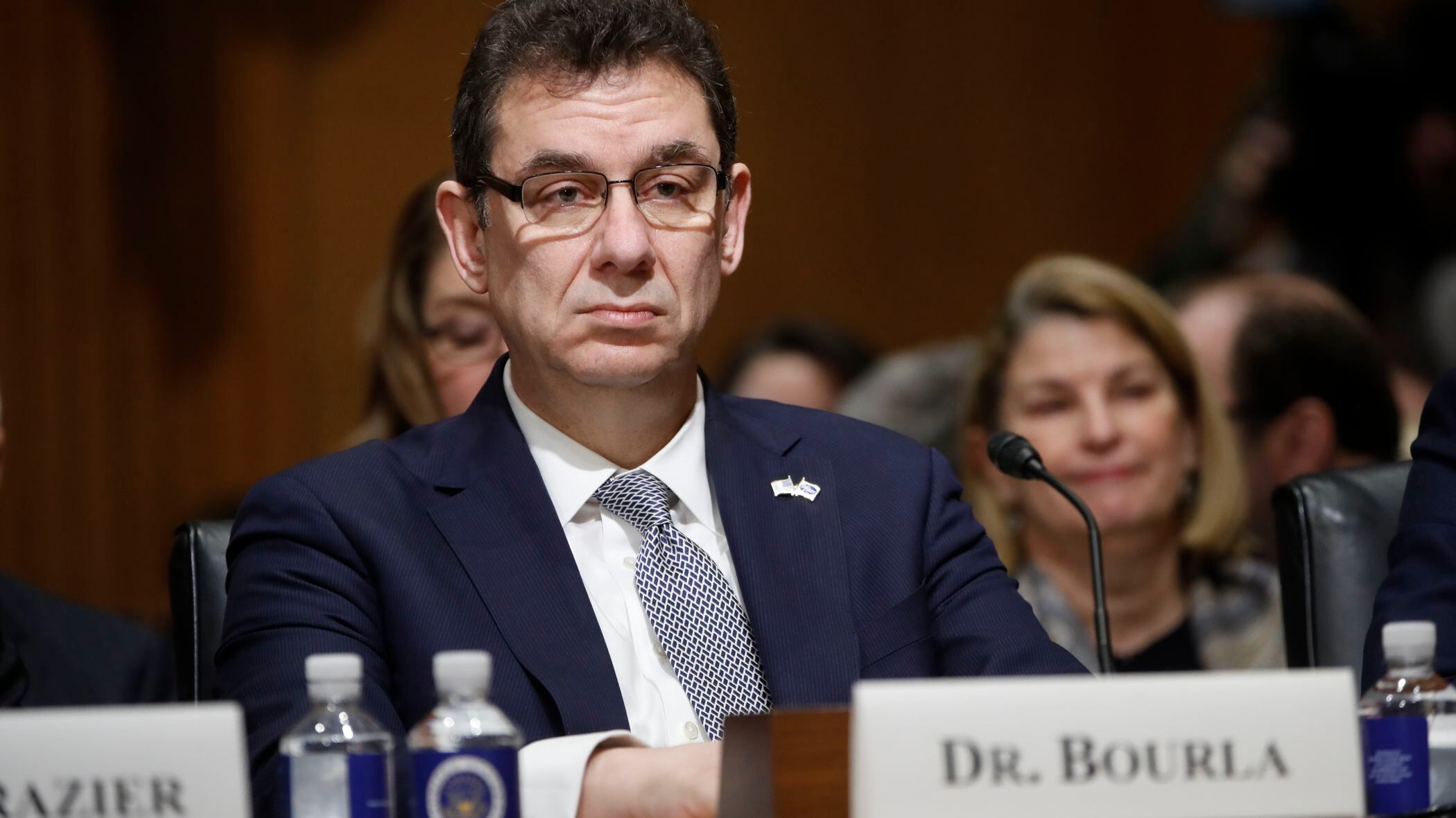
In this Feb. 26, 2019 file photo, Albert Bourla, chief executive officer of Pfizer, prepares to testify before the Senate Finance Committee hearing on drug prices, on Capitol Hill in Washington. Pfizer Inc.'s CEO says it can't seek emergency authorization of its COVID-19 vaccine before the third week of November — and that's if everything goes well. The announcement on Friday, Oct. 16, 2020, by Bourla reflects estimates from leading scientists that its unlikely data would start to emerge until November or December showing any of the leading vaccine candidates work. (AP Photo/Pablo Martinez Monsivais, File)
Pfizer Inc. cannot request emergency authorization of its COVID-19 vaccine before the third week of November -- and that’s if everything goes well, the company’s CEO announced Friday.
Despite President Donald Trump’s repeated promises of a vaccine before Election Day, scientists have been cautioning that it’s unlikely data showing a leading shot actually works would come until November or December.
Another leading U.S. contender, Moderna Inc., previously announced the earliest it could seek authorization of its own vaccine would be Nov. 25.
Pfizer CEO Albert Bourla has long said it's possible testing might reveal by the end of October if his company’s vaccine actually protects against the coronavirus. But in Friday’s announcement, he made clear that effectiveness is only part of the equation.
The vaccine also must be proven safe. And to qualify for an “emergency use authorization,” any COVID-19 vaccine must track at least half the participants in large-scale studies for two months after their second dose, the time period in which side effects are likely to appear.
Bourla estimated Pfizer's 44,000-person study will reach that milestone in the third week of November.
“We are operating at the speed of science,” he wrote in a letter posted to the company’s website.
The vaccine made by Pfizer and its German partner BioNTech is among several leading candidates in final testing.
Even if a vaccine emerges by year’s end, only limited doses will be available right away. The U.S. government is deciding who would be first in line, almost certainly health care workers, and estimates there may be enough for widespread vaccinations in the spring.
___
The Associated Press Health and Science Department receives support from the Howard Hughes Medical Institute’s Department of Science Education. The AP is solely responsible for all content.
As commercial options tighten, more travelers are turning to private aviation. Wheels Up CEO George Mattson breaks down capacity and demand challenges.
Layoffs, hiring slowdowns, and shifting skill demands dominate this year’s job talk. LinkedIn’s Kory Kantenga explains what workers should watch for next.
Retailers face tariffs and cost challenges this holiday season. Wells Fargo's Lauren Murphy shares insights on pricing, promotions, and shopping trends.
Dateability, founded by sisters Jacqueline and Alexa Child, is the only dating app for disabled and chronically ill communities, fostering love without limits.
Some small grocery stores and neighborhood convenience stores are eager for the U.S. government shutdown to end and for their customers to start receiving federal food aid again. Late last month, the Trump administration froze funding for the SNAP benefits that about 42 million Americans use to buy groceries. The U.S. Department of Agriculture says about 74% of the assistance was spent last year at superstores like Walmart and supermarkets like Kroger. Around 14% went to smaller stores that are more accessible to SNAP beneficiaries. A former director of the United Nations World Food Program says SNAP is not only a social safety net for families but a local economic engine that supports neighborhood businesses.
Andy Baehr, Head of Product at CoinDesk Indices, breaks down crypto’s Black Friday crash, Bitcoin dipping under $100K, and what’s driving the market rout.