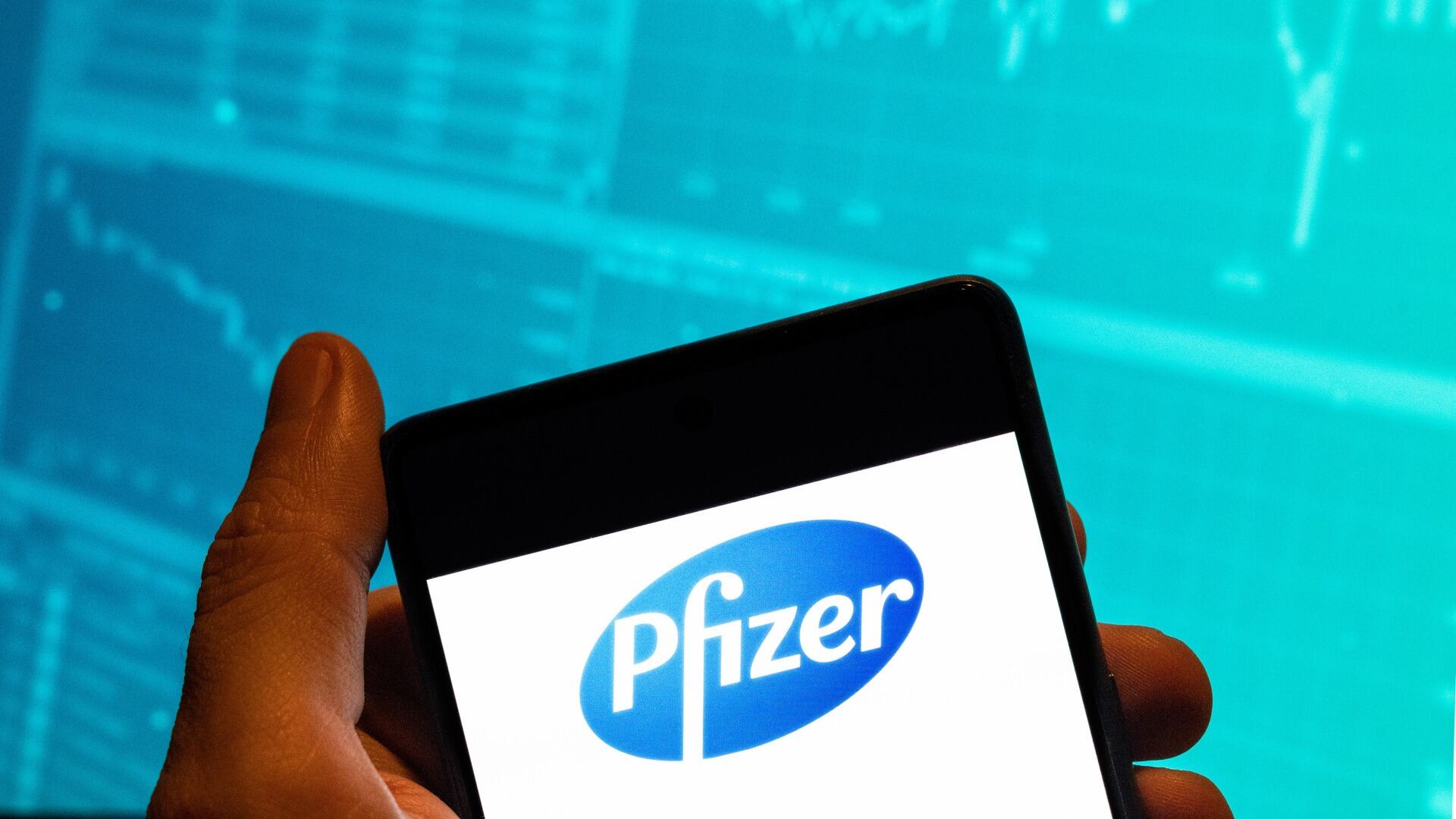
In this photo illustration, the American multinational pharmaceutical corporation Pfizer logo is seen displayed on a smartphone with an economic stock exchange index graph in the background. (Photo Illustration by Budrul Chukrut/SOPA Images/LightRocket via Getty Images)
Pfizer has entered a $43 billion merger agreement with biotechnology firm Seagen. The deal is designed to bolster the pharmaceutical giant's efforts to fight cancer by scaling up the production of a promising antibody drug.
“Pfizer is deploying its financial resources to advance the battle against cancer, a leading cause of death worldwide with a significant impact on public health,” said CEO Dr. Albert Bourla.
“Together, Pfizer and Seagen seek to accelerate the next generation of cancer breakthroughs and bring new solutions to patients by combining the power of Seagen’s antibody-drug conjugate (ADC) technology with the scale and strength of Pfizer’s capabilities and expertise."
ADCs are designed to kill cancer cells and limit off-target toxicities. Bourla noted that oncology is the "largest growth driver in global medicine," and that the deal would improve Pfzier's position in the space.
Seagen forecast $2.2 billion in revenue in 2023, up 12 percent from last year. Pfizer said the company could contribute $10 billion in risk-adjusted revenues by 2030. This would supplement the company's existing oncology division, which brought in $12 billion in revenue in 2022 with a combination of prostate cancer and the breast cancer treatments.
“Pfizer shares our steadfast commitment to patients, and this combination is a testament to the passion, dedication and talent of the Seagen team to achieve our mission to discover, develop, and commercialize transformative cancer medicines that make a meaningful difference in people’s lives,” said Seagan CEO David Epstein.
From snow in April to heatwaves in December, it’s hard to plan a trip in a climate change world. Startup Sensible Weather thinks weather-based travel reimbursements are the solution.
Between corporate debt and the widening gap between ‘the haves and the have nots,’ there are reasons to be cautious about the economy, even with interest rate cuts on their way.
If the A.I. hype hasn’t given you enough of a reason to be excited (and a little terrified), the CEO of Zapata AI says the next frontier is designing bridges or creating pharmaceutical drugs.
Stocks are near record highs, inflation is moderating, and analyst Deiya Pernas is 'optimistic' the U.S. is heading for a soft landing without a recession – which is good news for your wallet.
Google co-founders Larry Page and Sergey Brin loved pulling pranks, so much so they began rolling outlandish ideas every April Fools' Day not long after starting their company more than a quarter century ago.
Sam Bankman-Fried co-founded the FTX crypto exchange in 2019 and quickly built it into the world’s second most popular place to trade digital currency. It collapsed almost as quickly — by the fall of 2022, it was bankrupt.
The economic effects of the Baltimore bridge collapse, Americans are living longer but not better, and Gen Z and millennials are struggling to afford rent, let alone a mortgage.