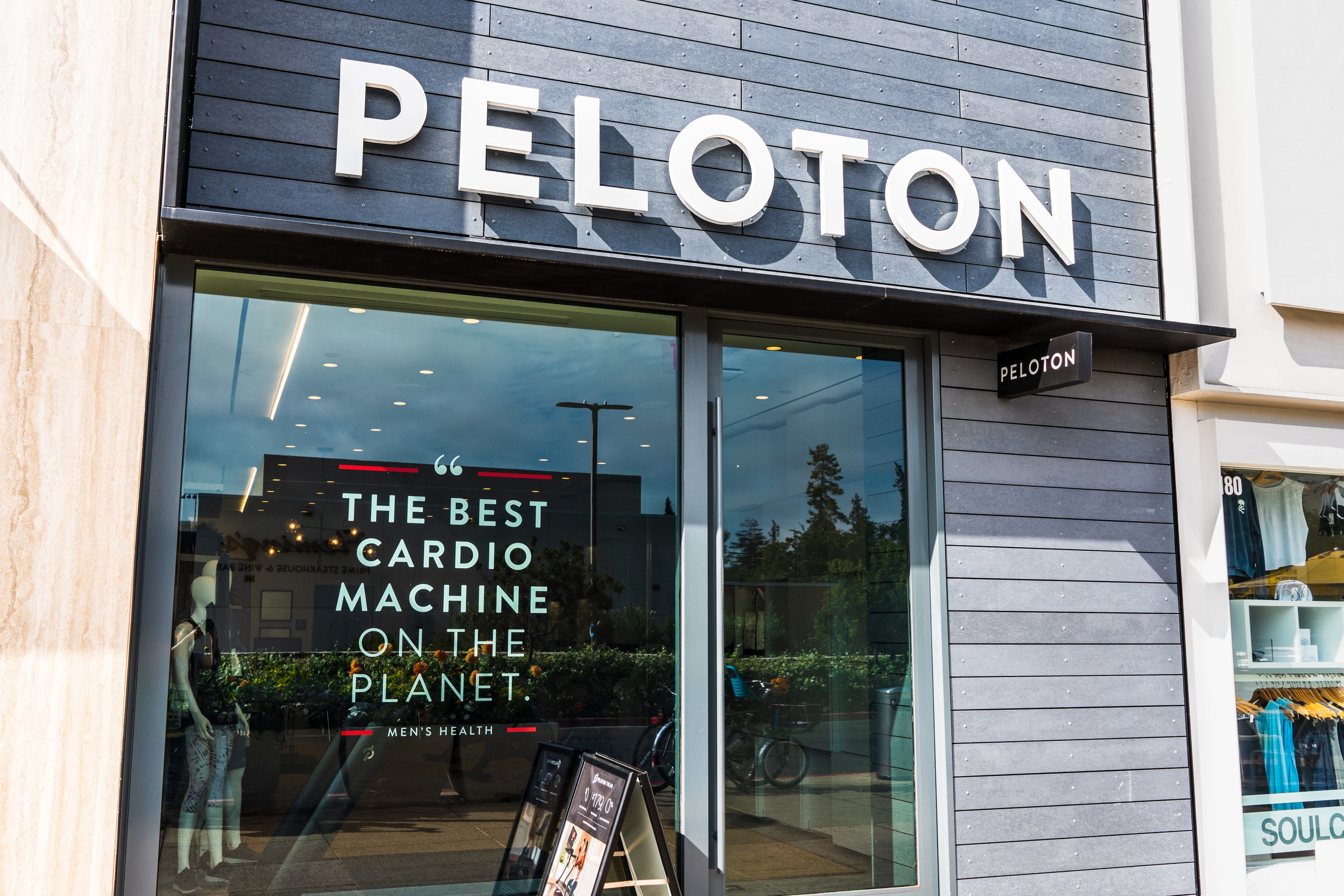
Peloton priced shares at $29 after the bell Wednesday, valuing the company at $8.06 billion as it prepares to make its public debut Thursday. That's at the high end of the original $26 to $29 price range Peloton was targeting. The company raised $1.16 billion in the offering.
Peloton is pitching itself to investors as more than just an at-home fitness company. With live and on-demand classes led by popular instructors, plus branded gear and clothing that members can flaunt in public, Peloton is hoping its cult-like following translates to a successful IPO.
Peloton boasts a loyal subscriber-base with over 1.4 million members that logged 55 million total workouts in fiscal 2019. In its S-1 filing, Peloton also said it had a 95 percent member retention rate which helped the company rake in $915 million in revenue. Most of that money came from sales of Peloton's high-margin and high-cost Connected Fitness Products.
The Peloton bike costs about $2,000 and its treadmill more than $4,000. The Connected Fitness Subscription, which allows members to stream classes for $39 a month, accounted for nearly 20 percent of Peloton's revenue for fiscal 2019.
Those classes are only getting more popular. Peloton says the average number of monthly workouts per connected subscriber has about doubled since the first quarter of 2017 to more than 12 workouts a month.
Still, losses for the company are widening. Peloton's annual net loss more than quintupled from $47.9 million in fiscal 2018 to $245.7 million in 2019. The company doesn't expect to achieve profitability in the near future.
Another reason that may give investors pause, Peloton is currently facing a $300 million lawsuit over the use of music streamed in its classes. The National Music Publisher's Association claims tracks from big-time artists like Taylor Swift, Adele, and the Beatles, have been used unlawfully. Peloton has spent $50.6 million on music licensing over the last three years.
Peloton will start trading Thursday on the Nasdaq Exchange under the ticker symbol PTON.
Tom Shannon, Bowlero CEO, joined Cheddar to discuss the decision to bring the company to the New York Stock Exchange via a SPAC merger with Isos Acquisition Corporation. Shannon said one of the goals of the public offering is to expand operations internationally, noting that Bowlero has the potential to reach worldwide markets due to the sport's popularity. "Bowling is a global market, and I'll give you an example. In South Korea, there are three million league bowlers and 1,200 bowling centers in South Korea alone," he said.
If you're looking for a date, 2022 might be your year. Online dating platform Bumble is buzzing with dating predictions from its latest survey. Shan Boodram, sex and relationships expert at Bumble, joined Cheddar to discuss some of the findings and what people can expect from the future dating landscape. Some of the results showed that public displays of affection are back on the rise as more people get vaccinated and that more users are opting for alcohol-free first dates. She also explained the trend of "explori-dating," a way that users are attempting to get out of their comfort zone. "People are willing to date outside of their city to get to that," she said.
Anthony Martini, Chief Music Officer of Slip.stream, and Jesse Korwin, CMO of Slip.stream, talk about the challenges creators have uploading music on Twitch and how 'Slip.stream' prioritizes artists by streamlining the licensing process.
Cheddar is looking back at the 12 biggest buzzwords of the year leading up to Christmas. The seventh term in the countdown is Transitory. Definition: (adjective) of brief gratification, not permanent.
More businesses are requiring workers to return to the office, but there is concern that many employees in the middle class, especially women and people of color, need remote work options for reasons including childcare and financial security. Joan Williams, director of the Center for WorkLife Law at the University of California, joined Cheddar to discuss why office mandates could be detrimental to the middle class. She noted that while companies claim a return to offices would help foster more collaboration and efficiency, reports show that they are successfully able to do their jobs from home.
Fresh Vine Wine, a maker of low-carb, low-calorie, and gluten-free wines, made its public debut on the NYSE. Celeb do-owners Nina Dobrev and Julianne Hough, alongside CEO Janelle Anderson, joined Cheddar's Azia Celestino to talk about their partnership, the decision to launch an IPO, and tout the healthy lifestyle market their product is going for.
The automotive industry continues to reel as the ongoing global semiconductor chip shortage continues to cause prices to rise. Ben Preston, autos reporter for Consumer Reports, joined Cheddar to discuss the state of the car industry. "I think that right now is a terrible time to buy a new car because dealership lots are looking a bit thin," Preston said. He noted that once manufacturers had initially halted production due to the pandemic, chip companies shifted toward providing service to tech companies, leading to supply constraints as every new car built needs about 30 to 100 chips in its construction.