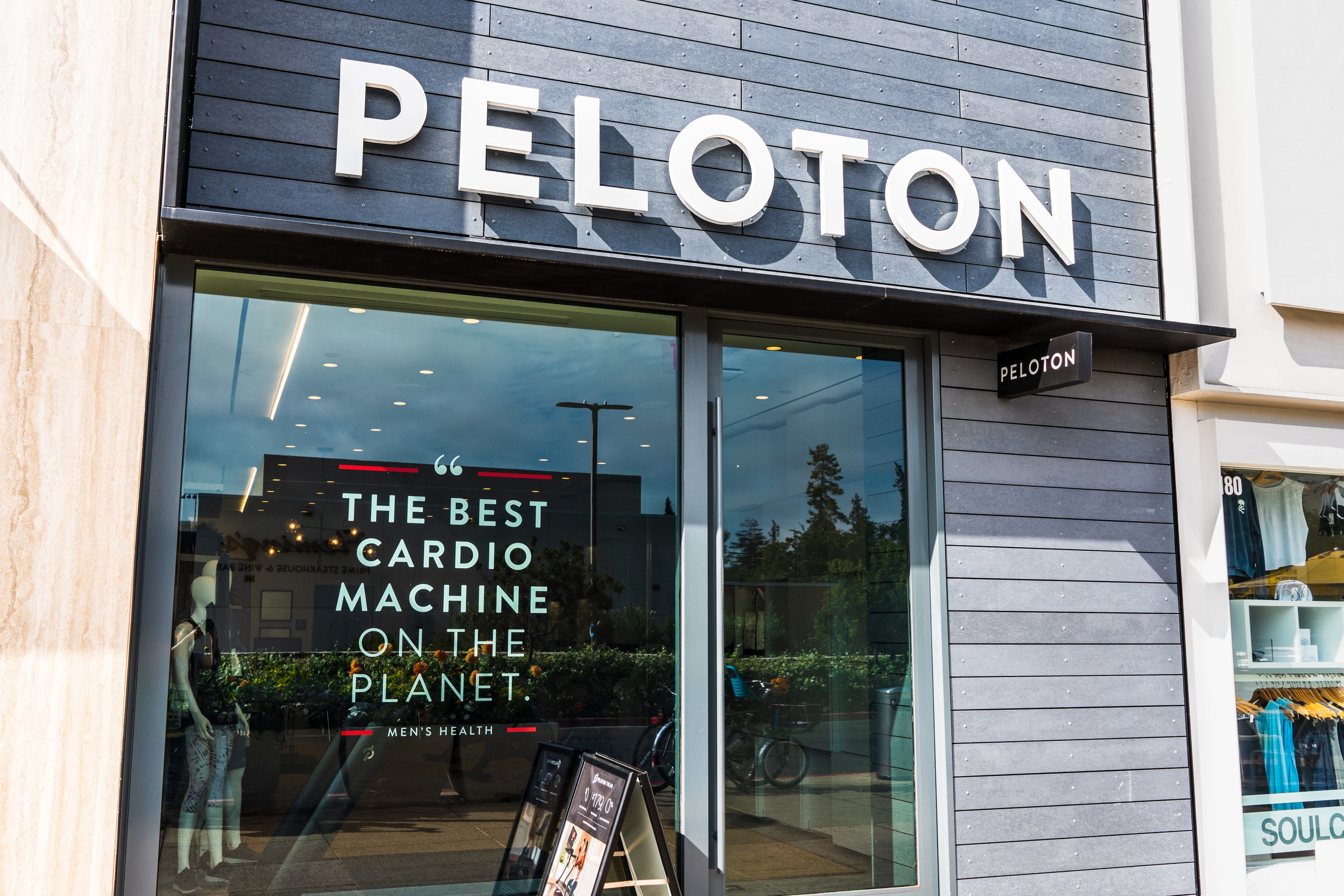
Peloton priced shares at $29 after the bell Wednesday, valuing the company at $8.06 billion as it prepares to make its public debut Thursday. That's at the high end of the original $26 to $29 price range Peloton was targeting. The company raised $1.16 billion in the offering.
Peloton is pitching itself to investors as more than just an at-home fitness company. With live and on-demand classes led by popular instructors, plus branded gear and clothing that members can flaunt in public, Peloton is hoping its cult-like following translates to a successful IPO.
Peloton boasts a loyal subscriber-base with over 1.4 million members that logged 55 million total workouts in fiscal 2019. In its S-1 filing, Peloton also said it had a 95 percent member retention rate which helped the company rake in $915 million in revenue. Most of that money came from sales of Peloton's high-margin and high-cost Connected Fitness Products.
The Peloton bike costs about $2,000 and its treadmill more than $4,000. The Connected Fitness Subscription, which allows members to stream classes for $39 a month, accounted for nearly 20 percent of Peloton's revenue for fiscal 2019.
Those classes are only getting more popular. Peloton says the average number of monthly workouts per connected subscriber has about doubled since the first quarter of 2017 to more than 12 workouts a month.
Still, losses for the company are widening. Peloton's annual net loss more than quintupled from $47.9 million in fiscal 2018 to $245.7 million in 2019. The company doesn't expect to achieve profitability in the near future.
Another reason that may give investors pause, Peloton is currently facing a $300 million lawsuit over the use of music streamed in its classes. The National Music Publisher's Association claims tracks from big-time artists like Taylor Swift, Adele, and the Beatles, have been used unlawfully. Peloton has spent $50.6 million on music licensing over the last three years.
Peloton will start trading Thursday on the Nasdaq Exchange under the ticker symbol PTON.
Lydia Simmons, founder of 'Moms Official Objective' or 'M.O.O.,' joins Cheddar News to discuss nutritional and hormonal support products for every stage of womanhood.
Plant-based hair extension company Rebundle recently raised $1.4 million in a pre-seed round led by M25. The company based in St. Louis says it is revolutionizing hair extensions with more comfort and less waste. Rebundle's braiding hair is made from a non-toxic, biodegradable plant, which the company says is better for the scalp and the environment. Rebundle Co-Founder and CEO Ciara Imani May and Co-Founder and CMO Danielle Washington joined Cheddar News' Closing Bell to discuss.
Soildus Labs, a market compliance and surveillance technology provider for crypto firms, has spearheaded the launch of the Crypto Market Integrity Coalition, a pledge committing to a safe and sensibly-regulated crypto industry. Kathy Kraninger, VP of Regulatory Affairs at Solidus Labs, discusses on Cheddar News' Closing Bell the biggest problems in the digital asset space that this new initiative plans to solve.
Stocks closed mixed Monday as a broader tech sell-off continued, leading the Nasdaq to close down 0.58%. Investors are keeping an eye on earnings, and also looking ahead to Thursday's CPI data, which will give an idea of how hot inflation could still be running. Steve Sosnick, Chief Strategist at Interactive Brokers, joins Closing Bell to discuss today's close, the Federal Reserve's plans to raise interest rates and taper asset purchasing, his 2022 market outlook, and more.
The global chip shortage continues to weigh on the automotive industry. For example, Ford says it is suspending or cutting production at eight of its factories in North America through next week due to the shortage. Balu Balakrishnan, President and CEO of Power Integrations, joins Cheddar News' Closing Bell, where he elaborates on why the chip shortage has dragged into 2022.