Peloton priced shares at $29 after the bell Wednesday, valuing the company at $8.06 billion as it prepares to make its public debut Thursday. That's at the high end of the original $26 to $29 price range Peloton was targeting. The company raised $1.16 billion in the offering.
Peloton is pitching itself to investors as more than just an at-home fitness company. With live and on-demand classes led by popular instructors, plus branded gear and clothing that members can flaunt in public, Peloton is hoping its cult-like following translates to a successful IPO.
Peloton boasts a loyal subscriber-base with over 1.4 million members that logged 55 million total workouts in fiscal 2019. In its S-1 filing, Peloton also said it had a 95 percent member retention rate which helped the company rake in $915 million in revenue. Most of that money came from sales of Peloton's high-margin and high-cost Connected Fitness Products.
The Peloton bike costs about $2,000 and its treadmill more than $4,000. The Connected Fitness Subscription, which allows members to stream classes for $39 a month, accounted for nearly 20 percent of Peloton's revenue for fiscal 2019.
Those classes are only getting more popular. Peloton says the average number of monthly workouts per connected subscriber has about doubled since the first quarter of 2017 to more than 12 workouts a month.
Still, losses for the company are widening. Peloton's annual net loss more than quintupled from $47.9 million in fiscal 2018 to $245.7 million in 2019. The company doesn't expect to achieve profitability in the near future.
Another reason that may give investors pause, Peloton is currently facing a $300 million lawsuit over the use of music streamed in its classes. The National Music Publisher's Association claims tracks from big-time artists like Taylor Swift, Adele, and the Beatles, have been used unlawfully. Peloton has spent $50.6 million on music licensing over the last three years.
Peloton will start trading Thursday on the Nasdaq Exchange under the ticker symbol PTON.
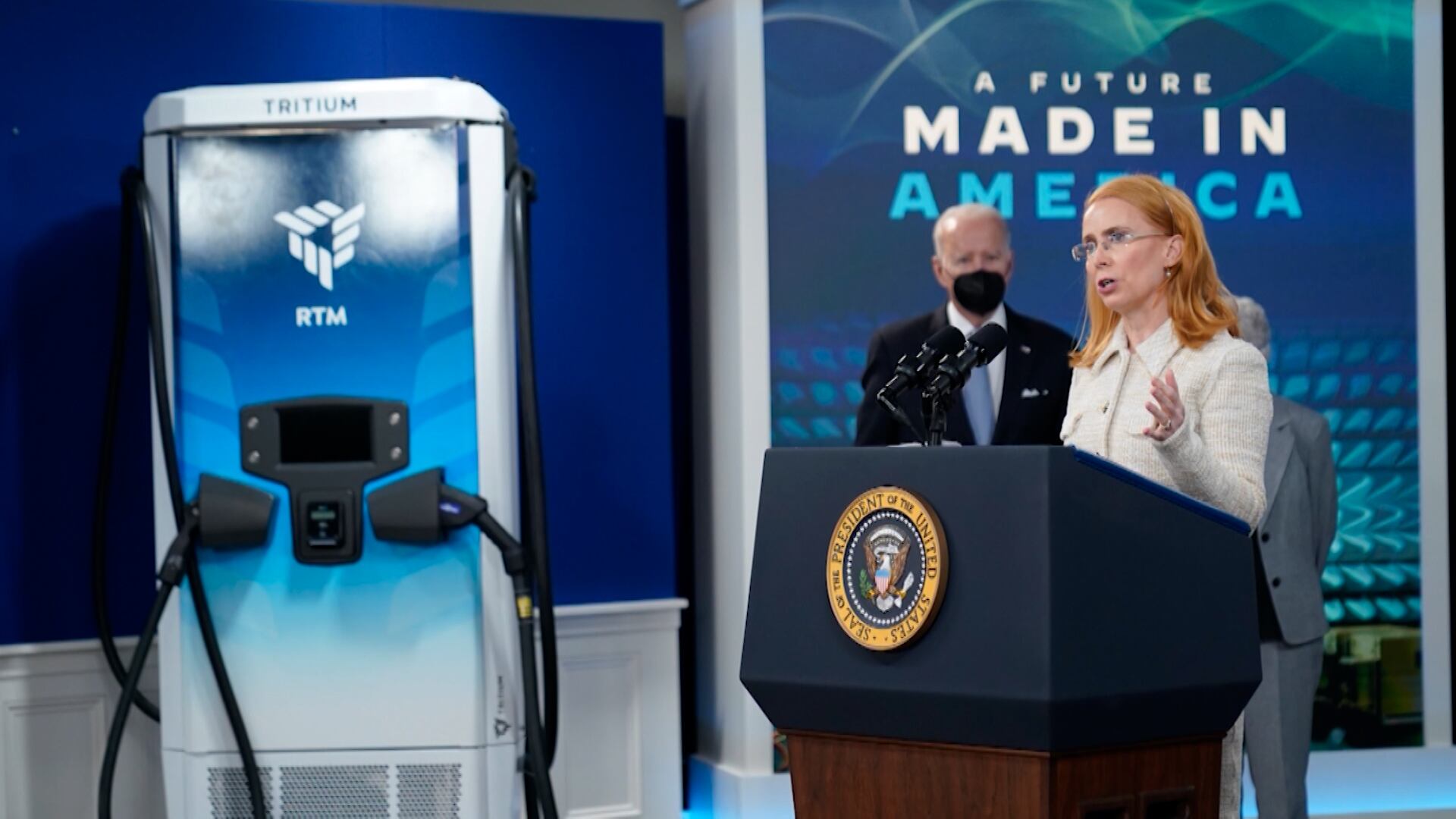
President Biden's push for electric vehicles is doing more than trying to hold off climate change as it also hopes to revive American manufacturing jobs. The latest company to open an EV charging production plant in the U.S. is Australia-based Tritium, looking to open its new Lebanon, Tennessee, facility in the fall of 2022. It's expected to create at least 500 jobs in the region and reach a production capacity of 10,000 charging units per year. Jane Hunter, CEO and executive director of Tritium, joined Closing Bell to discuss the plant, production capacity, and working with the Biden administration. "The policies that they put in place have directly driven demand for our fast charging products," she said. "Discussions that we have are just incredibly positive because this administration wants to have an electric superhighway that runs all across the country so that it's open equitably for all people to drive electric vehicles."
Samsung unveiled its latest product lineup, including a new family of Galaxy S22 smartphones featuring the S22 Ultra with a larger screen, more powerful camera, and the Samsung S Pen stylus. The company also revealed its latest tablet, the Tab S8 Ultra, featuring a 14.6" screen, expanded storage, and 4K video capability. Cheddar News was able to showcase each device as Allison Johnson, reviews writer at The Verge, joined Closing Bell to discuss the new releases, the standout features, and more.
Shares of Canadian cannabis giant Canopy Growth surged after the company reported Q3 earnings Wednesday morning, with shares up more than 15 percent at the close of the day's trading session. Despite net revenue declining year-over-year, Canopy beat analyst expectations and has ramped up efforts to develop a "THC ecosystem' in the U.S. Canopy Growth's CEO, David Klein, joined Cheddar News' Closing Bell to discuss the report. He noted that its brands Storz & Bickel vaporizers and BioSteel beverages showed record growth.
Commercial property ownership platform withco recently raised $32 million across a seed and Series A funding round. The company purchases properties and then rents them back to small business owners and works to transition them into full ownership. Founder and CEO Kevin Song says withco was inspired by his family's experience of operating a Brooklyn grocery store for two decades and being forced to shutter the business due to a doubling in rent by a new landlord. Now, Song says his mission is to help small business owners become commercial property owners, in a way that's simple and affordable. Song joined Cheddar News' Closing Bell to discuss.
David Nelson, Chief Strategist at Belpointe, joins Cheddar News' Closing Bell, where he says that Wednesday's market movement shows a rotation back into the industries that were hit hard in January, but says his eyes are firmly fixed on the January CPI data set to be released Thursday.
Earlier this week, Peloton announced a change in its C-suite, with new chief executive Barry McCarthy telling the company's remaining staff in an email that he’s, 'here for the comeback story.' Greg Martin, Co-Founder of Rainmaker Securities, joins Cheddar's Closing Bell where he discusses how difficult are Peloton's challenges will be to overcome, especially after the company recently laid off approximately 20% of its staff.