Exercise startup Peloton, known for streaming spin classes for its indoor bikes, has registered to go public, joining a crowded field of tech companies that have or will join the public markets this year.
Like many of its tech peers, Peloton appears confident in its plans for a public offering, despite not yet being profitable. In its registration documents, the company reported that it had made $915 million in revenues in the past fiscal year, a significant jump from the $435 million it produced the year before, but ultimately saw net losses of about $196 million, about quadruple its previous net losses of $48 million.
Founded in 2012, Peloton produces high-end, internet-connected stationary bikes and treadmills that work in concert with its streamed exercise classes. Bike packages approximately start at $2,200 (including delivery) while the treadmills begin about $4,300. Required content subscriptions are $39 a month. The company also offers a $19.49 option that lets users stream classes on mobile devices or a computer.
Since 2016, Peloton has seen its subscriber base grow from 107,000 people to more than half a million.
"Peloton's a really interesting case. This has been a year — obviously — of a lot of high-profile IPOs already," Joshua Franklin, a corporate finance correspondent at Reuters, told Cheddar on Wednesday. "Peloton kind of gets a little bit of the good stuff that people have liked about IPOs so far this year, and also a little bit of the stuff that people aren't so wild about."
He pointed to the Peloton's subscription model, revenue growth, and focus on disruption in the fitness space as potential positives for investors. On the other hand, Franklin cautioned that: "They don't specify in their IPO filing how they're going to reach profitability. And we've seen with Uber and Lyft, that's something that investors really are quite focused on these days."
In going public, the startup hopes to appeal to investors with a multifaceted business model. It has framed itself as a fusion of a media, fitness, and tech company, producing interconnected hardware, platform, and content. In the prospectus made public today, it says: "We are a technology company that meshes the physical and digital worlds to create a completely new, immersive, and connected fitness experience.
Peloton also says it's an "apparel" and "social connection" company because it sells branded clothing and incorporates a messaging feature into its streaming platform.
Unlike popular spin class brands SoulCycle and Flywheel, Peloton does not rely on physical locations. It runs a small number of studios where the startup films the content it streams online, but in its filing the company said revenue from classes at these locations "has been immaterial to date."
The startup appears to have inspired — or at least, catalyzed — an emergence of similar businesses. Mirror, founded in 2016, sells vertical, in-home screens that stream live exercise classes. 2017 saw the introduction of Hydrow, a startup that sells modernized rowing machines that stream rowing classes.
Meanwhile, Equinox Group has announced its plans to sell an at-home bike that will feature SoulCycle spin classes. Flywheel has also started selling their own home bikes with coordinated, live-streamed content, a move that has earned it a lawsuit over a patent dispute with Peloton itself.
Cheddar Innovates gets a look at the satellite that's searching for the earliest light from the big bang, plus a former Nike executive breaks down what the new era of sportswear looks like.
Research finds that the market for plant-based foods is worth $7 billion, but a lot of the plant-based and vegan options on our shelves aren't as healthy as they seem. Enter 'Cool Beans.' Tyler Mayoras joins Cheddar Innovates to talk about his whole-food, plant-based burrito brand.
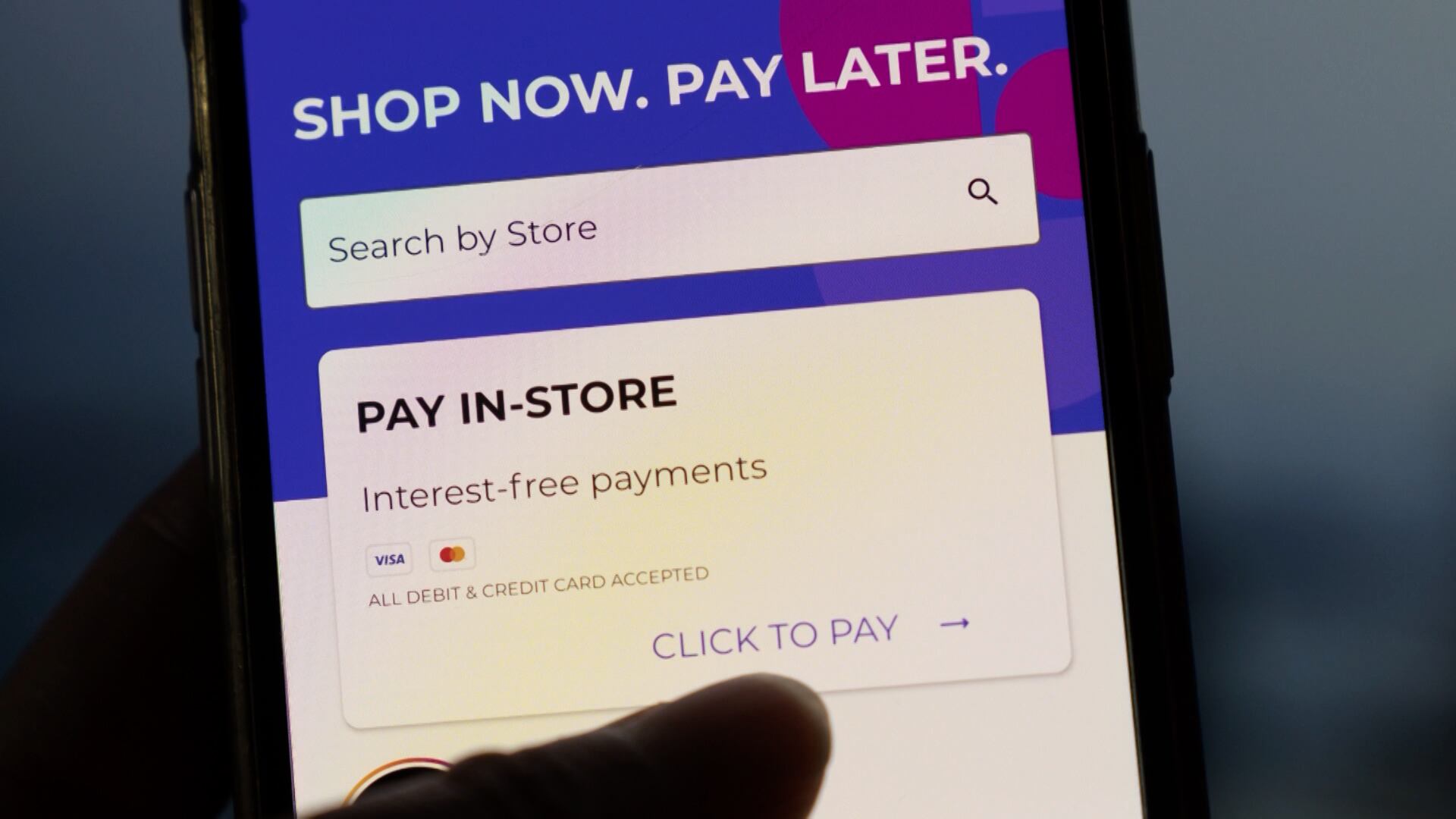
Dominique Broadway, CEO and founder of Finances Demystified, joined Cheddar to talk about the rising number of buy now, pay later (BNPL) services that are available to online shoppers. She noted that the desire for instant gratification among younger shoppers is at least one driver behind these services but said that without restraint it can be easy to fall into a mountain of debt. However, Broadway said this reverse layaway concept could be a huge opportunity for small and medium-sized businesses to increase their sales.
Ford Pro has teamed up with Salesforce to launch 'VIIZR.' a new software service designed to help small businesses and tradespeople succeed. The newly launched tool will help small businesses simplify commercial activities including invoicing, scheduling and managing requests, from one integrated, cloud-based platform. Ted Cannis, CEO, Ford Pro, joined Cheddar to discuss.
The Great Resignation has shown some signs of slowing in October with the number of those who quit their jobs falling by 4.7 percent to 4.16 million. This comes as worker strikes and calls for unionization ramp up. Jane Oates, president at WorkingNation joined Cheddar's "Opening Bell" to discuss the implications.
Cresco, a publicly traded, vertically integrated cannabis and medical marijuana company, recently reported its third quarter earnings. The company met expectations for EDITDA, but slightly missed on revenue, and reported a pretty significant widening of losses this year compared to the same time last year. Charlie Bachtell, CEO of Cresco Labs, joined Cheddar to explain what happened and his hopes for the future of the company.
a new study by The Buy Safe America Coalition shows retail theft has ballooned to over $68 billion per year. Most of these thefts are the result of something called organized retail crime. Those stolen goods are resold to unsuspecting consumers, often on popular online marketplaces like Facebook marketplace, eBay, OfferUp, and letgo. Mike Combs, Director of Organized Retail Crime Investigations at The Home Depot, joined Cheddar to discuss organized retail crime, how to identify it, and what can be done to stop it.
MARLOWE., the men's skincare and grooming brand, has announced 23-year-old professional boxer Ryan Garcia as "Chief Marlowe Officer" and co-owner of the brand. In this role, Ryan will help boost brand awareness, oversee product design, and strategize digital marketing content for his signature products. Ryan joined Cheddar to discuss the partnership and his boxing career.
Online broker TradeStation Group has landed on Wall Street. The company went public via SPAC deal, valuing the combined venture at $1.4 billion. John Bartleman , President & CEO TradeStation Group, Inc. joined Cheddar's Opening Bell to discuss.
Samsung is getting a major shake-up. In its biggest reshuffle since 2017, the South Korean company is merging its mobile and consumer electronics divisions and replacing its three CEOs with two new leaders. The move is seen as an effort to simplify its structure and focus more on the semiconductor business. Paulina Likos, investing reporter for U.S. News & World Report, explains why Samsung is merging these two units now, and its potential priorities moving forward.