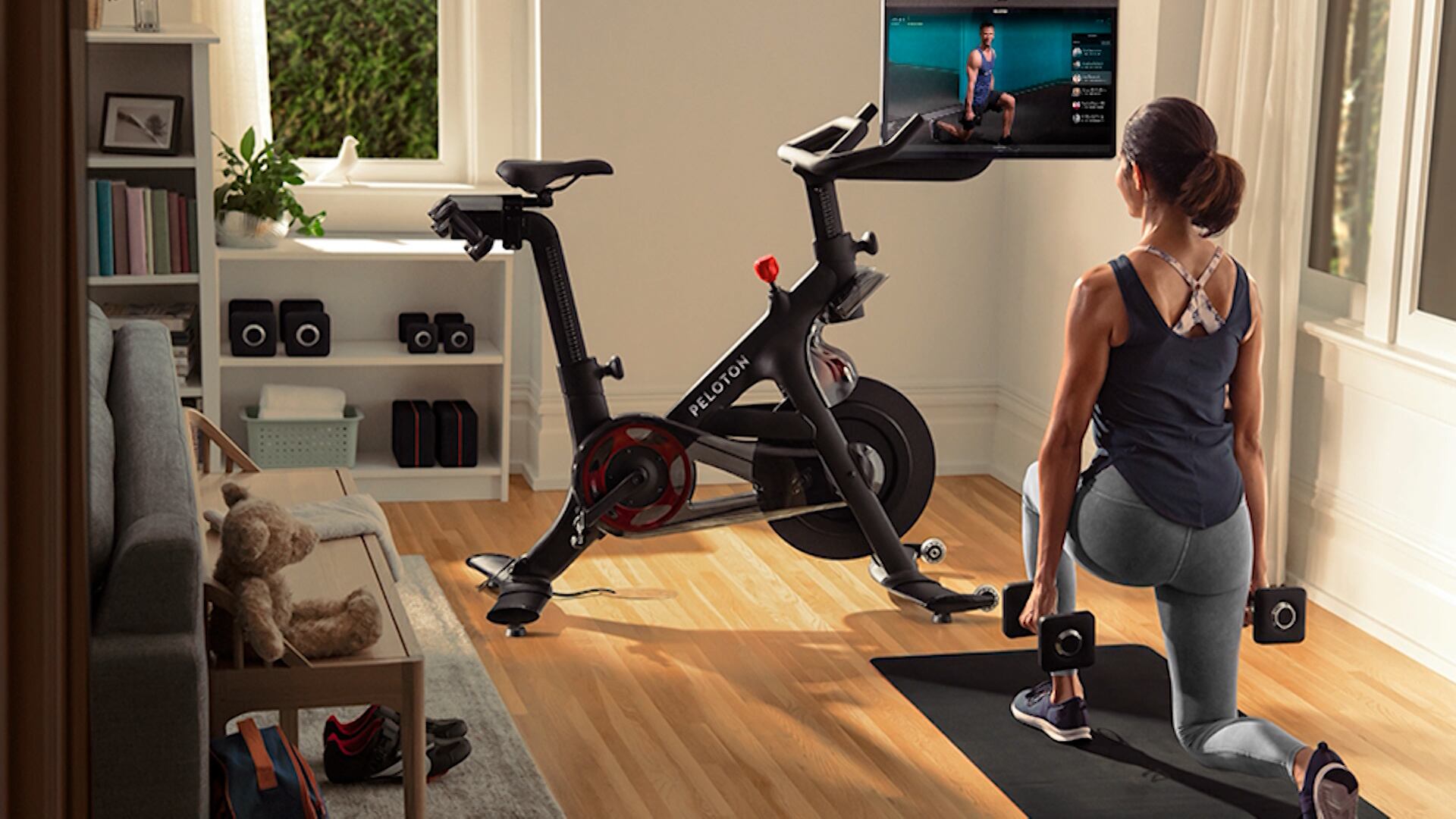
Exercise startup Peloton, known for streaming spin classes for its indoor bikes, has registered to go public, joining a crowded field of tech companies that have or will join the public markets this year.
Like many of its tech peers, Peloton appears confident in its plans for a public offering, despite not yet being profitable. In its registration documents, the company reported that it had made $915 million in revenues in the past fiscal year, a significant jump from the $435 million it produced the year before, but ultimately saw net losses of about $196 million, about quadruple its previous net losses of $48 million.
Founded in 2012, Peloton produces high-end, internet-connected stationary bikes and treadmills that work in concert with its streamed exercise classes. Bike packages approximately start at $2,200 (including delivery) while the treadmills begin about $4,300. Required content subscriptions are $39 a month. The company also offers a $19.49 option that lets users stream classes on mobile devices or a computer.
Since 2016, Peloton has seen its subscriber base grow from 107,000 people to more than half a million.
"Peloton's a really interesting case. This has been a year — obviously — of a lot of high-profile IPOs already," Joshua Franklin, a corporate finance correspondent at Reuters, told Cheddar on Wednesday. "Peloton kind of gets a little bit of the good stuff that people have liked about IPOs so far this year, and also a little bit of the stuff that people aren't so wild about."
He pointed to the Peloton's subscription model, revenue growth, and focus on disruption in the fitness space as potential positives for investors. On the other hand, Franklin cautioned that: "They don't specify in their IPO filing how they're going to reach profitability. And we've seen with Uber and Lyft, that's something that investors really are quite focused on these days."
In going public, the startup hopes to appeal to investors with a multifaceted business model. It has framed itself as a fusion of a media, fitness, and tech company, producing interconnected hardware, platform, and content. In the prospectus made public today, it says: "We are a technology company that meshes the physical and digital worlds to create a completely new, immersive, and connected fitness experience.
Peloton also says it's an "apparel" and "social connection" company because it sells branded clothing and incorporates a messaging feature into its streaming platform.
Unlike popular spin class brands SoulCycle and Flywheel, Peloton does not rely on physical locations. It runs a small number of studios where the startup films the content it streams online, but in its filing the company said revenue from classes at these locations "has been immaterial to date."
The startup appears to have inspired — or at least, catalyzed — an emergence of similar businesses. Mirror, founded in 2016, sells vertical, in-home screens that stream live exercise classes. 2017 saw the introduction of Hydrow, a startup that sells modernized rowing machines that stream rowing classes.
Meanwhile, Equinox Group has announced its plans to sell an at-home bike that will feature SoulCycle spin classes. Flywheel has also started selling their own home bikes with coordinated, live-streamed content, a move that has earned it a lawsuit over a patent dispute with Peloton itself.
Technology company Unity announced it has acquired Ziva Dynamics. Marc Whitten, SVP & GM, Create at Unity, joins Cheddar News' Closing Bell, where he discusses how this move will help his company democratize real-time character creation.
Wellness retreats have grown in popularity as self-care has become a bigger focus during the pandemic. Jamie Costello, Vice President of Sales and Fitness at Pritikin Longevity Center, joined Cheddar to discuss the goals of a retreat program, and how to make health and wellness accessible to more people.
The gambling industry has seen a boom since shutting down in 2020, outpacing even pre-pandemic levels. But as gamblers have returned to the tables, there's been a rise in reports of gambling addiction as well. Sara Slane, founder of Slane Advisory and sports betting/casino gaming executive, joined Cheddar to discuss the state of the gambling industry.
Shares of Peloton recovered after CEO John Foley debunked rumors that the company would halt production of some products, confirming that the company will instead be quote 'right-sizing' production as it faces lagging demand.
This comeback for the stock comes after reports surfaced that Peloton could completely hit the brakes on production of its bikes and treadmills. In the last year, Peloton has wiped nearly $40 billion off its market cap, with its stock down over 70% in 2021. Doug Astrop, managing partner at Exponential Investment Partners, joined Cheddar Movers to discuss.
After an intense hours-long meltdown Monday, stocks closed higher in a last minute, stunning comeback. At one point, the Dow shed over 1,000 points, the tech-heavy Nasdaq was down close to 5% and inching toward correction territory, and the S&P 500 briefly hit a correction earlier in the day. During most of Monday's session, stocks were on track to mark their worst months since March 2020, and for the Nasdaq, since October 2008. Philip Palumbo, Founder, CEO and Chief Investment Officer of Palumbo Wealth Management, joined Cheddar News' Closing Bell to discuss today's stunning market comeback, whether there's more room for stocks to fall, his 2022 market predictions, and more.
Bobby Zagotta, CEO of Bitstamp USA, joins Cheddar News' Closing Bell, where he discusses what he expects to see from Bitcoin and other cryptocurrencies amid a volatile period in the market, and explains how his crypto exchange is helping investors.
Markets started the week on a rocky note: the major indexes at most points during the day were double digits off of their highs, on the path to their worst performances since March 2020 and for the Nasdaq, since October 2008. Investors were skittish about the Federal Reserve's meeting this week, where the central bank is expected to announce more details about its plans to hike interest rates and taper asset purchasing this year. Art Hogan, Chief Market Strategist at National Securities, joined Cheddar News' Closing Bell to discuss today's market meltdown, why investors were feeling pressure, what to expect from the Fed, and more.
AT&T announced it's offering two tiers of high-speed internet, 2 gigs, and 5 gigs, to its fiber customers in more than 70 metro regions. AT&T Consumer CEO Thaddeus Arroyo joined Cheddar to talk about the newly available speed upgrades for 5.2 million of its customers, and where the rollout goes from here. "Over the course of 2022, we'll rapidly continue to retrofit the rest of the base," he said. "And importantly now is, as we build-out, we've talked about building out to cover 30 million homes and businesses by the end of 2025, we're going to continue to ensure that every new location that we stand up has this multi gig capability."
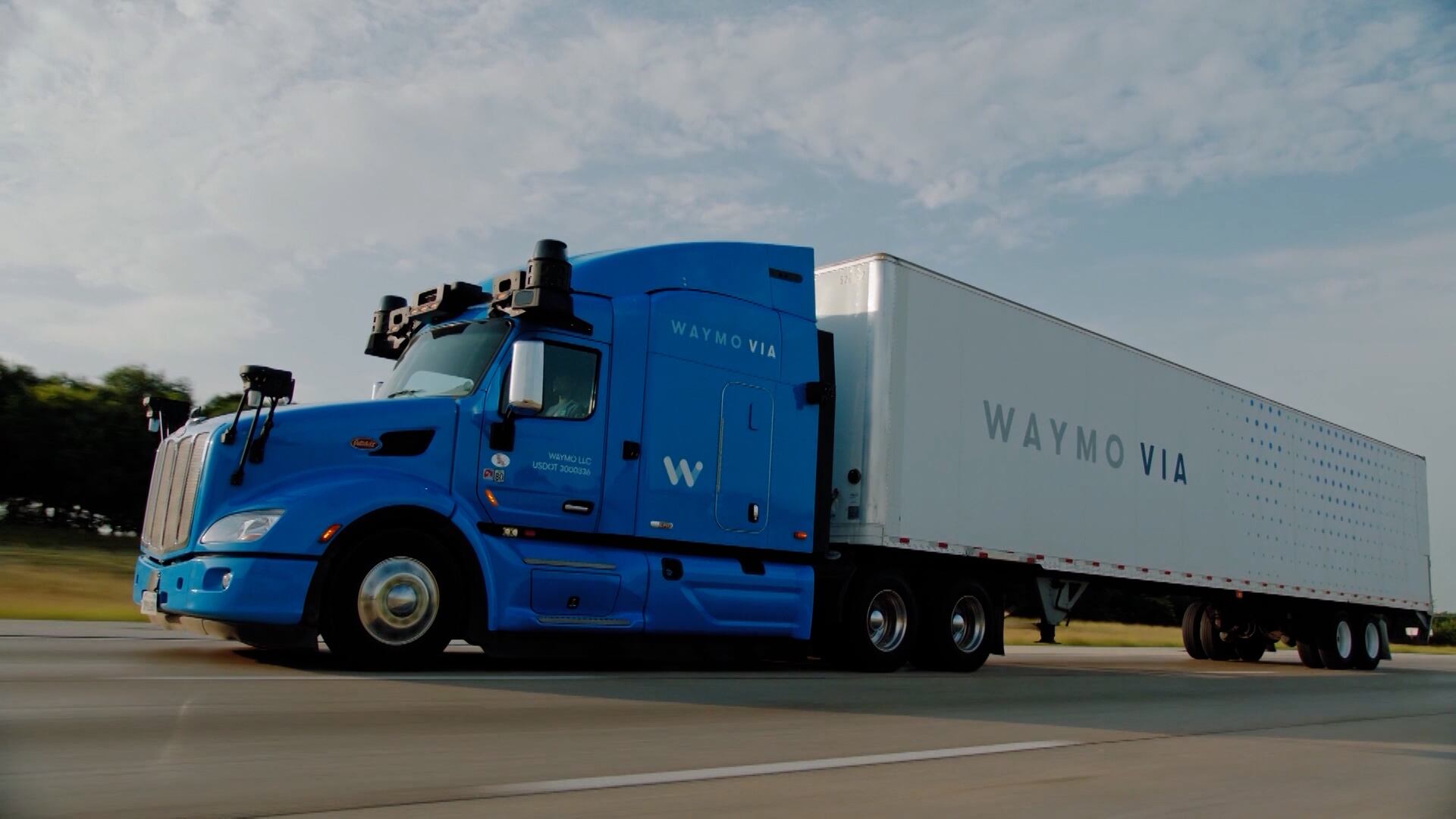
Autonomous driving tech company Waymo is partnering with transportation and logistics business J.B. Hunt. The two firms are teaming up to bring autonomous shipping to the highways. Head of commercialization for trucking at Waymo, Charlie Jatt, joined Cheddar to discuss how the companies are combining their strengths. "We, of course at Waymo, are working on the technology side of affairs, and J. B Hunt brings critical operational and commercial expertise," Jatt said. "And together we're going to work to deploy the first fully autonomous Class 8 truck hauling goods for one of their customers in the coming years in Texas."