Exercise startup Peloton, known for streaming spin classes for its indoor bikes, has registered to go public, joining a crowded field of tech companies that have or will join the public markets this year.
Like many of its tech peers, Peloton appears confident in its plans for a public offering, despite not yet being profitable. In its registration documents, the company reported that it had made $915 million in revenues in the past fiscal year, a significant jump from the $435 million it produced the year before, but ultimately saw net losses of about $196 million, about quadruple its previous net losses of $48 million.
Founded in 2012, Peloton produces high-end, internet-connected stationary bikes and treadmills that work in concert with its streamed exercise classes. Bike packages approximately start at $2,200 (including delivery) while the treadmills begin about $4,300. Required content subscriptions are $39 a month. The company also offers a $19.49 option that lets users stream classes on mobile devices or a computer.
Since 2016, Peloton has seen its subscriber base grow from 107,000 people to more than half a million.
"Peloton's a really interesting case. This has been a year — obviously — of a lot of high-profile IPOs already," Joshua Franklin, a corporate finance correspondent at Reuters, told Cheddar on Wednesday. "Peloton kind of gets a little bit of the good stuff that people have liked about IPOs so far this year, and also a little bit of the stuff that people aren't so wild about."
He pointed to the Peloton's subscription model, revenue growth, and focus on disruption in the fitness space as potential positives for investors. On the other hand, Franklin cautioned that: "They don't specify in their IPO filing how they're going to reach profitability. And we've seen with Uber and Lyft, that's something that investors really are quite focused on these days."
In going public, the startup hopes to appeal to investors with a multifaceted business model. It has framed itself as a fusion of a media, fitness, and tech company, producing interconnected hardware, platform, and content. In the prospectus made public today, it says: "We are a technology company that meshes the physical and digital worlds to create a completely new, immersive, and connected fitness experience.
Peloton also says it's an "apparel" and "social connection" company because it sells branded clothing and incorporates a messaging feature into its streaming platform.
Unlike popular spin class brands SoulCycle and Flywheel, Peloton does not rely on physical locations. It runs a small number of studios where the startup films the content it streams online, but in its filing the company said revenue from classes at these locations "has been immaterial to date."
The startup appears to have inspired — or at least, catalyzed — an emergence of similar businesses. Mirror, founded in 2016, sells vertical, in-home screens that stream live exercise classes. 2017 saw the introduction of Hydrow, a startup that sells modernized rowing machines that stream rowing classes.
Meanwhile, Equinox Group has announced its plans to sell an at-home bike that will feature SoulCycle spin classes. Flywheel has also started selling their own home bikes with coordinated, live-streamed content, a move that has earned it a lawsuit over a patent dispute with Peloton itself.
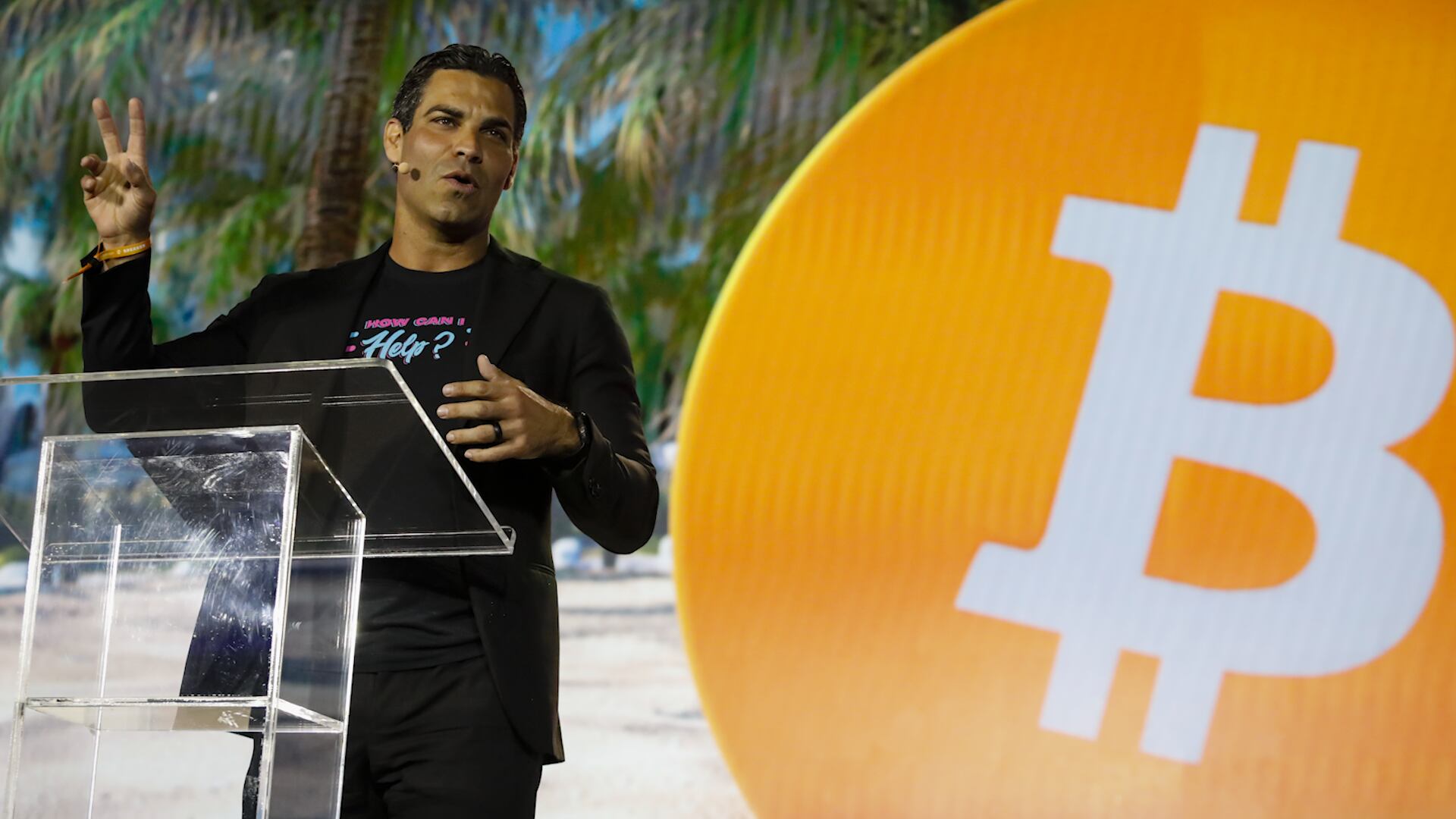
Miami wants to be the crypto capital of the world. Mayor Francis Suarez has gone all in on the blockchain, even accepting one of his first paychecks in Bitcoin, hosting one of the world's largest digital cryptocurrency conferences, and marketing Miami as a great place for tech experts to work. Maja Vujinovic, managing director of OGroupLLC, joined Cheddar's Fast Forward to discuss Miami's enthusiasm toward crypto, some of the potential risks that entails, and where the city might be heading when it comes to the crypto takeover.
Like so many other cities, Miami experienced a tourism boom over the summer after vaccines were distributed. But, the Omicron variant has thrown the travel industry for a loop. David Whitaker, president and CEO of the Greater Miami Convention and Visitors Bureau, joined Cheddar to discuss the city as a tourist destination, and how it has handled headwinds from the pandemic.
Miami's real estate market has boomed since early 2020, thanks to an overall strong housing market, remote work, and no income tax as incentives. The city is preparing to welcome even more residents as people relocate to warmer climates to work from home. Garrett Derderian, director of market intelligence at SERHANT, joined Cheddar to discuss the Magic City's red hot market.
Rockstar Energy, a subsidiary of Pepsico, unveiled its new beverage brand, Rockstar Unplugged, changing up the energy drink formula with hemp seed oil as an ingredient. PepsiCo Energy CMO Fabiola Torres joined Cheddar News to talk about how the product promotes “good vibes” and allows consumers to unwind and discuss partnering with "MTV Unplugged" for a concert series. "We couldn't find a better partnership that MTV," she said. "MTV Unplugged has been such an iconic proposition … and we believe that we're the right partners because the insight of our proposition for Rockstar Unplugged comes from music.
Eight months after the National Football League announced $1 million in research into cannabinoids, the NFL-NFLPA Joint Pain Management Committee has awarded the funding to two teams of medical researchers at the University of California San Diego and the University of Regina. The NFL says the studies will investigate the effects of cannabinoids on pain management and neuroprotection from concussion in elite football players, respectively. Cheddar correspondent Chloe Ailello spoke with Jeff Miller, the executive vice president of communications, public affairs, and policy for the NFL, about the studies, as well as the recent lawsuit filed against the NFL by former Miami Dolphins head coach Brian Flores. "Maybe we can learn things from other alternative pain approaches that are going to benefit our player population and then sports medicine as a whole," Miller said.
All Hands celebrates Black History Month by highlighting achievements in inclusivity and paying homage to those who have fought for equal rights. Rep. Maxine Waters (D-CA) joins Cheddar News to discuss voter suppression; Damali Peterman, CEO of Breakthrough ADR, elaborates on the biggest barriers for Black professionals; Andre Perry, senior fellow of Brookings Institution, dives into student loans and the racial wealth divide; and lastly, BET CEO Scott Mills discusses the company's initiatives for 2022.
Hinge users who have children can opt-in to a $100 stipend up to $25,000 for childcare. Logan Ury, the director of relationship science for the online dating platform, noted the issue as an obstacle for single parents who want to go out on dates. "We have heard that singles with children have a hard time going on dates for one of the reasons being that it's just hard to find childcare and it's hard to be able to afford it," she said. Ury also said that the hot topic among Hinge's users is mental health and the prioritizing of mental health.
According to the Federal Reserve, the investment gap between Black and white Americans has remained substantial, with only 34 percent of Black households joining in on the historic rise in the markets. Stacey Tisdale, the first Black woman to have reported from the NYSE and the CEO and president of Mind Money Media Inc., said that the data might not be as disheartening as it seems. "I think that number is very deceiving. That Federal Reserve study is actually from 2019, and it's very important that we all look beneath that number and look beneath the surface because there is nothing short of an investing revolution going on in the Black community," Tisdale said.