Exercise startup Peloton, known for streaming spin classes for its indoor bikes, has registered to go public, joining a crowded field of tech companies that have or will join the public markets this year.
Like many of its tech peers, Peloton appears confident in its plans for a public offering, despite not yet being profitable. In its registration documents, the company reported that it had made $915 million in revenues in the past fiscal year, a significant jump from the $435 million it produced the year before, but ultimately saw net losses of about $196 million, about quadruple its previous net losses of $48 million.
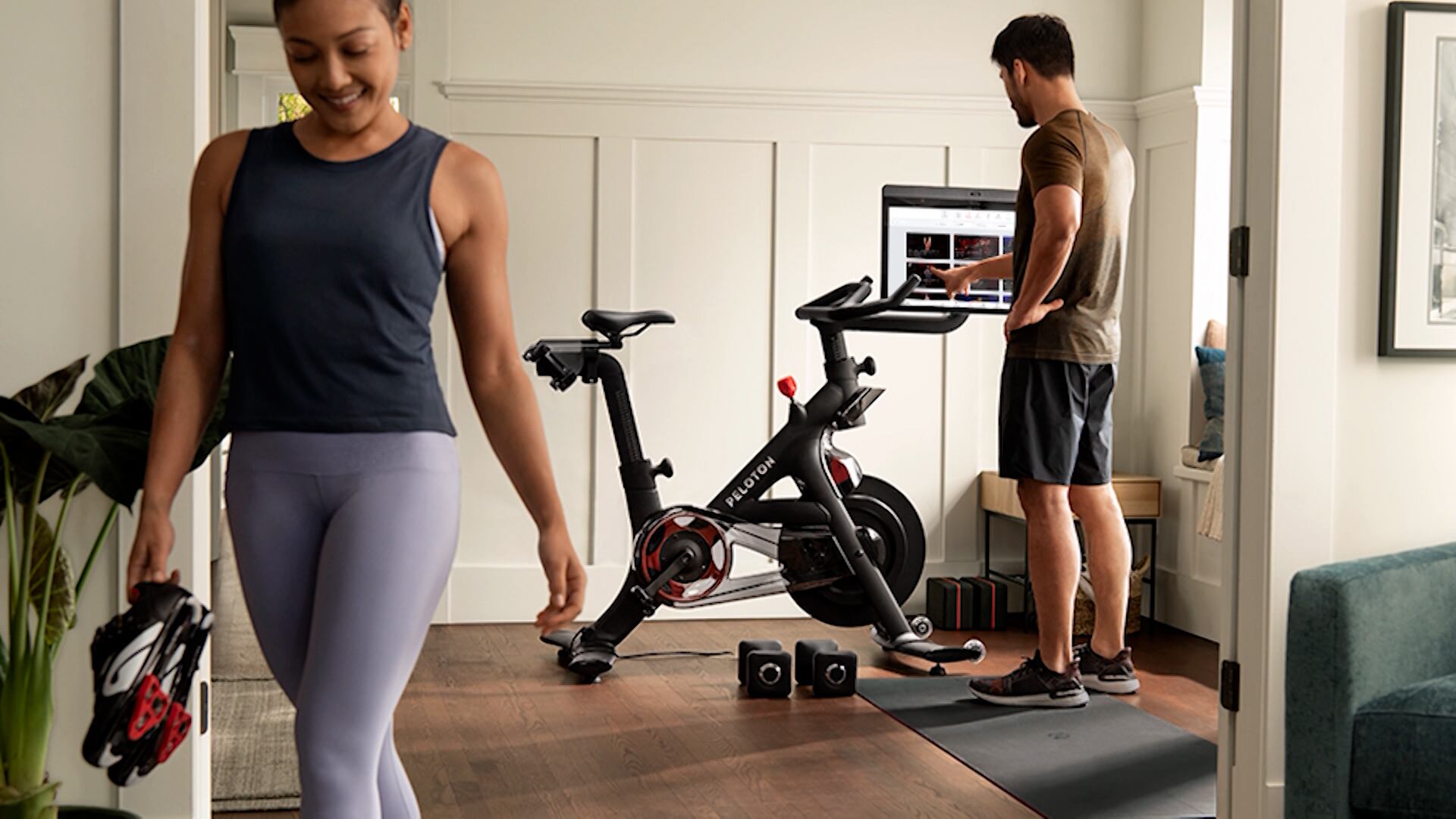
Founded in 2012, Peloton produces high-end, internet-connected stationary bikes and treadmills that work in concert with its streamed exercise classes. Bike packages approximately start at $2,200 (including delivery) while the treadmills begin about $4,300. Required content subscriptions are $39 a month. The company also offers a $19.49 option that lets users stream classes on mobile devices or a computer.
Since 2016, Peloton has seen its subscriber base grow from 107,000 people to more than half a million.
"Peloton's a really interesting case. This has been a year — obviously — of a lot of high-profile IPOs already," Joshua Franklin, a corporate finance correspondent at Reuters, told Cheddar on Wednesday. "Peloton kind of gets a little bit of the good stuff that people have liked about IPOs so far this year, and also a little bit of the stuff that people aren't so wild about."
He pointed to the Peloton's subscription model, revenue growth, and focus on disruption in the fitness space as potential positives for investors. On the other hand, Franklin cautioned that: "They don't specify in their IPO filing how they're going to reach profitability. And we've seen with Uber and Lyft, that's something that investors really are quite focused on these days."
In going public, the startup hopes to appeal to investors with a multifaceted business model. It has framed itself as a fusion of a media, fitness, and tech company, producing interconnected hardware, platform, and content. In the prospectus made public today, it says: "We are a technology company that meshes the physical and digital worlds to create a completely new, immersive, and connected fitness experience.
Peloton also says it's an "apparel" and "social connection" company because it sells branded clothing and incorporates a messaging feature into its streaming platform.
Unlike popular spin class brands SoulCycle and Flywheel, Peloton does not rely on physical locations. It runs a small number of studios where the startup films the content it streams online, but in its filing the company said revenue from classes at these locations "has been immaterial to date."
The startup appears to have inspired — or at least, catalyzed — an emergence of similar businesses. Mirror, founded in 2016, sells vertical, in-home screens that stream live exercise classes. 2017 saw the introduction of Hydrow, a startup that sells modernized rowing machines that stream rowing classes.
Meanwhile, Equinox Group has announced its plans to sell an at-home bike that will feature SoulCycle spin classes. Flywheel has also started selling their own home bikes with coordinated, live-streamed content, a move that has earned it a lawsuit over a patent dispute with Peloton itself.
In 2022, the FAA has received 323 reports of unruly passengers so far. Soon, flying could soon be limited to cooperative passengers only. Delta Airlines has asked the Department of Justice to put unruly travelers on a 'no-fly' list. Bryan Del Monte, president of the Aviation Agency, joins Cheddar News to discuss.
New York City’s tourism industry has seen a bumpy recovery from the pandemic, as the omicron surge delivers yet another blow to one of the world’s top tourist destinations. The arts and entertainment sector has been one of the hardest hit, with Broadway shows canceling performances once again after an industry-wide shutdown. Chris Heywood, executive vice president of global communications at NYC & Company, joined Cheddar's Fast Forward to talk about why he's confident the theater district - and the rest of the city - will eventually return to its pre-pandemic glory.
Greg Martin, Founder and Managing Director at Rainmaker Securities, discusses the benefits of Big Tech bidding for Peloton and highlights the ongoing headwinds impacting the exercise equipment maker.
SES Holdings, a leader in production of high-performance hybrid lithium-metal rechargeable batteries for electric vehicles, has arrived on Wall Street. The company went public via SPAC deal and now trades on the New York Stock Exchange under the ticker 'SES.' Qichao Hu, founder & CEO, joined Cheddar Movers to discuss the debut as well as what lies ahead for the company.
Amazon warehouse workers in Alabama are set to begin voting to unionize for a second time after workers at the facility in the town of Bessemer overwhelmingly voted against forming a union during an election early last year; but in November, the National Labor Relations Board overturned the vote, upholding a union challenge of the results which argued that Amazon undermined the conditions for a fair election. Another round of ballots will now be mailed out to works at the warehouse for a so-called re-run election. Director of Labor and Employment Studies at San Francisco State University John Logan and National Field Director for Our Revolution Mike Oles joined Cheddar News' Closing Bell to discuss.
Stocks closed near session highs Tuesday as investors eyed more strong corporate earnings reports, and prepped for Thursday CPI data which will give an idea of how hot inflation may still be running. Hugh Johnson, Chairman and Chief Economist of Hugh Johnson Economics, joined Closing Bell to discuss today's close, earnings season so far, predictions about the Federal Reserve's plan to raise interest rates, and more.
Johannes Evenblij, President of PepsiCo Beverages North America for the West Division, joins Cheddar News to discuss giving back at the Super Bowl this year
Youth sports coaching service MOJO has partnered with Major League Baseball, named the "trusted grassroots coaching app" of the MLB. The app provides content for parents and coaches to help young players grow their skills. Ben Sherwood, founder & CEO of MOJO joined Cheddar News to talk about how his app works to improve coaching to keep players interested. "The number one reason that kids drop out of sports and all of the surveys is that sports aren't fun, and one of the big reasons that sports aren't fun is that the coach doesn't know what she or he is doing," he said. "We think there's a great coach in everyone, and we just have to have the right resources and tools and inspiration."