Exercise startup Peloton, known for streaming spin classes for its indoor bikes, has registered to go public, joining a crowded field of tech companies that have or will join the public markets this year.
Like many of its tech peers, Peloton appears confident in its plans for a public offering, despite not yet being profitable. In its registration documents, the company reported that it had made $915 million in revenues in the past fiscal year, a significant jump from the $435 million it produced the year before, but ultimately saw net losses of about $196 million, about quadruple its previous net losses of $48 million.
Founded in 2012, Peloton produces high-end, internet-connected stationary bikes and treadmills that work in concert with its streamed exercise classes. Bike packages approximately start at $2,200 (including delivery) while the treadmills begin about $4,300. Required content subscriptions are $39 a month. The company also offers a $19.49 option that lets users stream classes on mobile devices or a computer.
Since 2016, Peloton has seen its subscriber base grow from 107,000 people to more than half a million.
"Peloton's a really interesting case. This has been a year — obviously — of a lot of high-profile IPOs already," Joshua Franklin, a corporate finance correspondent at Reuters, told Cheddar on Wednesday. "Peloton kind of gets a little bit of the good stuff that people have liked about IPOs so far this year, and also a little bit of the stuff that people aren't so wild about."
He pointed to the Peloton's subscription model, revenue growth, and focus on disruption in the fitness space as potential positives for investors. On the other hand, Franklin cautioned that: "They don't specify in their IPO filing how they're going to reach profitability. And we've seen with Uber and Lyft, that's something that investors really are quite focused on these days."
In going public, the startup hopes to appeal to investors with a multifaceted business model. It has framed itself as a fusion of a media, fitness, and tech company, producing interconnected hardware, platform, and content. In the prospectus made public today, it says: "We are a technology company that meshes the physical and digital worlds to create a completely new, immersive, and connected fitness experience.
Peloton also says it's an "apparel" and "social connection" company because it sells branded clothing and incorporates a messaging feature into its streaming platform.
Unlike popular spin class brands SoulCycle and Flywheel, Peloton does not rely on physical locations. It runs a small number of studios where the startup films the content it streams online, but in its filing the company said revenue from classes at these locations "has been immaterial to date."
The startup appears to have inspired — or at least, catalyzed — an emergence of similar businesses. Mirror, founded in 2016, sells vertical, in-home screens that stream live exercise classes. 2017 saw the introduction of Hydrow, a startup that sells modernized rowing machines that stream rowing classes.
Meanwhile, Equinox Group has announced its plans to sell an at-home bike that will feature SoulCycle spin classes. Flywheel has also started selling their own home bikes with coordinated, live-streamed content, a move that has earned it a lawsuit over a patent dispute with Peloton itself.
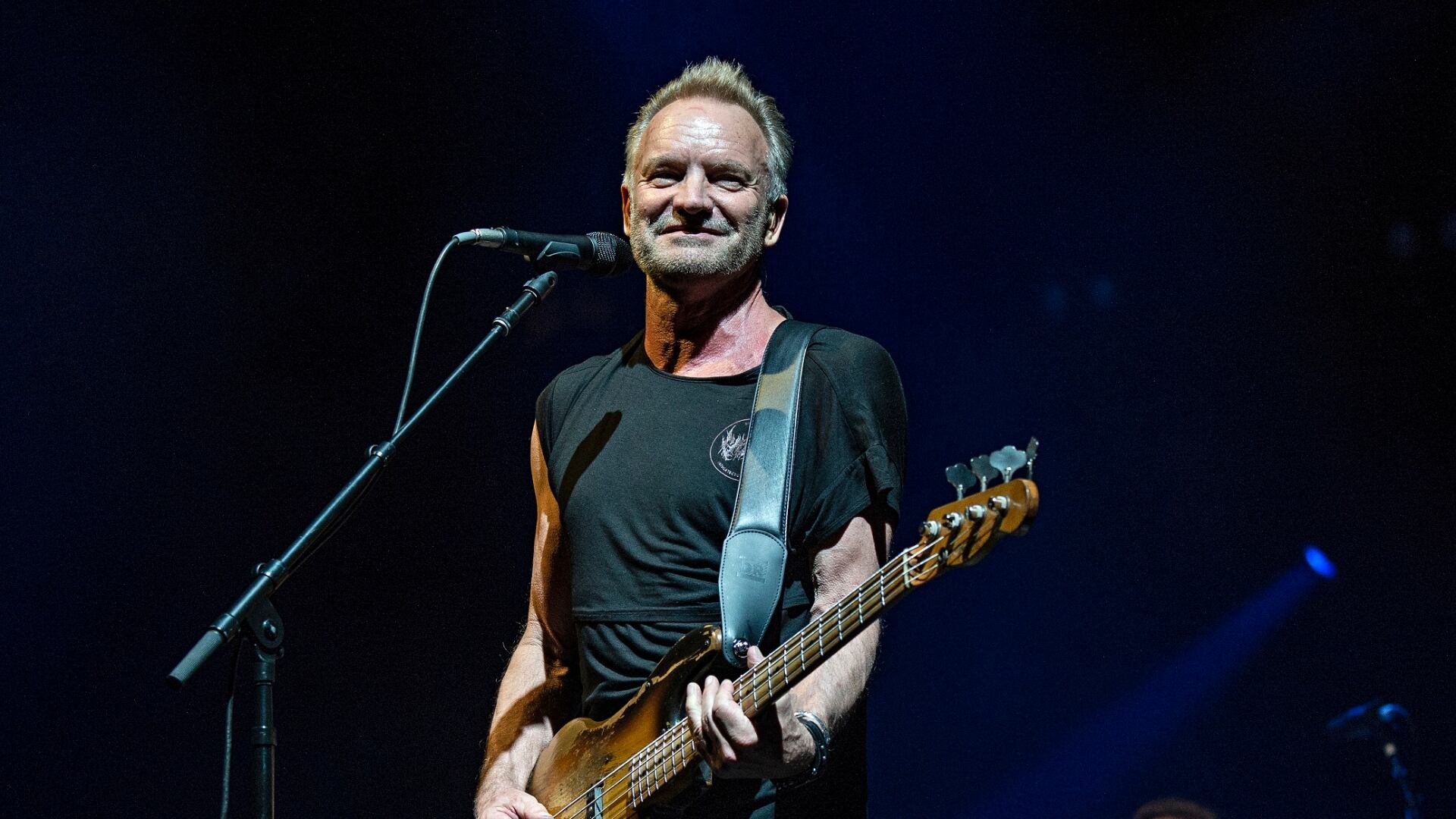
Sting has sold his catalog of more than 600 songs for $300 million to Universal Music. The deal gives the label the rights to all of his work, including “Every Breath You Take," as well as all future royalties.
Miller Lite is opening the first branded bar in the metaverse, by way of Decentraland, as a way to advertise during the Super Bowl this year without buying an expensive TV commercial slot. Sofia Colucci, global vice president of Miller Family of Brands, joined Cheddar to talk about the new marketing concept. "We have a lot of great partnerships with NFL teams throughout the year but were shut out of advertising during the Super Bowl game, so this pushes us to think creatively and also think of what feels really relevant right now," Colucci said. "There's no question that there's a lot of excitement with the metaverse, and we wanted to participate but in a way that felt right for Miller Lite."
Plans to add affordable housing to a development in Yellow Springs, Ohio, were squashed after comedian Dave Chappelle and other community members spoke out against the project. Chappelle threatened to pull the plug on his local comedy club and restaurant projects if the development had been approved.
Jason Moser, Senior Analyst at The Motley Fool, joined Wake Up With Cheddar to talk about the big takeaways from Disney's Q1 report, which showed the company nearing 130 million Disney+ subscribers as parks revenue ticks up.
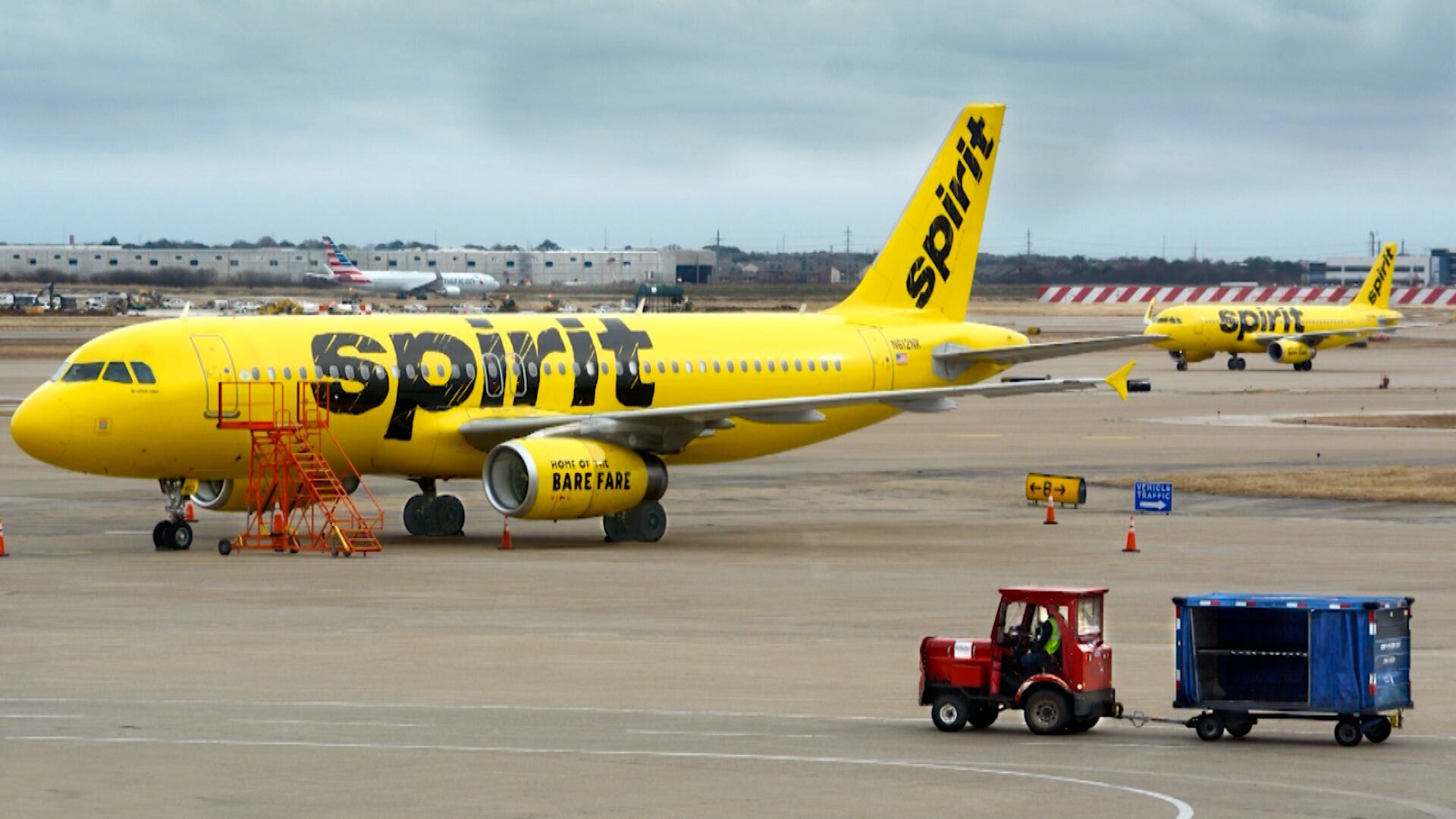
The airline industry is seeing a major consolidation as Frontier and Spirit Airlines have agreed to merge in a deal valued at $6.6 billion dollars. Frontier will control just over 51% of the company, and Spirit will control the other 48%, creating what would become the fifth-largest airline in the U.S. The deal was approved over the weekend, with Spirit CEO Ted Christie saying that the merger aims to create an aggressive, low-fare competitor focused on consumer-friendly pricing. John Grant, Senior Analyst at OAG explains the gravity of the merger, and the wider impact it could have on competition and the airline industry as a whole.
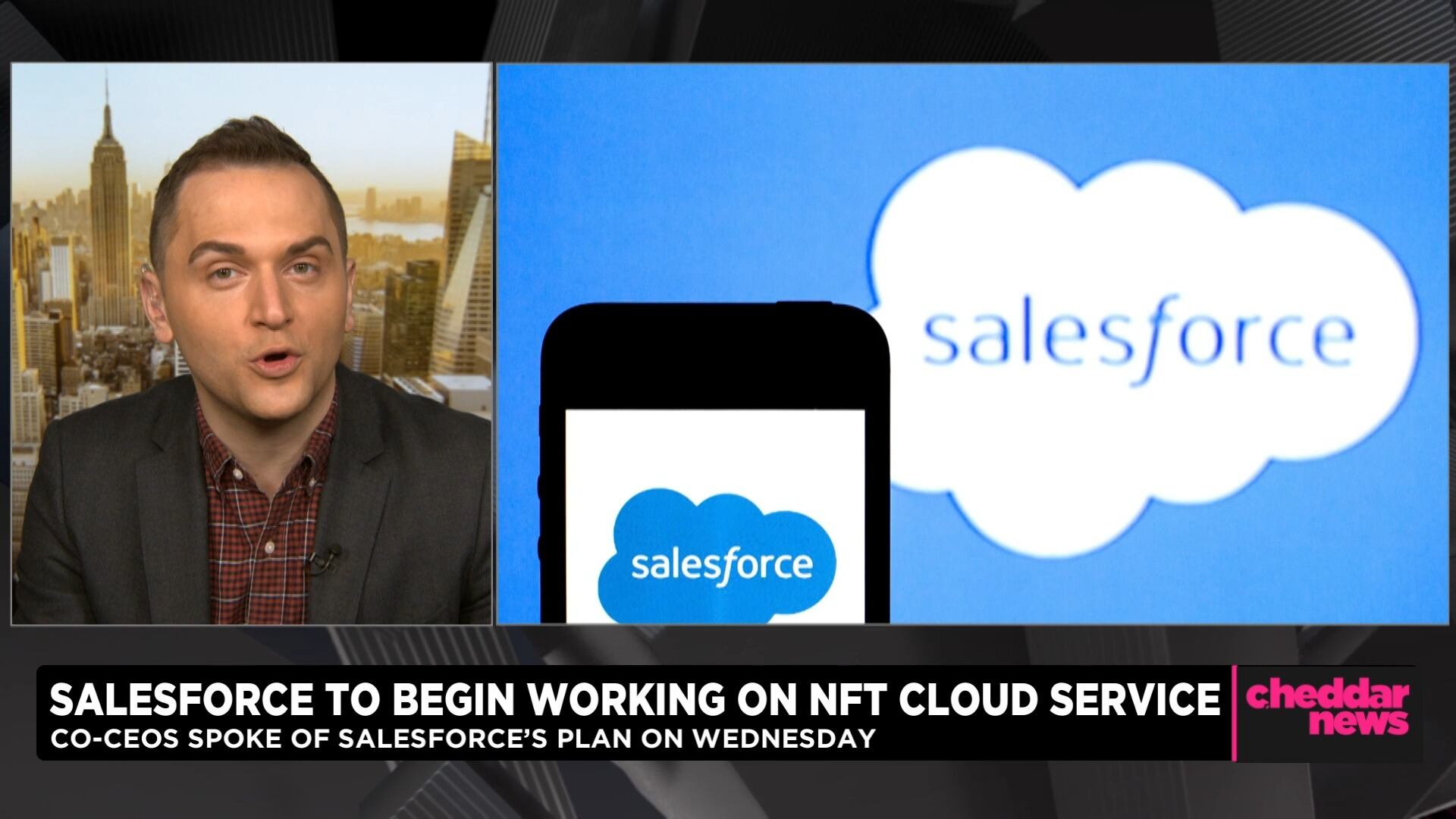
Cheeze, Inc. is a media platform that hopes to help photographers to tell stories through the use of NFT’s. Simon Hudson, founder and CEO of Cheeze, Inc. joined Cheddar News to explain the process as well as teasing its "Women of Authenticity" display for Women’s History Month. "We've made it very simple and focused very hard on reducing all of the friction to bring their items to the blockchain." Hudson explained. He also addressed reports that cloud software giant Salesforce could be getting into the NFT marketplace.
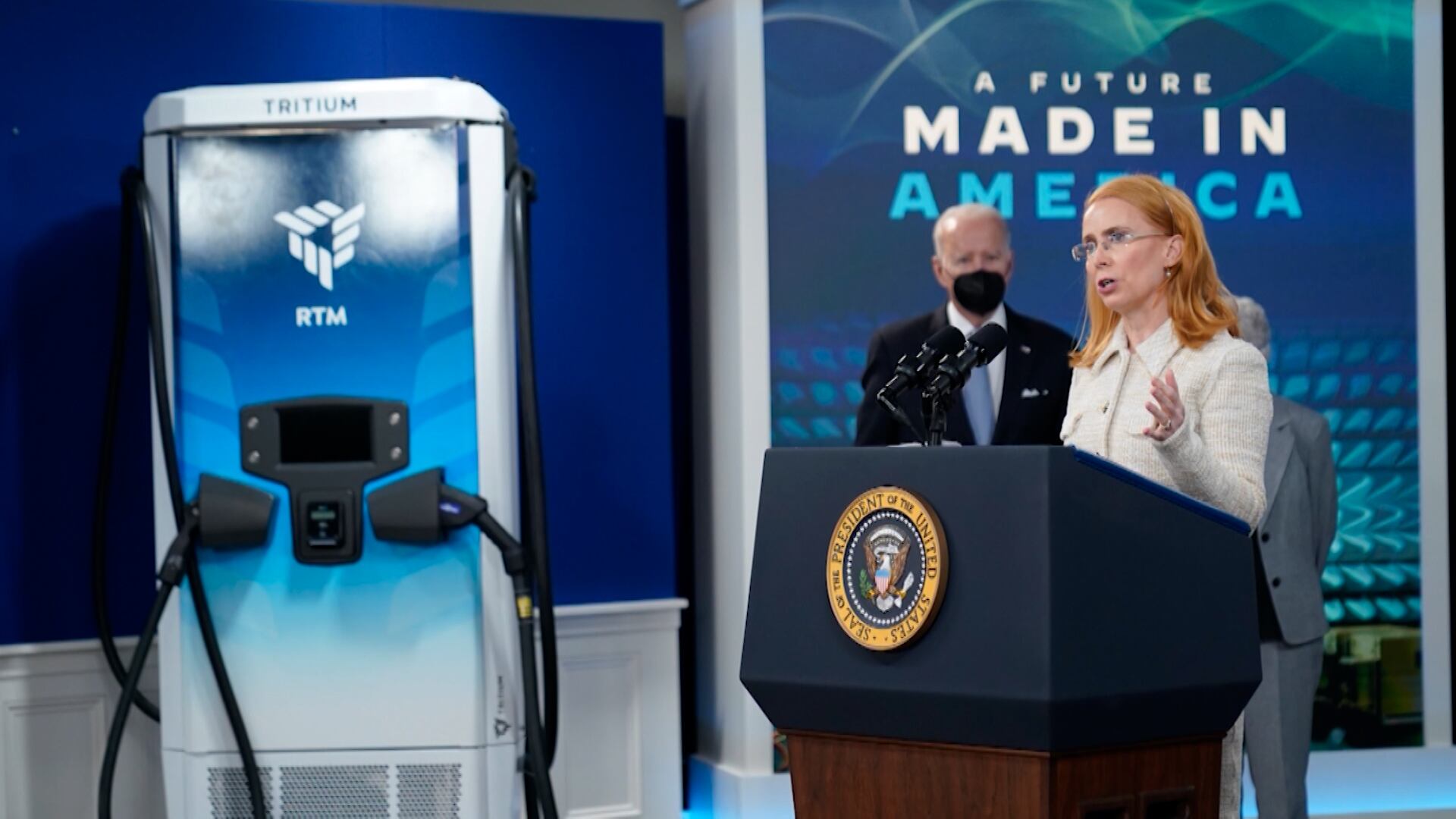
President Biden's push for electric vehicles is doing more than trying to hold off climate change as it also hopes to revive American manufacturing jobs. The latest company to open an EV charging production plant in the U.S. is Australia-based Tritium, looking to open its new Lebanon, Tennessee, facility in the fall of 2022. It's expected to create at least 500 jobs in the region and reach a production capacity of 10,000 charging units per year. Jane Hunter, CEO and executive director of Tritium, joined Closing Bell to discuss the plant, production capacity, and working with the Biden administration. "The policies that they put in place have directly driven demand for our fast charging products," she said. "Discussions that we have are just incredibly positive because this administration wants to have an electric superhighway that runs all across the country so that it's open equitably for all people to drive electric vehicles."