After most of the country's school districts were forced into virtual learning in the spring as a result of the growing coronavirus pandemic, Dr. Nathaniel Beers, president of the HSC Health Care System, told Cheddar it is necessary for students to return to class in-person this coming fall.
The American Academy of Pediatrics, for which Beers also serves as a member of the council of health, made the recommendation. Beers said the impact of children missing in-person interaction could be more damaging than actually contracting COVID-19.
"The impact on lack of access to adequate nutrition, lack of access to social and emotional supports, mental and behavioral supports, special education supports all impact the community of kids in different ways and families in different ways," he added.
While many businesses consider staggered or modified schedules for its adult workers, Beers said children should be in school "as much as possible" and "as many children as possible should be in school for in-school instruction," and warned keeping kids at home will exacerbate existing disparities in communities.
"That, however, is going to look very different in different communities based on the disease burden that they have, based on the resources that they have, to ensure that staff and students, and families, can all be protected if schools are going to be open," Dr. Beers noted.
Despite the recommendation, officials are still deciding how to hold school, considering health experts are still learning about the impacts of COVID-19. Beers said that while he was initially not convinced that in-person schooling was the way to go, he has changed his mind as more research indicates children, as a group, appear to be among those least impacted by the virus.
"The data has been increasing over the past six months," he said. "Children are less likely to get the disease. They are less likely to spread the disease to others. Children are less likely to give it to other kids and other adults and they are less likely to have complications from the disease."
As some states move forward with steps to reopen, according to Beers, the primary focus should be on schools rather than other operations more likely to inflate the number of confirmed cases, as in Florida and Texas.
"There was really a lack of comprehensive guidance that was helping schools think about what are the critical pieces that they need to undertake in order to ensure that kids can return to school and that schools can be prepared to safely have staff in buildings as well," he said.
While the school year is still weeks away for many students, parents considering playdates or summer camp for their children today should know "outdoor is better than indoor" and making smart decisions about potential health impacts should be the primary concern before letting children interact with others, Beers said.
"The longer you are inside in poor ventilation, the higher likelihood you are to create an exposure that will put you at higher risk for getting the virus," he added.
On December 25, 2021, NASA got into the holiday spirit by launching the James Webb Space Telescope, the largest and most powerful space science observatory in history.
It is intended to succeed the Hubble Space Telescope as NASA's flagship mission in astrophysics and is able to view objects too old and distant for Hubble. Gregory Robinson, director of NASA's James Webb Space Telescope program, joins Cheddar News' Closing Bell to discuss the mission. "I think a lot of what we don't know today is what I'm expecting to find and certainly really understand what took place more than 13.5 billion years ago and see the formation of some of the first galaxies in our universe," said Robinson.
Every few years, the Olympics roll around to prove that, yes, the world’s best athletes can jump farther, swim faster, and generally crush records that would’ve been impossible just a few decades ago. Take ski jumping - the world record has increased by well over 200 meters in fewer than 100 years. Responsible for this is a lot of intentional engineering of equipment and hills, but perhaps the biggest change is thanks to one act of human daring. Watch to find out how!
YouTube creator platform Spotter recently announced $200 million in Series D financing at a valuation of $1.7 billion, led by SoftBank Vision Fund 2. Spotter allows YouTubers to license the rights to their video catalogs in exchange for large sums of cash paid upfront. The company's clients include some of YouTube's most popular personalities, with a combined total of more than 1.2 billion subscribers. Aaron Debevoise, founder and CEO of Spotter, joins Cheddar News' Closing Bell to discuss.
What if we added the equivalent of over 1300 football fields to the tip of Manhattan? This was the proposal of a recent op-ed in The New York Times - increasing the size of the borough by about 12% in order to mitigate two of its most pressing problems. There’s evidence from all over the world that doing this can be a useful technique for crowded ocean-side cities. But the process to do so - reclaiming land from the ocean - is rife with potential downsides. So is this a proportional response to gigantic problems? Or a zany harebrained scheme that’ll do more harm than good?
Marti Bledsoe Post, executive director of On Our Sleeves, joins Cheddar News to discuss the latest study finding the impact children's mental health can have on working parents.
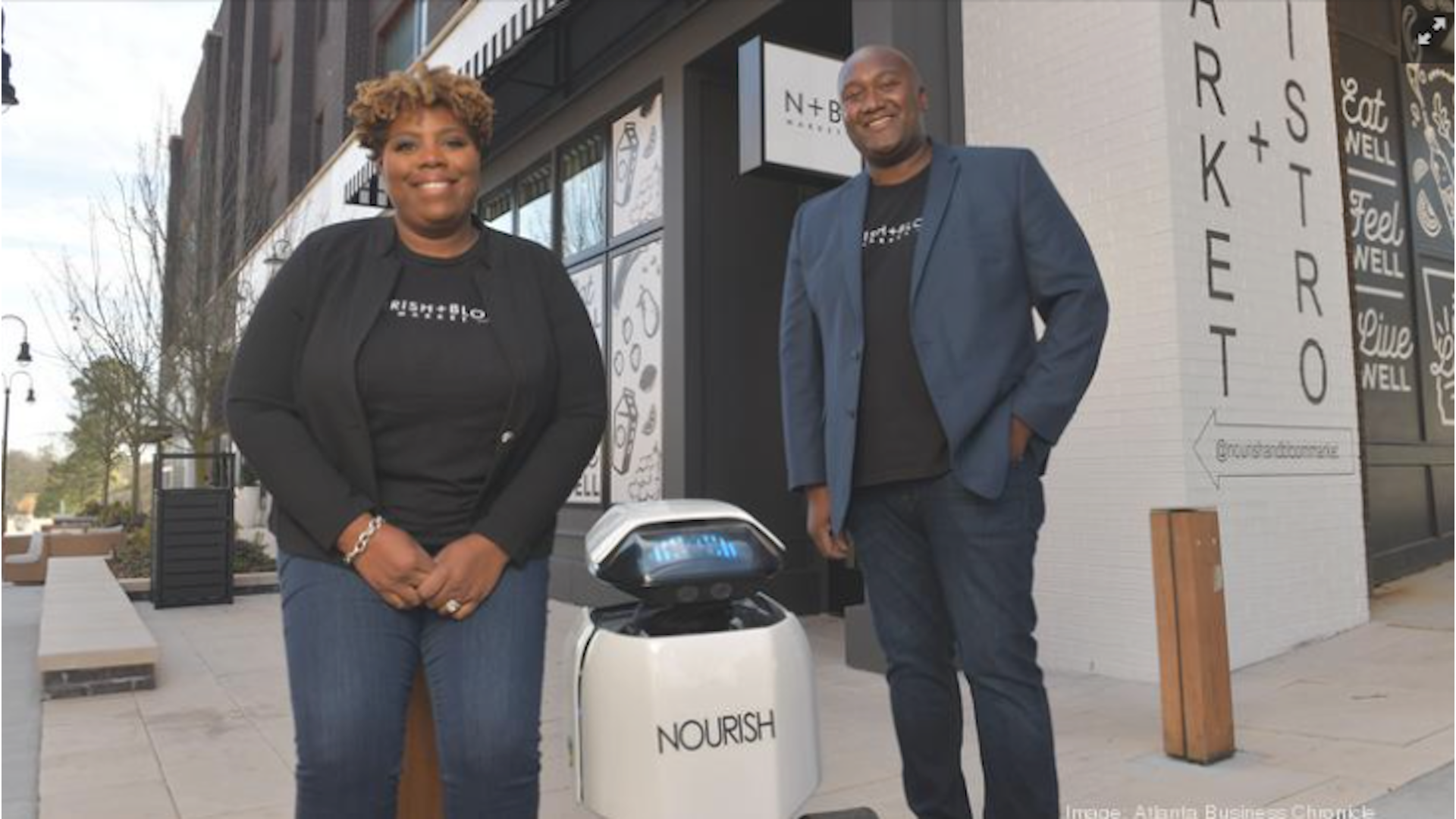
Jamie Hemmings and Jilea Hemmings, owners and founders of Nourish + Bloom Market, join Cheddar News to talk about the inspiration behind creating their cashierless grocery store.
Bartholomew Jones and Renata Henderson, co-owners of Cxffeeblack, join Cheddar News to discuss how they are merging Black culture with coffee in Memphis.
Dr. Daniel Bober, psychiatrist and certified addiction medicine physician, joins Cheddar News to offer tips on how parents and guardians can talk to their children about what's happening in Ukraine.