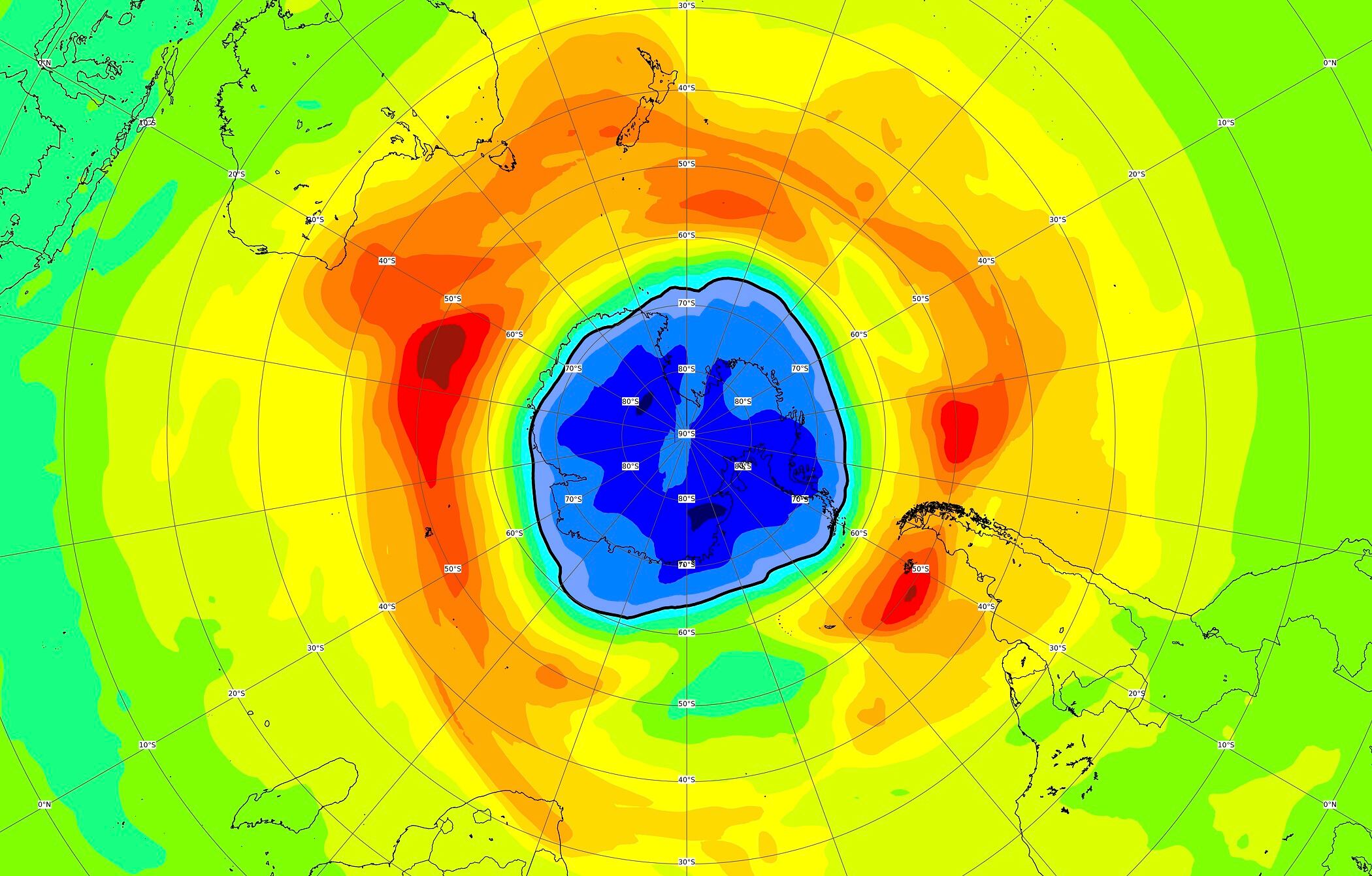
This image, provided on Thursday, Sept. 16, 2021 by the European Space Agency (ESA) shows a map of the ozone hole over the South Pole on 16 September 2021. Scientists say the Southern Hemisphere ozone hole is larger than usual and already surpasses the size of Antarctica. (AP Photo/European Space Agency, ESA)
Scientists say the hole in the Earth’s protective ozone layer over the Southern Hemisphere is larger than usual this year and already surpasses the size of Antarctica.
The European Union’s Copernicus Atmosphere Monitoring Service said Thursday that the so-called ozone hole, which appears every year during the Southern Hemisphere spring, has grown considerably in the past week following an average start.
“Forecasts show that this year´s hole has evolved into a rather larger than usual one,” said Vincent-Henri Peuch, who heads the EU's satellite monitoring service.
“We are looking at a quite big and potentially also deep ozone hole,” he said.
Atmospheric ozone absorbs ultraviolet light coming from the sun. Its absence means more of this high-energy radiation reaches the Earth, where it can harm living cells.
Peuch noted that last year's ozone hole also started out unremarkably but then turned into one of the longest-lasting ones on record.
The Montreal Protocol, signed in 1987, led to a ban on a group of chemicals called halocarbons that were blamed for exacerbating the annual ozone hole.
Experts say that while the ozone layer is beginning to recover, it's likely to take until the 2060s for the ozone-depleting substances used in refrigerants and spray cans to completely disappear from the atmosphere.
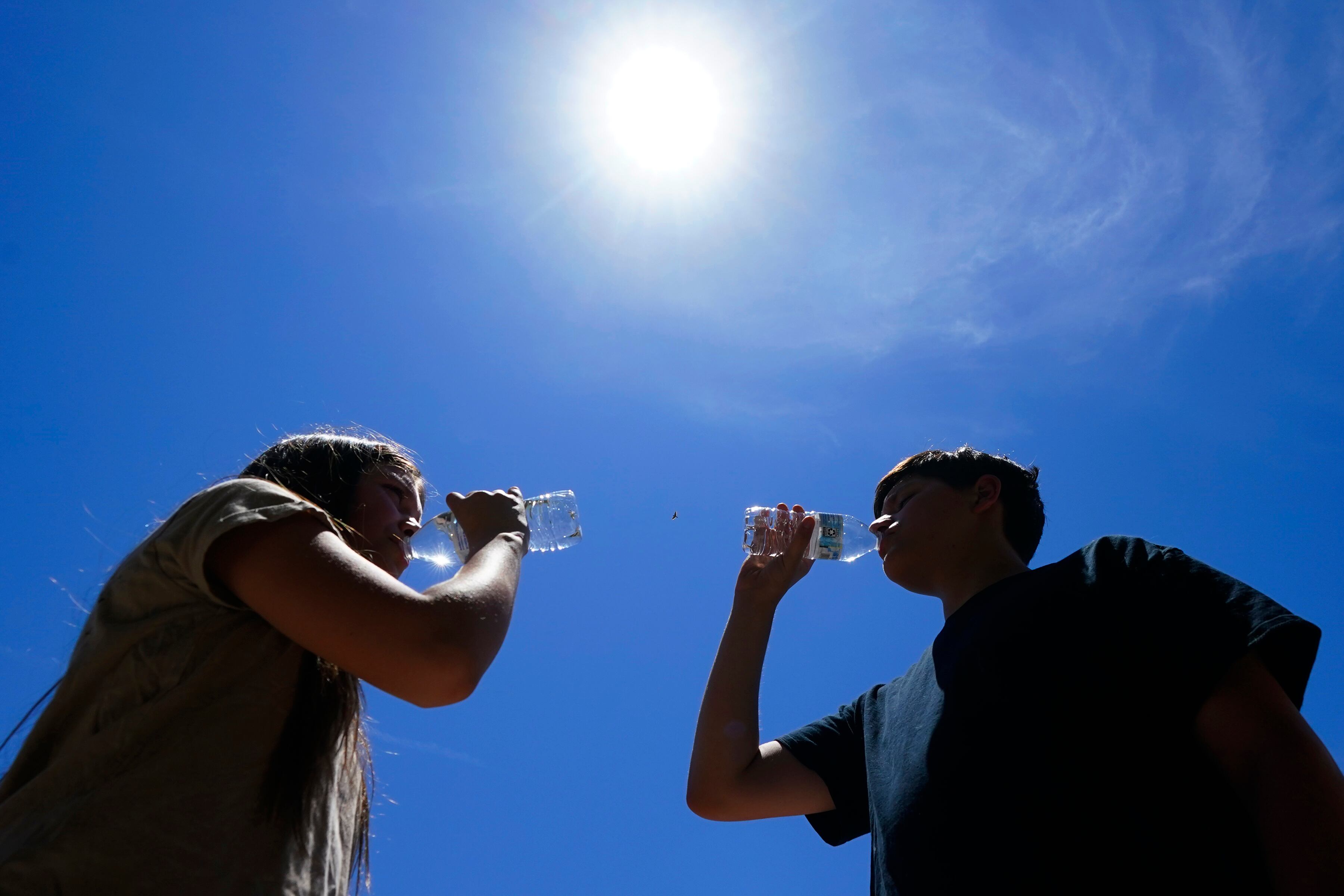
High temperatures continue to affect people in the U.S. and abroad, including in Iran where it reached 152 degrees on Sunday. The southwestern part of the U.S. continues to experience extreme weather after over a week of a heat wave.
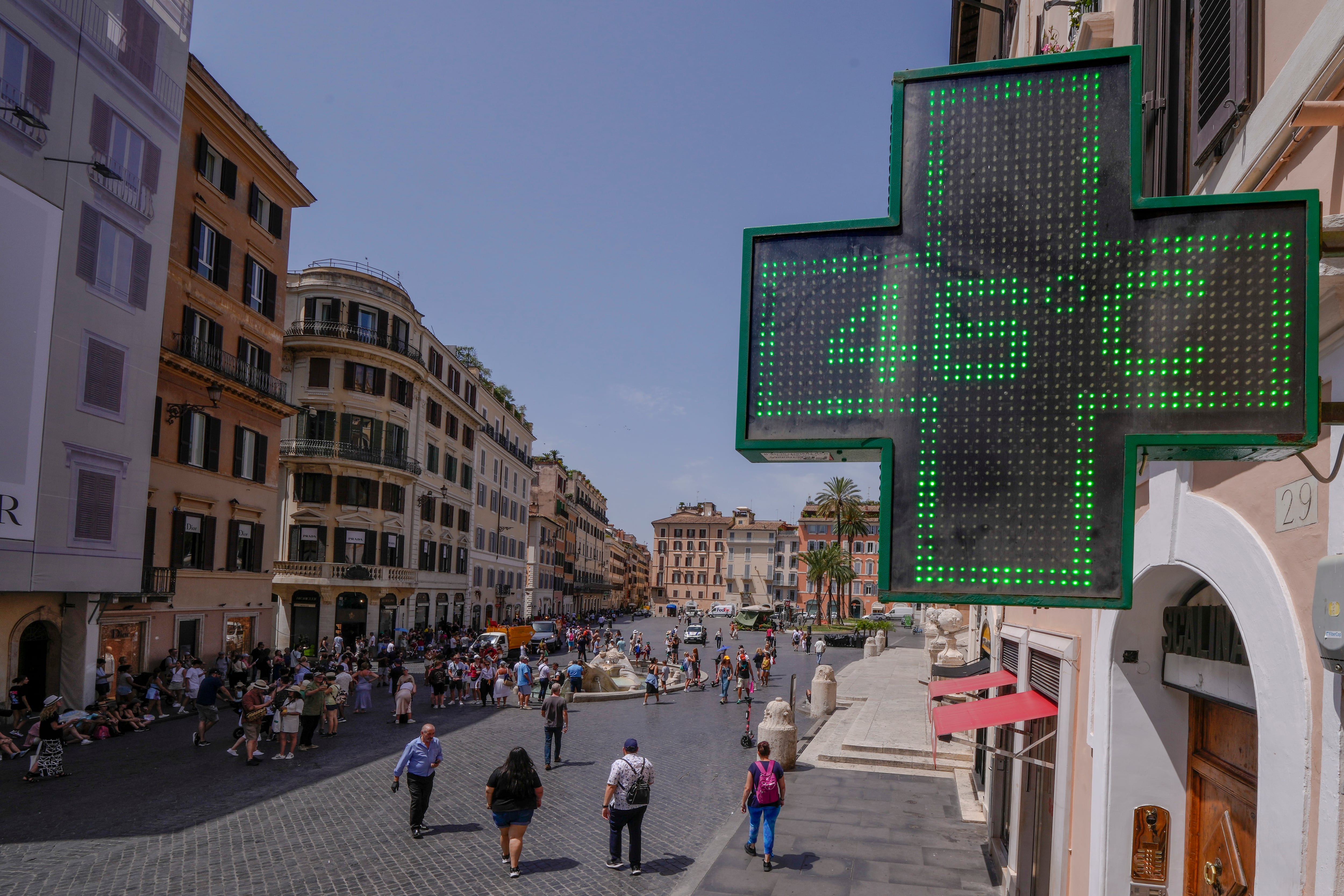
Officials warned residents and tourists packing Mediterranean destinations on Tuesday to stay indoors during the hottest hours as the second heat wave in as many weeks hits the region and Greece, Spain and Switzerland battled wildfires.
While the East Coast grappled with the aftermath of downpours that closed roads and rendered the water supply undrinkable in places, the West and other parts of the country contended with sizzling temperatures and unsafe air quality attributed to Canadian wildfires.
U.S. officials on Monday approved the first long-acting drug to protect babies and toddlers against a respiratory virus that sends tens of thousands of American children to the hospital each year.