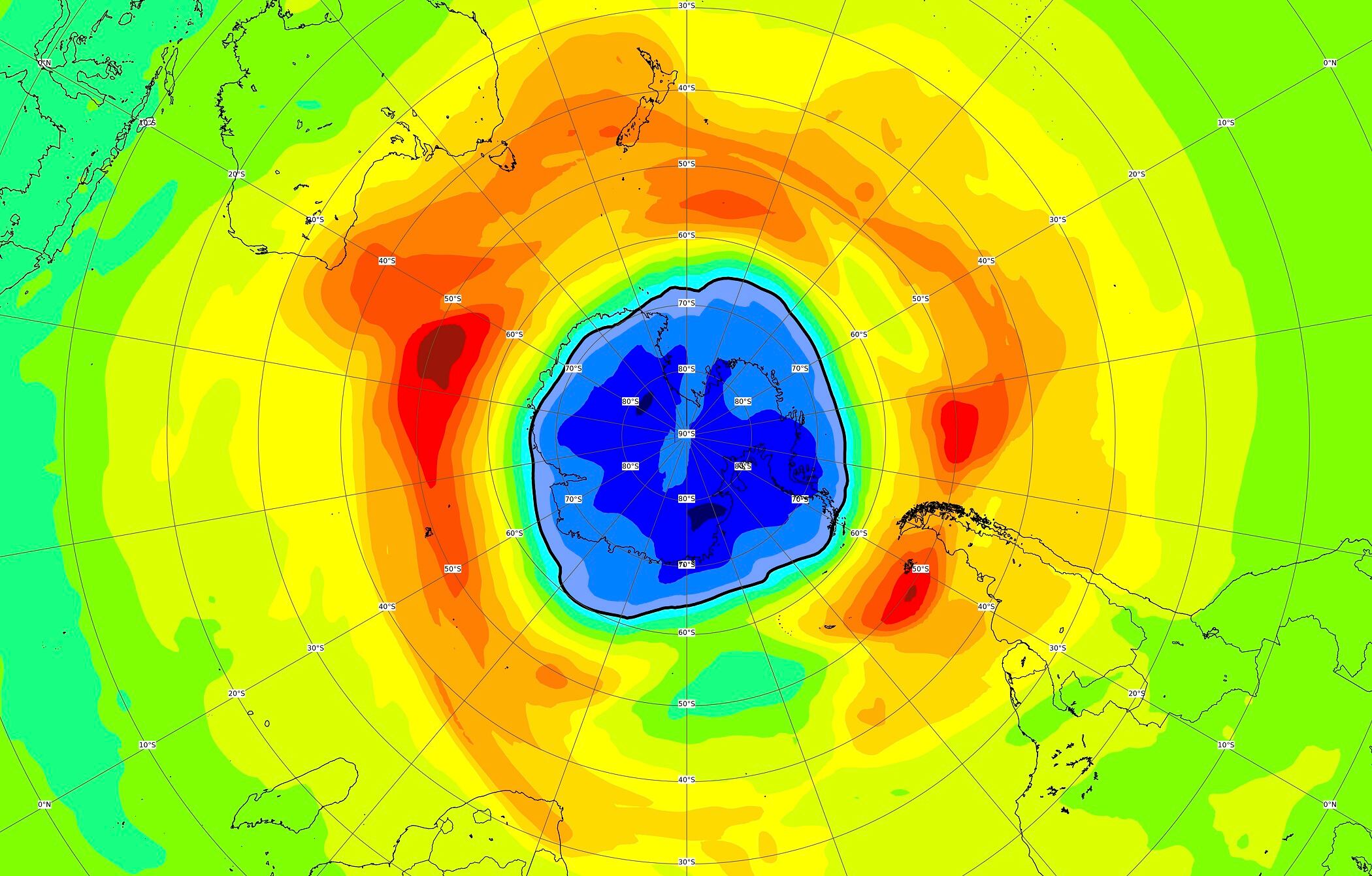
This image, provided on Thursday, Sept. 16, 2021 by the European Space Agency (ESA) shows a map of the ozone hole over the South Pole on 16 September 2021. Scientists say the Southern Hemisphere ozone hole is larger than usual and already surpasses the size of Antarctica. (AP Photo/European Space Agency, ESA)
Scientists say the hole in the Earth’s protective ozone layer over the Southern Hemisphere is larger than usual this year and already surpasses the size of Antarctica.
The European Union’s Copernicus Atmosphere Monitoring Service said Thursday that the so-called ozone hole, which appears every year during the Southern Hemisphere spring, has grown considerably in the past week following an average start.
“Forecasts show that this year´s hole has evolved into a rather larger than usual one,” said Vincent-Henri Peuch, who heads the EU's satellite monitoring service.
“We are looking at a quite big and potentially also deep ozone hole,” he said.
Atmospheric ozone absorbs ultraviolet light coming from the sun. Its absence means more of this high-energy radiation reaches the Earth, where it can harm living cells.
Peuch noted that last year's ozone hole also started out unremarkably but then turned into one of the longest-lasting ones on record.
The Montreal Protocol, signed in 1987, led to a ban on a group of chemicals called halocarbons that were blamed for exacerbating the annual ozone hole.
Experts say that while the ozone layer is beginning to recover, it's likely to take until the 2060s for the ozone-depleting substances used in refrigerants and spray cans to completely disappear from the atmosphere.
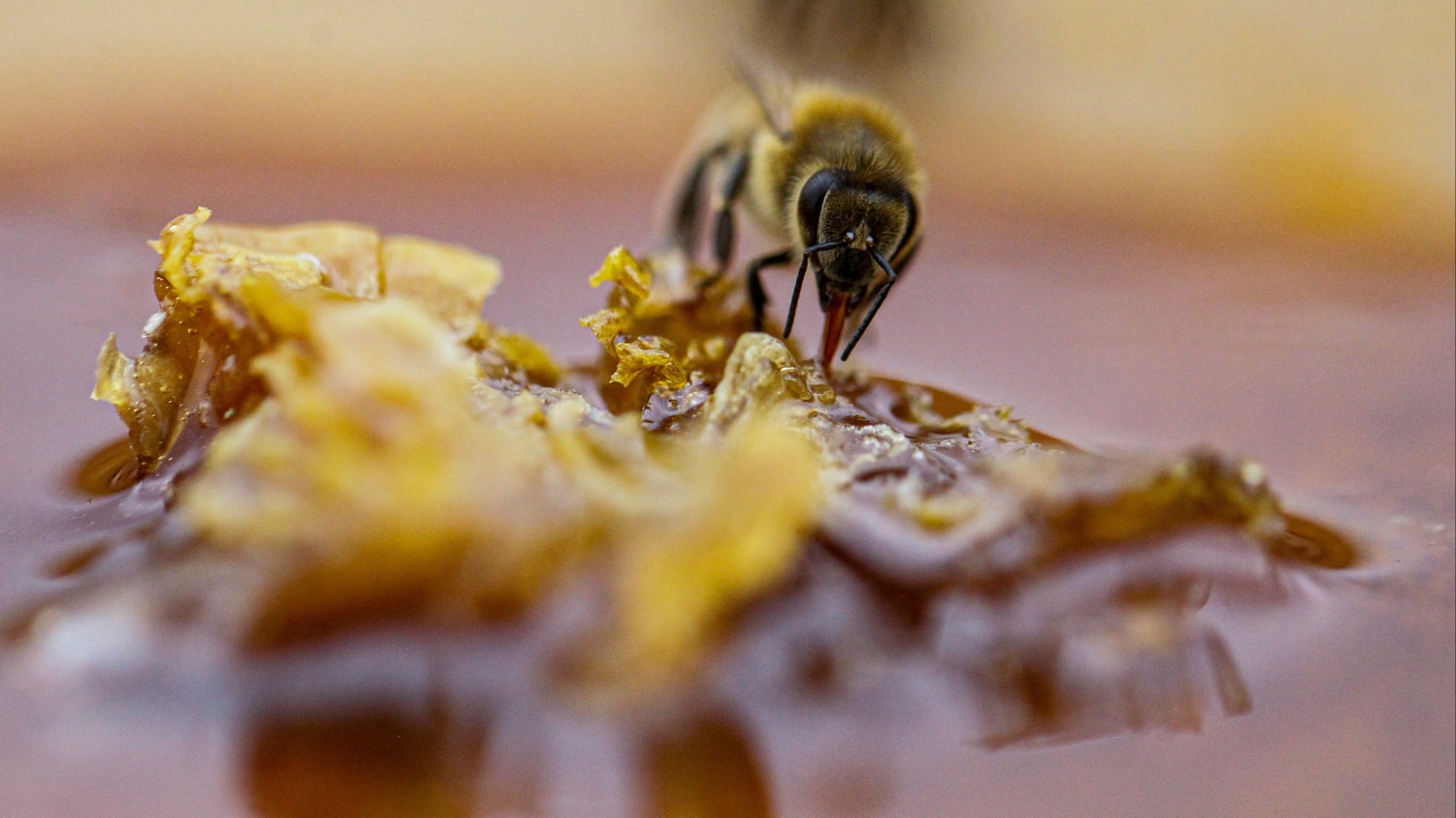
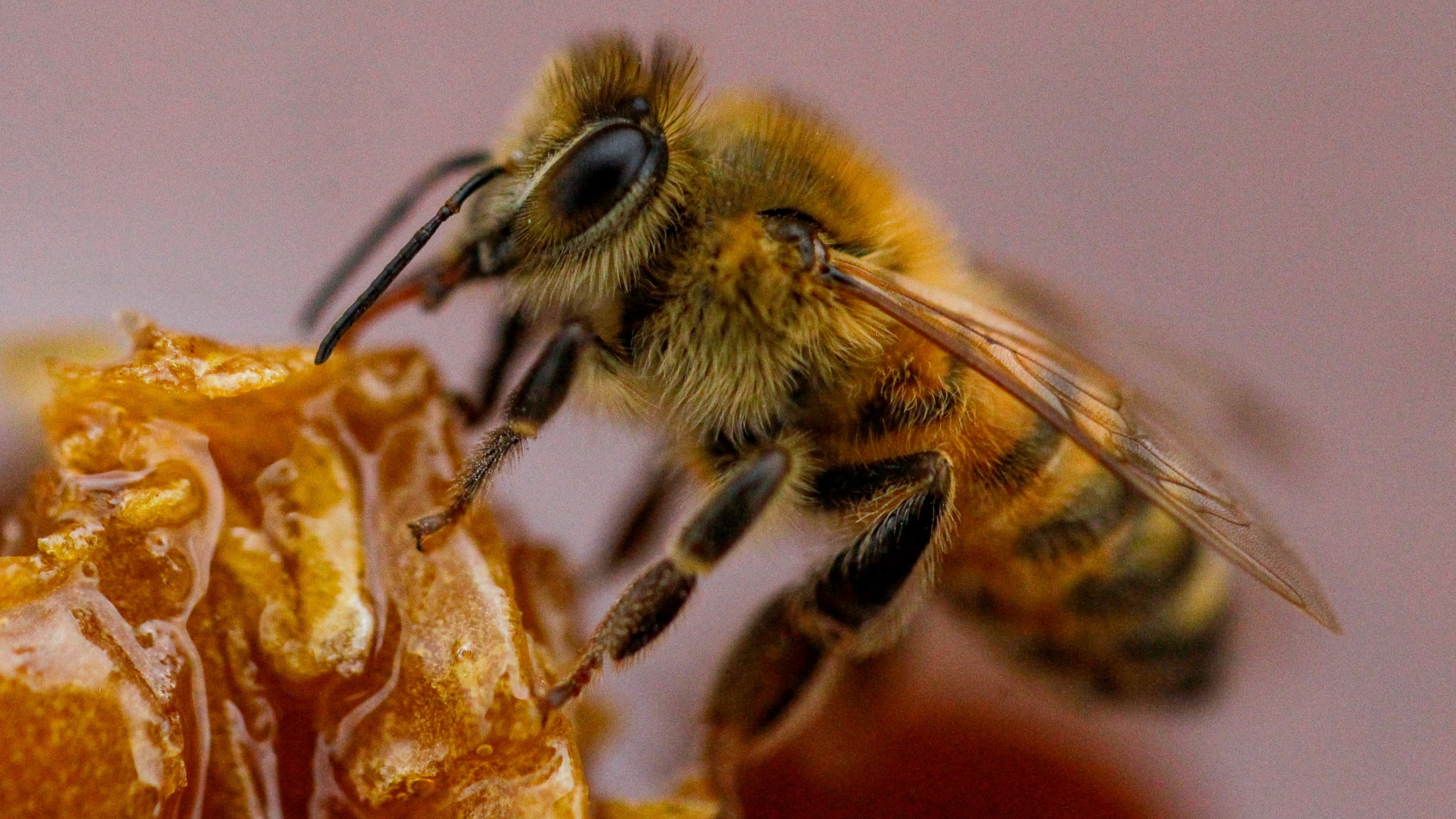
Astor Apiaries' Nick Hoefly is an expert on honey bees and, of course, honey. Cheddar News' Michelle Castillo checked out the hives to learn everything you ever wanted to know about honey ahead of Bee's Knees Week.
Nick Hoefly of Astor Apiaries explains the importance of bees for our ecosystem and talks to Cheddar News' Michelle Castillo about what you can do if you're nervous around them.
Research now shows dogs tend to age better when they have plenty of interaction with humans and other pets, according to a study published in the journal Evolution, Medicine & Public Health.
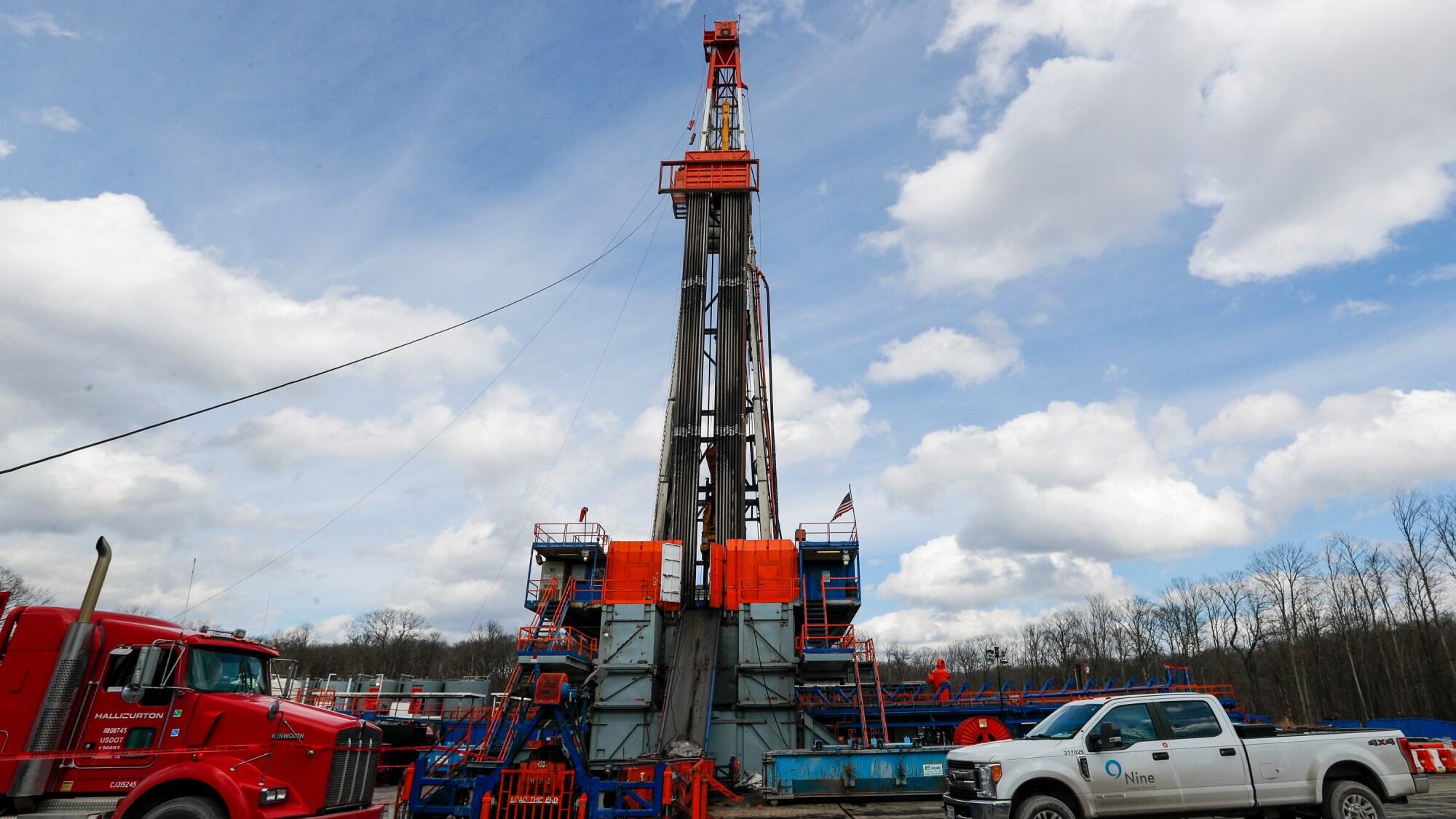
Children who lived closer to natural gas wells in heavily drilled western Pennsylvania were more likely to develop a relatively rare form of cancer, and nearby residents of all ages had an increased chance of severe asthma reactions, researchers said in reports released Tuesday evening.
Surgeons transplanted a pig’s kidney into a brain-dead man and for over a month it's worked normally — a critical step toward an operation the New York team hopes to eventually try in living patients.