By Elliot Spagat and Nomaan Merchant
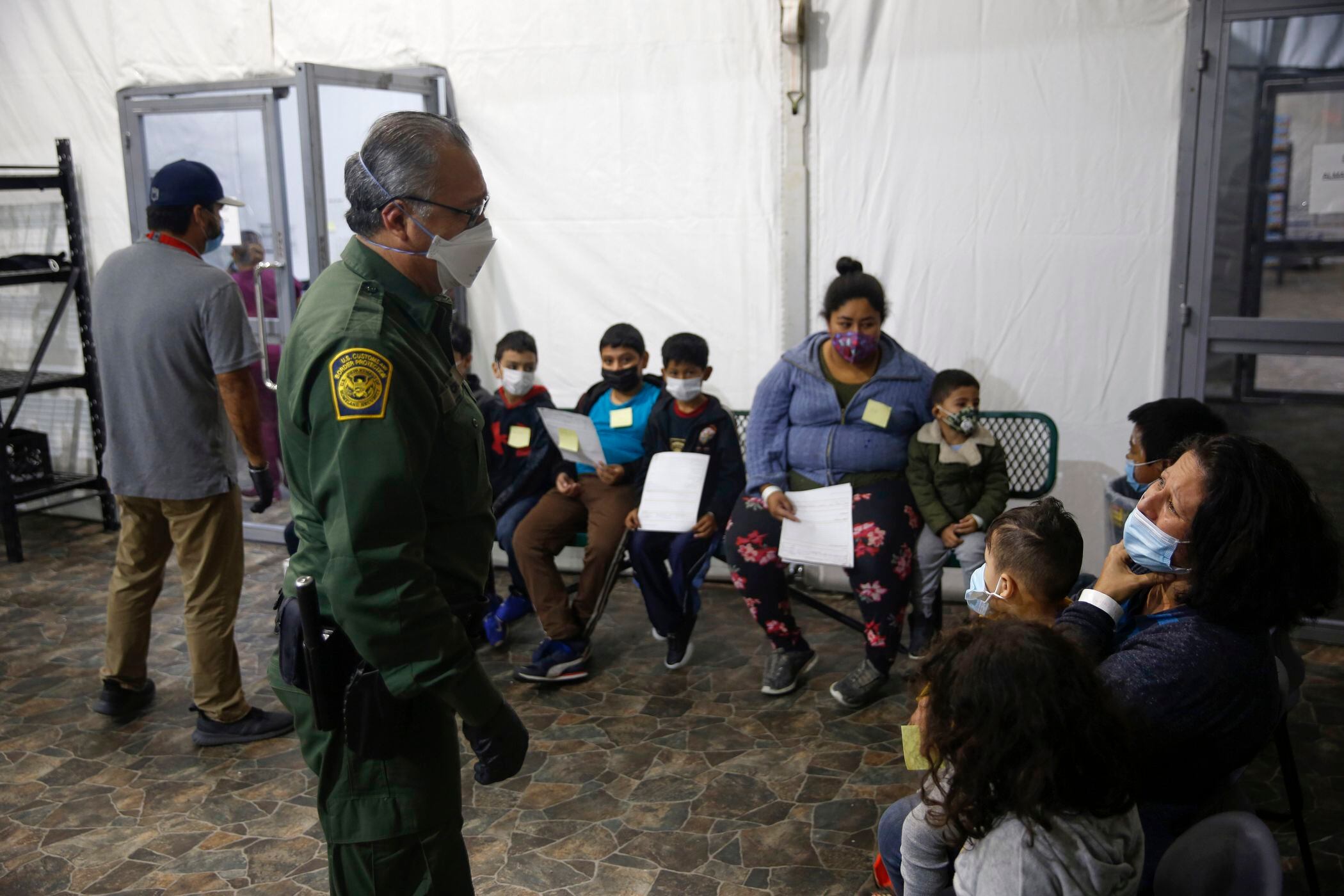
The Biden administration for the first time Tuesday allowed journalists inside its main border detention facility for migrant children, revealing a severely overcrowded tent structure where more than 4,000 people, including children and families, were crammed into a space intended for 250 and the youngest were kept in a large playpen with mats on the floor for sleeping.
With thousands of children and families arriving at the U.S.-Mexico border in recent weeks and packing facilities, President Joe Biden has been under pressure to bring more transparency to the process. U.S. Customs and Border Protection allowed two journalists from The Associated Press and a crew from CBS to tour the facility in Donna, Texas, in the Rio Grande Valley, the nation's busiest corridor for illegal crossings.
More than 4,100 people were being housed on the property Tuesday. Most were unaccompanied children processed in tents before being taken to facilities run by the Department of Health and Human Services and then placed with a family member, relative or sponsor.
The children were being housed by the hundreds in eight "pods" formed by plastic dividers, each about 3,200 square feet (297 square meters) in size. Many of the pods had more than 500 children in them.
Oscar Escamilla, acting executive officer of the U.S. Border Patrol in the Rio Grande Valley, said 250 to 300 kids enter daily and far fewer leave.
The youngest children — among them, a 3-year-old girl being cared for by her 11-year-old brother and a newborn with a 17-year-old mother — are kept out of the pods and sleep in a playpen area.
On Tuesday, journalists watched children being processed. They went into a small room for lice inspection and a health check. Their hair was hosed down and towels were tossed in a black bin marked “Lice.” The kids — many of whom have made long journeys to get to the border, including stretches on foot — were also checked for scabies, fever, and other ailments. No COVID-19 test was administered unless a child showed symptoms.
Nurse practitioners also gave psychological tests, asking children if they had suicidal thoughts. All shoelaces were removed to avoid harm to anyone.
The children were then led down a green turf hall to a large intake room. Those 14 and older are fingerprinted and have their photo taken; younger children did not.
They went to a second intake room where they got notices to appear for immigration court. Border Patrol agents asked them if they had a contact in the U.S. and allowed the child to call that person.
Children were given bracelets with a barcode that shows a history of when they showered and medical conditions.
Outside the facility, the roar of construction equipment could be heard along with air conditioning units.
The Biden administration has continued expelling adults who try to cross the border under a coronavirus-related public health declaration enacted by former President Donald Trump. Biden also has tried to expel most families traveling together, but changes in Mexican law have forced agents to release many parents and children into the U.S.
Biden has declined to resume the Trump-era practice of expelling unaccompanied immigrant children. Several hundred kids and teenagers are crossing the border daily, most fleeing violence, poverty or the effects of natural disasters in Central America. In some cases, parents refused entry into the U.S. have sent their children across the border alone, hoping they will be placed with relatives eventually.
The Border Patrol is apprehending far more children daily than Health and Human Services is placing with U.S. sponsors, leading to a severe backlog in the system. The Border Patrol generally is not supposed to detain children for more than three days, but Health and Human Services lacks space.
More than 2,000 kids have been at the Donna facility for more than 72 hours, including 39 for more than 15 days.
HHS is housing children at convention centers in Dallas and San Diego and is opening large-scale sites in San Antonio, El Paso and elsewhere.
Biden has been sharply criticized by Republicans seeking to defend Trump's immigration record, which includes the separation of thousands of immigrant families under a “zero tolerance" policy.