By Matthew Daly and Aamer Madhani
The Biden administration said Wednesday it is hiring more federal firefighters — and immediately raising their pay — as officials ramp up response efforts in the face of a severe drought that is setting the stage for another destructive summer of intense wildfires across the West.
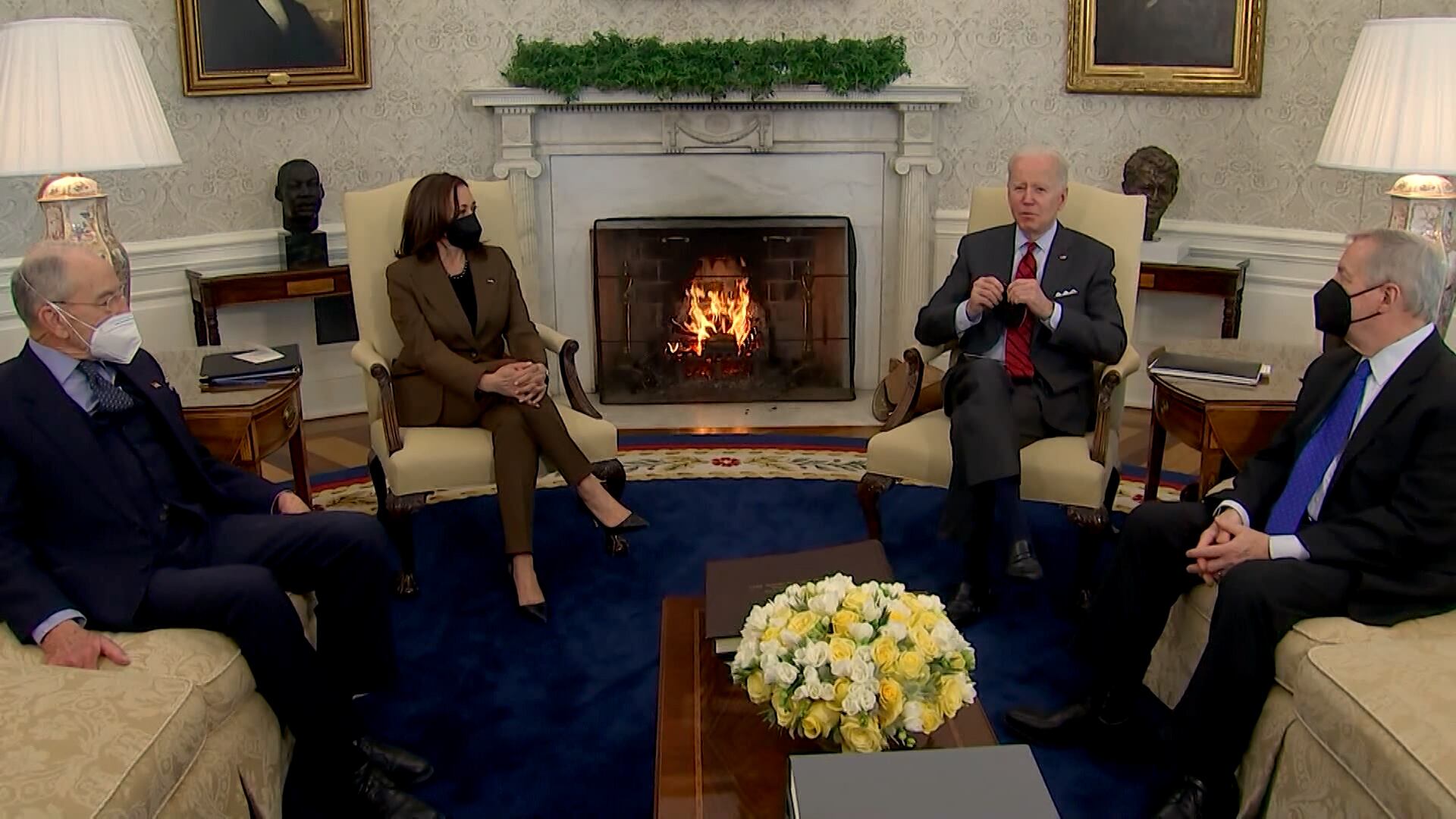
President Joe Biden announced the moves during a virtual meeting with governors from Western states and as a huge swath of the Pacific Northwest endures one of the worst heat waves in recent memory. Temperatures in Portland, Oregon, soared to a record 116 degrees Fahrenheit on Monday, a fact Biden cited as "a wake-up call to the rest of the public” about the realities of climate change.
“The truth is we’re playing catch-up'' on preparing for extreme heat and wildfires, Biden said, calling federal efforts "under-resourced'' compared with the deadly threat posed by climate change and extreme drought.
“That’s going to change and we have to do it,″ Biden told the governors. “We can’t cut corners when it comes to managing our wildfires or supporting our firefighters. Right now we have to act and act fast.″
Recalling horrific scenes from wildfires in California and other states last year, Biden said, “Orange skies look like end-of-days smoke and ash.″
Biden's plan would ensure that no one fighting wildland fires is making less than $15 per hour and would add or convert to full-time nearly 1,000 firefighters across a host of agencies.
“Because of climate change, wildland firefighting is no longer a seasonal endeavor,'' the White House said in a statement. “With fire seasons turning into fire years, it is imperative to have a year-round workforce that is available to respond at any time, that is supported and equitably compensated and is available to undertake preventive actions" such as cutting down small trees and brush that serve as fuel to fires that are increasing in size and intensity.
Western states have been parched by severe drought and record heat that has burned more than 2,300 square miles (5,900 square kilometers) this year. That’s ahead of the pace in 2020, which saw a near-record 15,000 square miles (40,000 square kilometers) burned, killing dozens of people and destroying more than 17,000 homes and other structures.
“Climate change is driving a dangerous confluence of extreme heat and prolonged drought,'' Biden said. “We’re seeing wildfires of greater intensity that move with more speed."
Biden has expressed dismay at the starting pay for federal firefighters, which is significantly lower than at many local and state fire agencies. Pay for new federal firefighters typically starts at $11 per hour to $14 per hour and they are overtime eligible, according to the Interior Department.
The pay raise will come in the form of retention incentives and by providing additional bonuses to those working on the front lines. More experienced permanent firefighters could also be eligible for a 10% retention incentive. Temporary firefighters will be eligible to receive some incentive pay under the plan.
Wednesday's meeting included eight Western governors, including California Gov. Gavin Newsom and Oregon Gov. Kate Brown. Both states are facing extreme drought and expect record-breaking fires.
Newsom, a Democrat, said he was pleased to be working with the White House, rather than as “sparring partners,'' as he described his state's relationship with the Trump administration. “We were debating raking policies'' in forests, Newsom said, referring to comments by then-President Donald Trump that the state should “rake” its forests to reduce the risk of wildfires.
With climate change, the wildfire seasons are only to get worse, Newsom and other governors said. “The hots are getting hotter, the dries are getting drier,” Newsom said.
Three Republican governors, Greg Gianforte of Montana, Brad Little of Idaho and Doug Ducey of Arizona, said they were disappointed not to be invited to the White House meeting, which included six Democrats and two Republicans.
“It is critical to engage governors fully and directly to have a productive discussion about how the federal government can improve its wildfire response and prevention efforts,'' Gianforte and Little wrote in a letter to Biden.
A White House spokesman said the invited governors represented “a cross-section of states impacted by wildfires” and said Biden will continue to work with governors from both parties on the issue.
The meeting with the governors came as the White House released a memo confirming its commitment to a clean energy standard, tax credits and 500,000 charging stations for electric vehicles, among other climate goals as officials pursue a two-track approach on infrastructure.
A memo by climate adviser Gina McCarthy and White House senior adviser Anita Dunn also pledges at least $10 billion to conserve and restore public lands and waters, address environmental injustice and create a Civilian Climate Corps to complete projects related to climate change and clean energy.
The memo responds to criticism from environmental groups and other progressives who are frustrated that many climate-related initiatives were cut out of a bipartisan infrastructure plan announced last week.
“We know more work needs to be done, which is why President Biden will continue championing'' the nearly $1 trillion bipartisan infrastructure bill and a separate, larger plan Biden and fellow Democrats aim to approve along party lines, the memo said.
On wildfires, administration officials have pledged to work with Congress to find a permanent fix to increase firefighter pay and convert more seasonal wildland firefighters to year-round workers.
The U.S. Forest Service and Interior Department combine to employ about 15,000 firefighters. Roughly 70% are full-time and 30% are seasonal. Those figures used to be reversed, but have changed as fire seasons have grown longer and more severe.
Oregon Sen. Ron Wyden, a Democrat who has pushed the administration to ramp up its wildfire response, said Congress "can and should bolster these efforts” with legislation to lift a cap on overtime pay, create a permanent firefighting workforce and expand work to remove hazardous fuels to lessen fire risk.
"The ongoing infrastructure debate in Congress gives us an essential chance to get this and other wildfire prevention efforts done,'' Wyden said.
___
Associated Press writers Keith Ridler in Boise, Idaho, and Matthew Brown in Billings, Montana, contributed to this report.