Oprah's Political Future, Evan Spiegel's Snap Snafu
Hive editor Jon Kelly, Kristen Scholer, and the VF Hive Panel take us through the five biggest stories of the day in politics, business, and technology. Emily Jane Fox kicks things off with a report on Ivanka Trump's tweet in support of Oprah Winfrey. Ivanka called Oprah's speech inspiring and empowering. The panel discusses the irony of the tweet considering Donald Trump's track record and whether it may have exposed her political instincts.
Maya Kosoff weighs in to discuss the latest woes for Evan Spiegel. She talks about the unpopular update that Snap rolled out this week and the fact that the company's stock is trading at about 50 percent of its IPO value.
T.A. Frank and Tina Nguyen join the discussion to weigh in on a potential Mitt Romney run for Orrin Hatch's Senate seat in Utah. The panel debates a possible presidential run for Romney in 2020.
Frank and Nguyen also report on Steve Bannon's ouster from Breitbart. They discuss the rift between Rebekah and Robert Mercer and Steve Bannon, as well as reports that the Mercers actually soured on Bannon months ago.
Emily Frank returns to round out the Hive Five to talk about Donald Trump and how his trip to Davos will be perceived by his base. T.A. Frank and Tina Nguyen also join in to discuss how Trump's America First agenda may not be so popular overseas.
The European Union is historically divided and slow when it comes to decision-making, but in the recent weeks, the 27 members have agreed upon several sanctions and decisions regarding foreign policy and defense. The EU has cut off Russian banks from the swift payment system, blocked Russian propaganda channels, and closed European skies for air travel to and from Russia. Germany, for example, who has refused to send any deadly weapons to conflict zones, has now agreed to send lethal weapons to Ukraine. Rupert Steiner, London Bureau Chief at Barron's, joins cheddar news to discuss.
Sam Stovall, Chief Investment Strategist at CFRA Research, joins Cheddar News' Closing Bell where he dives into the factors contributing to Monday's market plunge and what could be in store when February's CPI data comes out on Tuesday.
Derek Shearer, former U.S. Ambassador to Finland and contributing writer for Washington Monthly, joins Cheddar News to discuss the latest developments in the Russia-Ukraine conflict.
Americans continue to feel the pain at the pump as a result of Russia’s invasion of Ukraine. Patrick DeHaan, head of petroleum analysis at GasBuddy, joined Cheddar News to discuss how prices are being affected by the war and how much worse it could potentially get for drivers. "It's obviously a fluid situation. In one field today, I might feel differently in a half hour. But for now, I think we could see the national average realistically go somewhere into the mid $4 range, maybe $4.40 to $4.65 based on what we're seeing," he said.
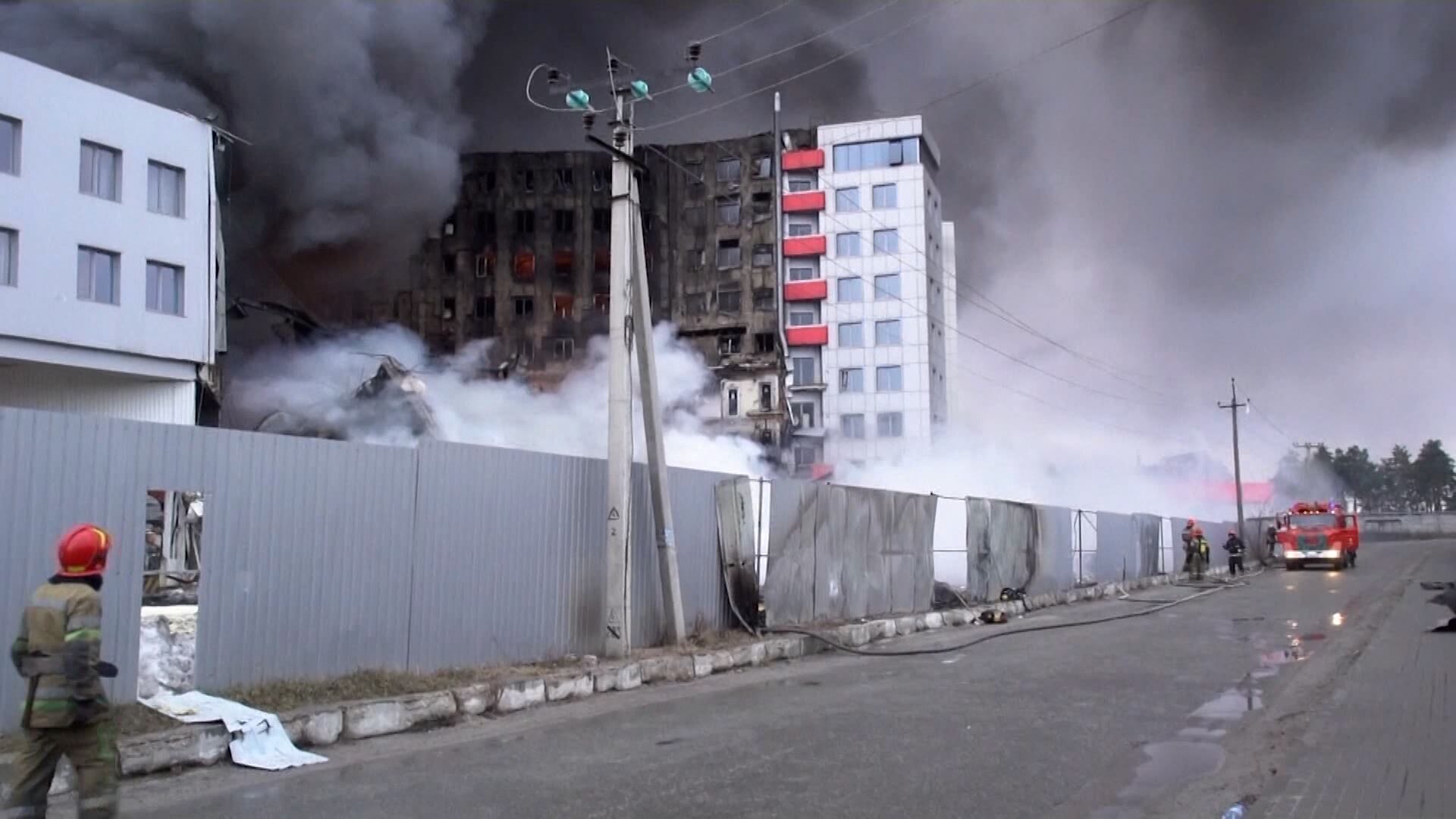
Russia’s invasion of Ukraine has entered its 12th day following what Ukrainian authorities described as increased shelling of encircled cities and another failed attempt to evacuate civilians from the port city of Mariupol.
Gasoline prices are pushing even farther above $4 a gallon, the highest price that American motorists have faced since July 2008, as calls grow to ban imports of Russian oil.
Jay Hatfield, Chief Investment Officer at ICAP, believes a lot of the bad news regarding the fighting in Ukraine and Fed is already priced into the market and looming uncertainty factored into Friday's movement. However, he also believes the upcoming Fed decision will be good news for Wall Street.
News of Russian forces taking control of a Ukrainian after artillery bombardment of a nuclear power plant raised concerns this week. Nuclear policy expert and Quincy Institute Distinguished Fellow Joe Cirincione joined Cheddar News to discuss the implications for a potential disaster. “I’m with the director general of the IAEA, the International Atomic Energy Agency. He says that he is extremely concerned, and that this Russian attack is a severe risk and that Russia clearly violated the fundamental principle of preserving the integrity of nuclear power plants," Cirincione said.